What to Wear in 50 Degree Weather: A Practical Travel Guide
Wondering what to wear in 50 degree weather on your next trip? Here's how to dress for cool mornings, mild afternoons, rain and wind, with outfit ideas for men and women.
If you're wondering what to wear in 50 degree weather, start with a long-sleeve shirt, a sweater, a light-to-medium jacket, long pants, and closed-toe shoes. At 50°F (10°C), you can feel perfectly comfortable walking around in the sunshine, then find yourself wishing you'd brought another layer when the wind picks up or rain gets into your clothes.
For Americans planning a spring trip to Europe or a fall getaway closer to home, 50-degree weather calls for layers rather than a bulky winter wardrobe. Shorts and a T-shirt might work for a sunny afternoon, but I'd think twice before wearing them for a full day of sightseeing. The goal is simple: stay warm outdoors without getting too hot when you step inside a cafe, museum, or restaurant.
What does 50 degree weather feel like?
Think cool, not freezing. At 50°F, a sweater and jacket will usually feel comfortable when you're walking and the wind isn't too strong. Sit outside for a while, stand on an exposed bridge, or get caught in the rain, though, and that same temperature can feel much colder.
Sunshine makes a difference, too. A dark jacket can feel warmer in direct sunlight, while a gray, damp afternoon may leave you reaching for your scarf. There's no single outfit that works perfectly for every 50-degree day. The forecast matters, and so does how much time you'll spend outside.
Pay attention to the overnight low, not just the daytime high. Across the destinations in this guide, average lows range from 32.5°F to 42.3°F. That is a big reason an outfit that feels fine at lunchtime might not be enough when you're leaving your hotel early or walking back after dinner.
My default? A breathable shirt, a sweater or fleece, a jacket, long pants, and comfortable shoes. You can take off the sweater when you warm up and put it back on later. Much easier than spending the afternoon carrying a coat that's too heavy or shivering because you packed too lightly.
Where and when can you expect 50 degree weather?
Planning a spring or fall trip? These city and month combinations give you a useful picture of the conditions you might pack for. The figures below are the supplied 20-year averages for 2006 through 2025. They're helpful for planning, but they aren't a forecast for your actual travel dates.
| Place | Month | Avg high °F/°C | Avg low | Rainy days | Sunshine |
|---|---|---|---|---|---|
| London, UK | March | 51.3°F / 10.7°C | 37.9°F | 11 | 7.1 hours/day |
| London, UK | November | 51.4°F / 10.8°C | 41.5°F | 12 | 4.4 hours/day |
| Paris, France | March | 53.6°F / 12°C | 38.5°F | 12 | 7.5 hours/day |
| Paris, France | November | 52.2°F / 11.2°C | 42.1°F | 12 | 4.5 hours/day |
| New York, USA | March | 49.5°F / 9.7°C | 32.5°F | 10 | 8.3 hours/day |
| New York, USA | November | 53.1°F / 11.7°C | 39°F | 8 | 6.8 hours/day |
| Amsterdam, Netherlands | November | 50°F / 10°C | 42.3°F | 14 | 4.3 hours/day |
| Seattle, USA | November | 49.8°F / 9.9°C | 40.6°F | 18 | 4.7 hours/day |
| Chicago, USA | April | 53.2°F / 11.8°C | 39.7°F | 13 | 9.1 hours/day |
Look at Seattle and New York in November. Seattle averages 18 rainy days, while New York averages 8. That alone is a good reason not to pack for both cities in exactly the same way. Seattle calls for a dependable rain jacket and shoes that can handle wet pavement. In New York, you can still pack for rain, but you may put more emphasis on comfortable walking clothes and layers for chilly starts.
Sunshine tells another part of the story. Amsterdam in November averages 4.3 hours of sunshine a day, compared with 9.1 hours in Chicago in April. Both have average daytime highs around 50°F, but you shouldn't expect the same experience on the street. A sunny afternoon can make walking feel pleasant; a gray, damp day can make the same temperature feel much less inviting.
Use the linked city guides to compare the typical conditions before you pack. Then check the current forecast closer to departure. Averages help you decide what belongs in your suitcase, while the forecast helps you choose what to wear on a particular day.
What to wear in 50 degree weather for women?
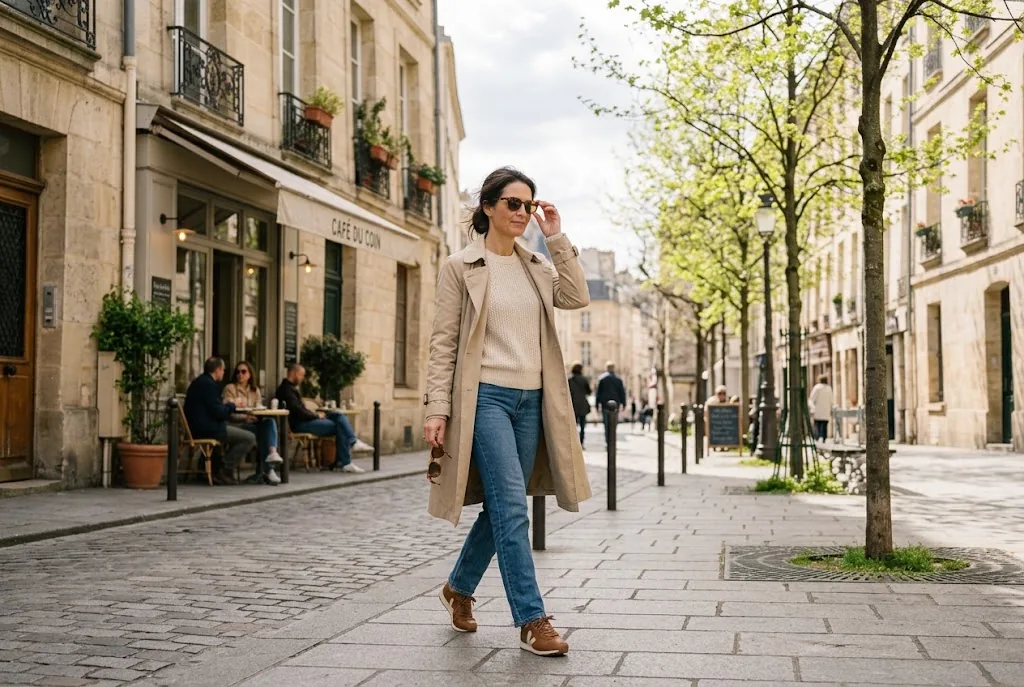
For women, the easiest approach is to build an outfit around a comfortable top, a warm middle layer, and a jacket. That combination works for sightseeing, shopping, casual dinners, and plenty of other travel plans. Change the shoes or outer layer, and the same basic outfit can look quite different.
What are the best casual outfits for women at 50°F?
- For city sightseeing: Wear a long-sleeve top, a knit sweater, straight-leg jeans, a trench coat, and comfortable leather sneakers or ankle boots.
- For a relaxed travel day: Pair a T-shirt with a cardigan, a lightweight quilted jacket, comfortable trousers, and walking shoes.
- For a polished look: Try a fine-knit sweater, tailored pants, a wool-blend coat, and loafers or ankle boots with grippy soles.
- For a skirt or dress: Add a long-sleeve layer, tights if you prefer the extra coverage, a coat, and closed-toe shoes.
- For a casual outdoor day: Choose a fleece or warm sweater under a wind-resistant jacket, with jeans or comfortable outdoor trousers.
A trench coat is a useful choice for a city trip because it works with jeans, dresses, and smarter outfits. Just don't assume every trench coat will keep you warm or dry. A thin fashion trench needs a sweater underneath, and it may not be enough on a cold, rainy day.
Jeans are fine for most dry days, but soaked denim can feel cold and take a long time to dry. If you're visiting a city with frequent rain, consider travel trousers made from a quicker-drying fabric. A small packing decision like that can make hours of walking much more comfortable.
Should women wear dresses or skirts at 50°F?
Yes. A dress or skirt can work at 50°F, provided the rest of your outfit matches the conditions. For a short walk to dinner, a dress with a coat and ankle boots may be all you need. For several hours outdoors, you'll probably appreciate an extra layer.
If you tend to feel cold, try tights with a skirt or dress, plus a sweater and a coat that closes comfortably. A sweater dress, structured coat, and ankle boots make a practical evening outfit without requiring a suitcase full of special-occasion clothing.
One thing I'd avoid: packing uncomfortable shoes just because they look good with a dress. If Paris or London is on your itinerary, you may spend much more time walking between places than you expect. Pick footwear that feels good after a long day, not just when you first put it on.
What should men wear in 50 degree weather?
Men can keep things straightforward: a shirt or base layer, a sweater, a jacket, long pants, and comfortable shoes. You don't need a complicated wardrobe to dress well in cool weather. The main decision is how warm your middle layer should be and whether your outer jacket needs to keep out rain or wind.
What are the best everyday outfits for men at 50°F?
- For sightseeing: A long-sleeve T-shirt, crewneck sweater, casual jacket, jeans, and supportive walking sneakers.
- For a smart-casual look: A button-down shirt, merino or cotton-knit sweater, unstructured coat, chinos, and leather shoes with grippy soles.
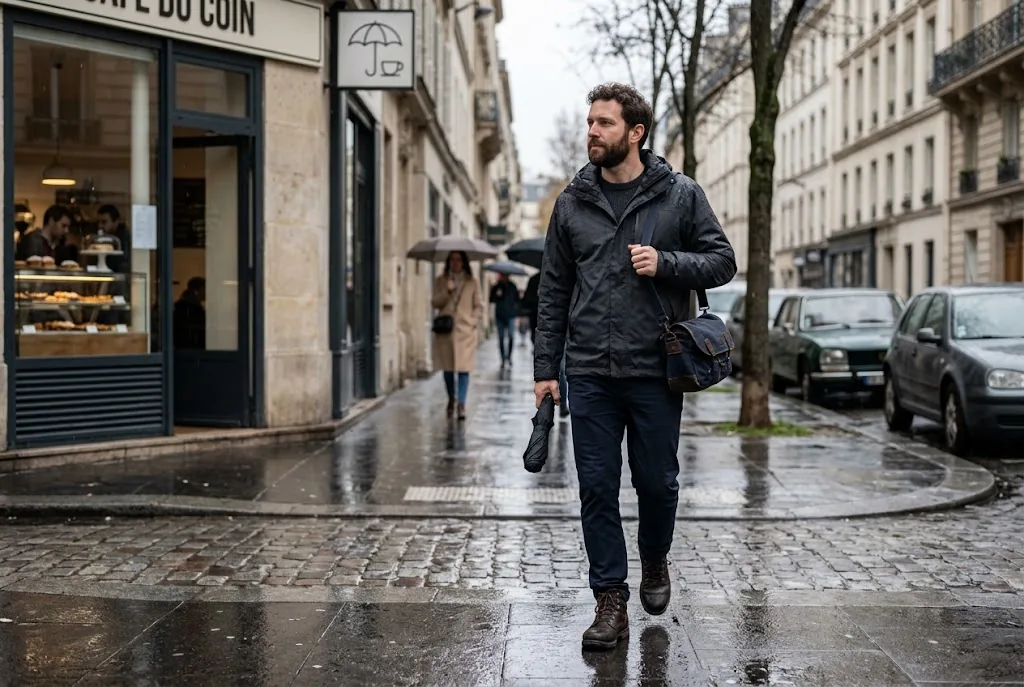
- For rainy weather: A quick-drying top, a light insulating layer, a waterproof shell, travel trousers, and water-resistant shoes.
- For a sporty day: A breathable base layer, fleece, wind-resistant jacket, flexible trousers, and walking or hiking shoes.
- For dinner: A collared shirt or fine-knit sweater, tailored trousers, a neat wool-blend coat, and clean leather shoes or ankle boots.
A denim jacket can work on a dry afternoon if you've got a warm sweater underneath. A bomber jacket is another easy casual option. Neither is my first choice for a wet November day in Seattle, though. A lightweight insulated jacket or waterproof shell will be more useful when the weather turns damp and windy.
For a small travel wardrobe, stick with colors that work together. A dark jacket, a couple of sweaters, a few tops, and two pairs of shoes can cover most of your plans. You can wear the same jacket with jeans during the day and chinos at dinner, so there's no need to pack a separate coat for every occasion.
Do you need a jacket in 50 degree weather?
For most people spending time outdoors, yes. A jacket is especially useful when you leave early, stay out after sunset, or stop walking for a while. You might feel warm enough in a sweater while moving through a city, then get chilly while waiting for a bus or standing outside a museum.
Which jacket works best at 50°F?
- Trench coat: A good option for city travel and light rain when you have a warm layer underneath.
- Light wool coat: Works well for dry days, smart outfits, and dinners when you want a more polished look.
- Fleece jacket: Comfortable for casual sightseeing, parks, and outdoor activities. Add a wind-resistant shell when needed.
- Light insulated jacket: Useful for chilly mornings, breezy waterfront areas, and people who feel cold easily.
- Waterproof shell: Best for wet or windy conditions, especially when worn over a sweater or fleece.
- Denim or bomber jacket: Fine for milder, mostly dry afternoons, but not the most dependable choice for prolonged rain.
There's little reason to bring your heaviest winter coat just because the forecast shows 50°F. A bulky coat can get uncomfortable when you're walking briskly, riding public transportation, or spending time in heated indoor spaces. A medium-weight jacket with room for a sweater gives you more control over how warm you feel.
New York in March is a good reason to make an exception. The supplied average low is 32.5°F, despite an average daytime high of 49.5°F. If you're heading out early or returning late, a warmer coat may be more comfortable than a light jacket alone. Check the actual forecast and pack for the coldest part of your day.
What should you wear on a sunny 50 degree day?
Sunny 50°F weather is usually the easiest version of this temperature to dress for. A long-sleeve shirt, light sweater, long pants, and a jacket you can remove make a good starting point. If the pavement is dry, comfortable sneakers or loafers can work well for a city walk.
Sunlight can make a cool afternoon feel surprisingly pleasant when you're moving around. A dark jacket may feel warmer in direct sun, while a lighter layer may be more comfortable if you're sensitive to heat. Choose something you can unzip or take off without much fuss.
Sunglasses are useful on bright days, and a compact scarf gives you another layer if the breeze starts to bother you. Gloves may feel unnecessary in the afternoon, but they can come in handy if you're heading out early or spending the evening outside.
Don't leave your jacket in the hotel just because the morning looks sunny. London's March average includes 7.1 hours of sunshine a day, but its average low is still 37.9°F. Pack for the chilly parts of the day, too, and you'll have more options when the conditions change.
What should you wear on a rainy 50 degree day?
Rain changes the clothing priorities. At 50°F, staying dry can matter just as much as adding warmth. Pick a waterproof or reliably water-resistant outer layer, long pants that won't drag across wet pavement, and shoes that can handle puddles without losing their grip.
- Wear a long-sleeve base layer and a sweater or fleece.
- Add a waterproof jacket with a hood instead of relying on a fashion coat alone.
- Choose water-resistant walking shoes or waterproof boots with good traction.
- Carry a compact umbrella if you expect to walk through town or move between shops and cafes.
- Bring spare socks if your itinerary includes extended outdoor time in wet conditions.
- Use a water-resistant day bag or pack a small cover to protect your phone and other essentials.
Seattle in November is the clearest example in this guide of why rain gear deserves suitcase space. The supplied averages show a daytime high of 49.8°F, 18 rainy days, and 4.7 hours of sunshine a day. That doesn't mean it'll rain every hour of your visit, but it does make a proper rain jacket and dependable footwear sensible choices.
Amsterdam in November averages 14 rainy days and 4.3 hours of sunshine a day. London averages 12 rainy days and 4.4 hours of sunshine a day in November. If you're visiting either city, I'd prioritize a hooded waterproof jacket and shoes that can handle wet sidewalks before adding extra fashion layers to your bag.
Honestly, I'd skip the canvas sneakers in November if rain is in the forecast. They may be comfortable on a dry day, but wet feet can ruin a long sightseeing itinerary. A regular cotton sweatshirt isn't ideal as your only outer layer, either, because it can absorb water and take a long time to dry.
What should you wear when it's windy at 50°F?
Wind can make 50°F feel much colder than you'd expect. A sweater and jacket might be plenty on a sheltered street, but walking along an exposed bridge or waterfront is a different story. The temperature hasn't changed, but your comfort certainly has.
Wear a wind-resistant jacket over a warm middle layer. A hood, scarf, and jacket that closes around your neck can help without adding much bulk. If you'll be outside for hours, a breathable base layer is useful, especially if you're walking quickly and likely to work up a sweat.
A thick knit sweater isn't always the answer. It may provide warmth, but wind can pass through loosely woven fabric. An outer layer that blocks the breeze can make a lighter sweater much more effective.
For a windy afternoon, long trousers and closed-toe shoes are a better bet than shorts and sandals. If rain is expected as well, use an outer layer that can handle both conditions. A jacket that flaps around or lets rain through the shoulders will get annoying fast on a long walk.
What to wear in 50 degree weather in the morning and evening
This is where travelers often get caught out. The supplied average lows across these destinations range from 32.5°F to 42.3°F, even though the daytime highs sit close to 50°F. An outfit that feels fine after lunch may be too light when you leave your hotel or walk home after dinner.
For an early start, put on your base layer, sweater, jacket, long pants, and closed-toe shoes before heading out. Add a scarf or light gloves if you're likely to stand around outdoors. You can always remove a layer later. Trying to warm up after you've left your extra clothes behind is much less convenient.
Evening plans need a little thought, too. Restaurants and museums can be warm indoors, so a removable jacket is easier to manage than one very heavy coat. Keep it with you for the walk back, especially if the route takes you through an exposed area or the forecast suggests rain.
New York in March shows why the low matters. The average high is 49.5°F, but the average low is 32.5°F. If your day includes breakfast out, sightseeing in the afternoon, and dinner later, don't dress as if you'll spend every hour in the afternoon sunshine. Bring a warmer layer for the bookends of your day.
What should you wear at 50°F for different activities?
What should you wear for city walking?
For a full day walking around New York, Paris, London, or Amsterdam, comfort should come first. A breathable shirt, sweater, jacket, long pants, and supportive shoes will get you through most sightseeing plans. Keep a small day bag for water, your phone, a compact umbrella, and any layer you take off.
Think about the ground you'll be walking on. Smooth leather soles can be slippery on wet paving, while old sneakers may not offer much support. Pick shoes that you've already worn on a long walk. A city trip isn't the time to find out that a new pair rubs your heels.
What should you wear for a work day?
For meetings or a business trip, smart layers make it easier to move between the office and the street. A button-down shirt or fine-knit top, tailored trousers, and a structured coat work for many office settings. Add a sweater underneath if you'll be walking between appointments or waiting outside.
Shoes matter here, too. If rain is likely, travel in water-resistant shoes and change into dress shoes at the office if you can. It keeps your work footwear dry and means you don't have to spend the day in damp socks.
What should you wear for dinner?
For dinner, aim for something polished that still works outdoors. Women might choose a knit dress, tights, ankle boots, and a wool-blend coat. Men might wear a collared shirt or fine-knit sweater, tailored trousers, and a neat coat.
You probably don't need a heavy winter parka for a short walk to dinner in typical 50°F weather. Still, leave the jacket on your packing list. A warm restaurant doesn't help much when you're walking back through cold, damp streets later in the evening.
What should you wear for a hike?
For a hike in 50°F weather, choose performance layers over city clothes. Wear a moisture-managing base layer, fleece or another insulating middle layer, and a wind-resistant or waterproof shell depending on the forecast. Flexible hiking trousers and sturdy shoes with suitable traction are much better for muddy trails than jeans and casual sneakers.
Bring an extra layer if the route is exposed or you'll be outside for a long time. You'll warm up as you walk, then cool down when you stop for a break. Being able to remove or add a layer makes those changes easier to handle.
Check local trail conditions before setting off. A city forecast with a daytime high near 50°F won't tell you whether a trail is muddy, exposed, or affected by recent rain. For a longer hike, check the forecast for the actual trail area instead of relying on the nearest city's weather.
How does 50 degree weather feel in different travel destinations?
Is London cold in March or November?
London averages a daytime high of 51.3°F in March and 51.4°F in November. The highs are almost identical, but the rest of the averages tell a different story. March has 7.1 hours of sunshine a day and 11 rainy days, while November has 4.4 hours of sunshine and 12 rainy days.
For March, pack layers you can adjust, including a sweater, a trench or medium-weight coat, and walking shoes. In November, put more emphasis on a dependable waterproof jacket, a warmer middle layer, and footwear that handles wet sidewalks. Compare the London March weather guide with the London November weather guide before you decide what to bring.
What should you wear in Paris in March or November?
Paris averages a high of 53.6°F in March, with 7.5 hours of sunshine a day. In November, the average high is 52.2°F and sunshine drops to 4.5 hours a day. Both months average 12 rainy days, so rain protection still belongs on your packing list whichever month you choose.
For walks between cafes, museums, shops, and restaurants, try tailored trousers or jeans, a sweater, a medium-weight coat, and comfortable shoes. March offers more average sunshine, so removable layers are handy. In November, I'd pay closer attention to the forecast and choose a coat that can handle a damp afternoon. See the Paris March weather guide and the Paris November weather guide for more seasonal detail.
What should you pack for New York in March or November?
New York's March average high is 49.5°F, with an average low of 32.5°F. In November, the average high is 53.1°F and the low is 39°F. March averages 10 rainy days and 8.3 hours of sunshine a day, while November averages 8 rainy days and 6.8 hours of sunshine a day.
For March, prepare for cold starts and pack a warmer coat for early and late outings. November's average daytime high is a little milder, but a sweater and medium-weight coat are still useful. If the forecast points to colder conditions, add a warmer layer. Start with the New York March weather guide or the New York November weather guide when planning your trip.
How should you dress for Amsterdam in November?
Amsterdam averages a high of 50°F and a low of 42.3°F in November, with 14 rainy days and 4.3 hours of sunshine a day. Expect the possibility of cool, damp weather and limited sunshine. A waterproof jacket, warm sweater, long trousers, and shoes with good grip are a sensible starting point.
If your plans include cycling or lots of walking, make sure your jacket allows you to move freely and keeps the wind out. Keep a scarf handy, too. An umbrella can help around town, but I wouldn't rely on it as your only protection when the weather turns wet and breezy. Check the Amsterdam November weather guide before packing.
What should you wear in Seattle in November?
Seattle's supplied November averages are a high of 49.8°F, a low of 40.6°F, 18 rainy days, and 4.7 hours of sunshine a day. Rain deserves a big place in your packing plans, but that doesn't mean you need to wear a bulky winter outfit all day.
Take a waterproof shell, a sweater or fleece, comfortable trousers, and water-resistant shoes. The layers are easy to adjust when you move between outdoor neighborhoods and heated indoor attractions. A hood is particularly handy when you don't want to stop and open an umbrella every time the rain starts. Use the Seattle November weather guide to help plan what to pack.
What should you wear in Chicago in April?
Chicago averages a high of 53.2°F and a low of 39.7°F in April. The supplied averages include 13 rainy days and 9.1 hours of sunshine a day. That combination can mean a bright afternoon followed by a chilly start or finish, so one thin layer isn't always enough.
Try a sweater, medium-weight jacket, long pants, and closed-toe shoes. If you're planning a long walk or spending time in open spaces, bring a wind-resistant outer layer. The extra protection can be more useful than wearing a much heavier coat all day. Check the Chicago April weather guide before leaving home.
What should you pack for a trip with 50 degree weather?
You don't need a different outfit for every day. Build a small wardrobe around layers that work together, then choose your outerwear based on the likely rain and wind. For a trip with indoor sightseeing and long walks, a few versatile pieces will do more for you than a suitcase full of bulky clothes.
- Long-sleeve shirts or comfortable base layers.
- A sweater, cardigan, or fleece for warmth.
- A medium-weight jacket, coat, or waterproof shell suited to the forecast.
- Long trousers, jeans, or quick-drying travel pants.
- Comfortable walking shoes with good grip.
- Water-resistant footwear if rain is likely.
- A compact umbrella for city sightseeing.
- A scarf and optional light gloves for chilly mornings and evenings.
- Extra socks if your plans involve wet weather or extended walking.
- A small day bag for your removable layers and daily essentials.
If you're traveling between destinations, wear your bulkiest useful jacket on the travel day and pack lighter layers in your suitcase. Stick to clothing that can be combined in several ways, and avoid bringing shoes that only work with one outfit. That way, you have options without filling your luggage with clothes you may never wear.
Before you leave, check the forecast for your actual dates and pay attention to the high, low, rain, and wind. Use the WeatherApex trip planner to organize your weather research across destinations. For background on U.S. climate averages, read NOAA's explanation of climate normals. For current local conditions and alerts, check the National Weather Service.
What should you avoid wearing in 50 degree weather?
Shorts and a T-shirt are usually a poor default for a full day outdoors at 50°F. You might be comfortable in them during a sunny, active afternoon, but they offer little protection if the wind rises or the temperature drops. For several hours of sightseeing, long pants and a removable outer layer are a safer bet.
A heavy winter coat can be just as inconvenient in the wrong conditions. It might feel great during a cold morning but become uncomfortable on public transportation or while walking briskly. A medium-weight jacket with a sweater underneath gives you more flexibility.
Don't rely on cotton alone when rain is likely, and don't take brand-new shoes on a trip with lots of walking. One other mistake: packing for the average high and ignoring the low. New York's March average low is 32.5°F, while Seattle's November average includes 18 rainy days. Those are two very different reasons to rethink a light jacket and casual shoes.
What to wear in 50 degree weather: the quick checklist
Start with layers, then adjust for the conditions. At 50°F, a long-sleeve top, sweater, jacket, long pants, and comfortable shoes make a dependable everyday outfit for most travelers.
For sunshine, choose light layers you can take off. For rain, give waterproof outerwear and shoes priority. For wind, add a wind-resistant shell and protect your neck. For early mornings, evenings, and outdoor activities, plan for colder conditions than the daytime high suggests.
The same approach works for a spring visit to New York, a November weekend in London, or a rainy walking trip in Seattle. The details change with the destination: Seattle averages 18 rainy days in November, while New York averages 8 in the same month. Check the forecast, pack a few layers that work together, and you'll be ready for the cool-weather days that often come with spring and fall travel.
Frequently asked questions
Is 50 degrees cold enough to wear a winter coat?
At 50°F (10°C), most travelers can wear a medium-weight coat over a sweater instead of a bulky winter coat. However, colder mornings, rain, and strong winds can make extra insulation useful. Check the forecast's low temperature before leaving, especially if you'll spend several hours outside.
Can you wear shorts in 50 degree weather?
You can wear shorts at 50°F (10°C), but they're usually not the most comfortable choice for a full day of sightseeing. Long pants provide more coverage when the wind picks up or temperatures drop. Choose shorts only if you're comfortable with the conditions and your activity keeps you moving.
Is 50 degrees warm enough for a dress?
Yes, a dress can work comfortably at 50°F (10°C) when you pair it with suitable layers. Try a long-sleeve dress, tights, ankle boots, and a medium-weight coat. For outdoor sightseeing, bring an extra sweater or scarf. Choose a warmer outfit if the forecast predicts colder mornings or strong winds.
What shoes should you wear in 50 degree rainy weather?
Choose water-resistant walking shoes or waterproof boots with good traction for rainy 50°F (10°C) weather. Pack spare socks if you'll spend hours outdoors. In Seattle, November averages 18 rainy days, making reliable wet-weather footwear a practical choice. Avoid shoes that become slippery or uncomfortable when wet.