Best Places to Visit in New Zealand, and the Month Each One Shines
The best places to visit in New Zealand line up well in February and March, when Auckland averages 73.4°F (23.0°C) and Christchurch has just 6 rainy days. Here is where to go on each island, and when each place is at its best.
The best places to visit in New Zealand on a first trip are Auckland and the Bay of Islands, Rotorua, Wellington, Christchurch, and the long drive south to Queenstown and Fiordland, and the months that suit nearly all of them are February and March. In February Auckland averages a high of 73.4°F (23.0°C), Rotorua 72.9°F (22.7°C) and Christchurch 70.2°F (21.2°C) with just 6 rainy days. Wellington runs cooler at 66.2°F (19.0°C), but February is its driest month by rainy days, with 7.
Fix one thing in your head before planning anything: New Zealand is in the southern hemisphere, so its seasons are reversed. December to February is summer, March to May is autumn, June to August is winter, and September to November is spring. Christmas is a beach holiday here and July is ski season. If your real question is timing, or you want to pair this trip with Australia, our guide to the best time to visit Australia and New Zealand covers it. This piece is about where to go, and when each place is worth the drive.
The best places to visit in New Zealand at a glance
We have WeatherApex data for four New Zealand cities: Auckland, Wellington, Christchurch and Rotorua. For everywhere else, the last column names the nearest data city, or says plainly that we have no figures. A fiord or an alpine valley can behave very differently from a city a few hours away, so read those rows as a hint, not a measurement.
| Place | Best for | Best months | Typical number (data city) |
|---|---|---|---|
| Auckland and the Hauraki Gulf | Harbour city, island day trips | January to March | February high 73.4°F (23.0°C), 9 rainy days (Auckland) |
| Bay of Islands and Northland | Sailing, beaches, early history | January to March | Nearest is Auckland: 11.9 hours of sun a day in January |
| Rotorua | Geothermal parks, Maori culture | February to April | March high 68.9°F (20.5°C), 10 rainy days (Rotorua) |
| Tongariro and Lake Taupo | Alpine Crossing, lake time | December to March | No data; Rotorua is nearest, January high 72.9°F (22.7°C) |
| Wellington | Museums, food, waterfront walks | January to March | February: 7 rainy days, 11.3 hours of sun (Wellington) |
| Nelson, Abel Tasman, Marlborough | Coastal walking, kayaking, wine | December to April | No data in our set |
| Christchurch and Canterbury | Gardens, gateway to the Alps | December to March | January high 70.5°F (21.4°C), 8 rainy days (Christchurch) |
| Queenstown and Wanaka | Lakes and adventure; skiing in winter | December to March; July and August for snow | No data; usually colder than Christchurch in winter |
| Milford Sound and Fiordland | Fiord cruises, waterfalls, the Great Walks | December to March | No data; one of the wettest corners of the country |
| West Coast glaciers | Franz Josef and Fox valleys | December to March | No data; wet in every season |
North Island: harbours, steam and the capital
The North Island is warmer and more humid than the South, and its cities are closer together. Most people land in Auckland, so it makes sense to start there and work south.
Auckland and the islands of the Hauraki Gulf
Auckland is a city built around two harbours, and the best of it is on the water: ferries to Waiheke and Rangitoto, black sand beaches on the west coast, and long evenings in the inner suburbs. February is its warmest month at 73.4°F (23.0°C), with nights that stay near 63.7°F (17.6°C) and 9 rainy days. January is almost the same with more sun (11.9 hours a day). The catch is humidity, which sits at 75 to 77% all summer, so it feels warmer than the number suggests.
Winter is the soft spot. In July the high drops to 57.2°F (14.0°C), rain climbs to 5.1 inches (130 mm) over 14 days, and August has 15 rainy days, the most of the year. Auckland in winter is fine for a day or two of museums and food, but we would not plan a beach or island trip around it. The full monthly picture is on the Auckland weather page.
Bay of Islands and Northland
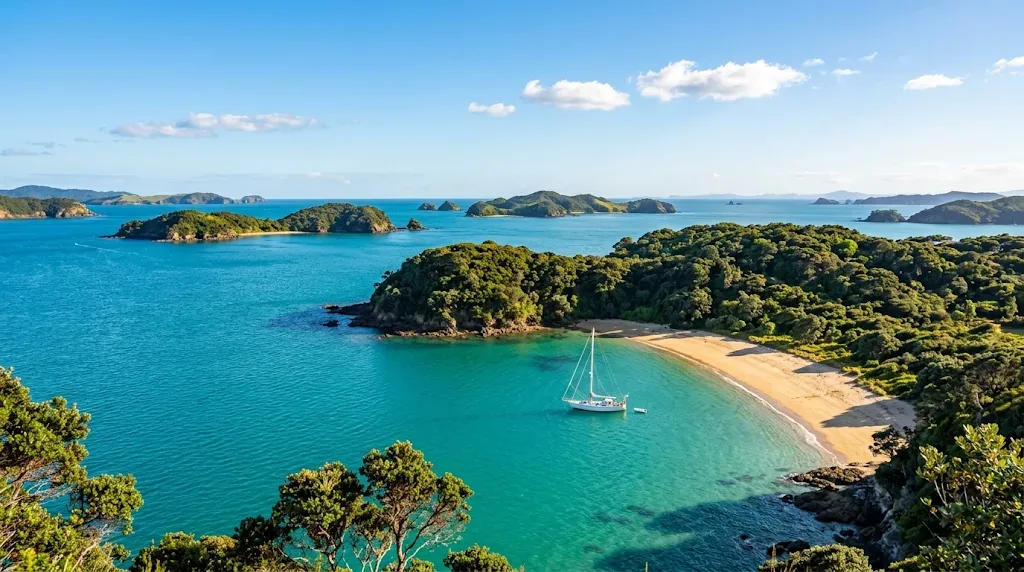
About three hours north of Auckland, the Bay of Islands is all sheltered coves, sailing trips and dolphin cruises, with the Waitangi Treaty Grounds a short drive from Paihia. We do not have a data city there, so the closest guide is Auckland, and Northland is usually a little warmer. Go in January to March for swimming and boat days. In winter many tours run a reduced schedule and the sea is cold, so it is a much quieter, greener place.
Rotorua, and on to Taupo and Tongariro
Rotorua smells faintly of sulphur and nobody minds for long. Geysers, mud pools, hot springs and some of the best places in the country to learn about Maori culture are all within a short drive. Summer is warm here: January and February both average 72.9°F (22.7°C). Our favourite window is March, at 68.9°F (20.5°C) with 10 rainy days and 9.7 hours of sun, when the school holidays are over and the steam looks better on cool mornings. Check Rotorua in March for the detail.
Be honest with yourself about rain. Rotorua is the wettest of our four cities, at about 52.5 inches (1,333 mm) a year, and July brings 5.3 inches (135 mm) with humidity at 88%. Winter visits still work, because soaking in a hot pool on a cold night is half the point. Just do not expect dry days.
Lake Taupo is about an hour south, and beyond it the Tongariro Alpine Crossing, a full-day hike across a volcanic landscape. We have no figures for the mountain itself. The general rule is that the crossing is a summer hike, roughly December to March, and that the weather on the saddle can turn cold and windy even then. Outside that window it is an alpine route that needs winter skills or a guide.
Wellington
The capital is compact, hilly and windy, with the national museum Te Papa, a good coffee and food scene, and a harbour you can walk around in an afternoon. It is the coolest of our North Island cities. January averages 65.8°F (18.8°C) with 8 rainy days and 12.4 hours of sun, and February has the fewest rainy days, 7. Rain totals are low in summer, about 2.0 inches (51 mm) in January.
Winter is grey rather than harsh: July averages 53.2°F (11.8°C) by day and 47.7°F (8.7°C) at night, with 12 rainy days and only 6.7 hours of sun. Most travellers pass through Wellington on the way to the ferry across Cook Strait, and we think it deserves at least one full day. See Wellington in January for the summer numbers.
South Island: lakes, fiords and big skies
The South Island is where many of the best places to visit in New Zealand are found, and also where our data runs thin. Only Christchurch has figures. Everything west and south of it sits in or beyond the Southern Alps, which catch weather from the Tasman Sea and make the west far wetter than the east.
Nelson, Abel Tasman and Marlborough
Right across the strait from Wellington, the top of the South Island is known for golden beaches, the coastal track in Abel Tasman National Park, and the vineyards around Blenheim. We have no data here. It has a reputation as one of the sunnier parts of the country, and December to April is the usual season for kayaking and walking. Summer huts and campsites on the Abel Tasman track book up early.
Christchurch and Canterbury
Christchurch is the gateway for most South Island road trips, and it has a dry, sunny climate compared with the rest of the country. It gets about 25.9 inches (657 mm) of rain a year, half of Rotorua's total. January averages 70.5°F (21.4°C) and February 70.2°F (21.2°C) with only 6 rainy days, the fewest in our New Zealand data. Humidity is lower too, at 69 to 71% in summer.
The temperature swing is bigger, though. Even in February the low is 55.0°F (12.8°C), so evenings need a layer. In July the city averages 50.9°F (10.5°C) by day and 37.4°F (3.0°C) at night, and frost is common. Look at Christchurch in February for a summer trip, or Christchurch in July if you are flying in to ski.
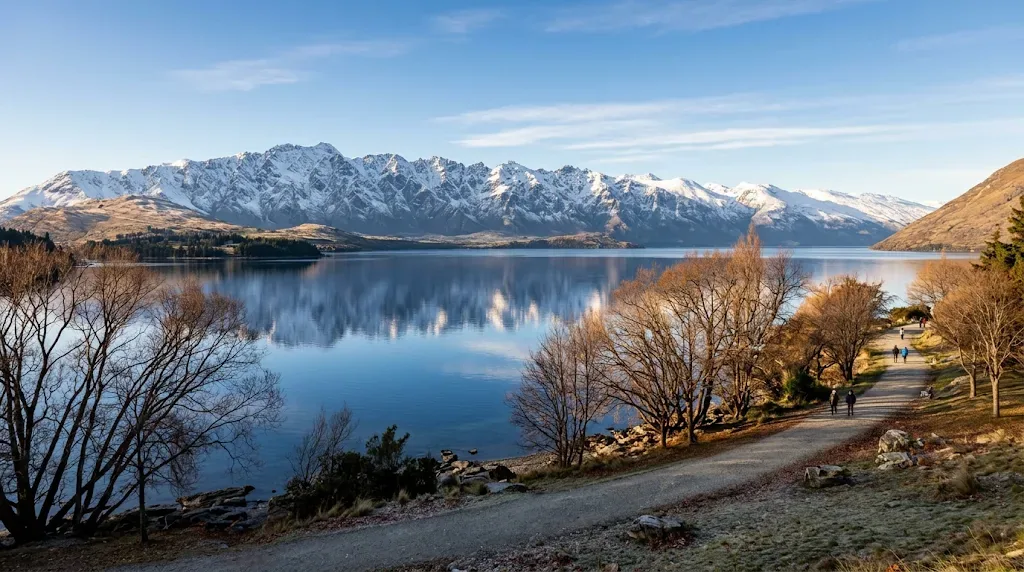
Queenstown and Wanaka
Queenstown is the country's adventure base, with jet boats, bungy, lake cruises and ski fields within an hour. Wanaka is quieter and, many visitors think, prettier. Neither has data in our set, and as inland lake towns they are usually colder than Christchurch in winter and drier than the west coast all year. There are really two seasons to pick from. December to March for hiking, cycling and long evenings by the lake. July and August for skiing, when the surrounding ranges are white and the town is busy again.
Milford Sound and Fiordland
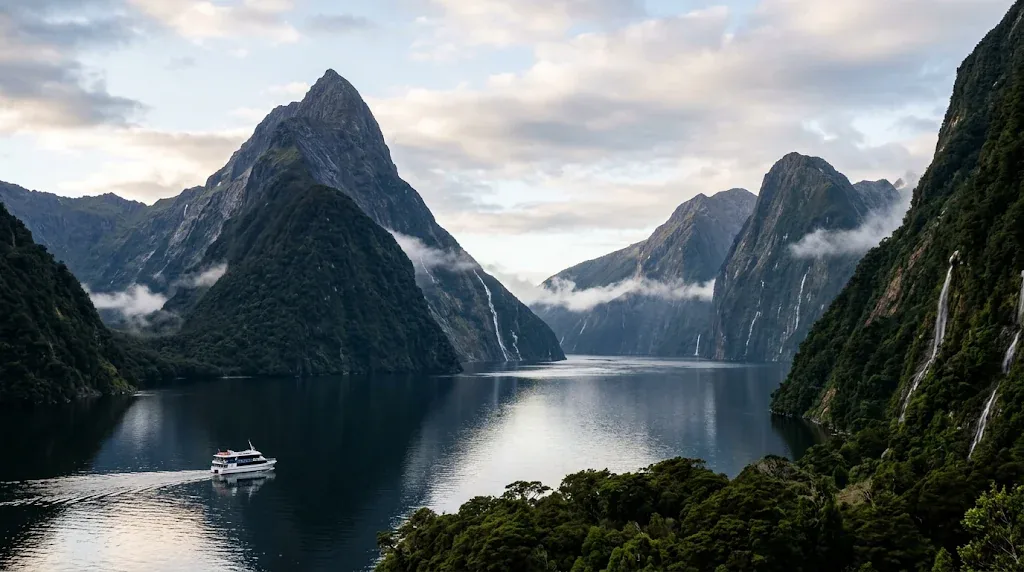
Milford Sound is one of the wettest inhabited places in New Zealand, and that is not a reason to skip it. Heavy rain turns the cliffs into hundreds of temporary waterfalls, and some people prefer it that way. We have no figures, so we will not pretend to know how many dry days you get. Go in December to March, when the road from Te Anau is clear and the days are longest, and build a spare day into your plan in case the cruise or the road is cancelled. In winter the Milford Road can close for avalanche risk.
The West Coast glaciers
Franz Josef and Fox glaciers sit close to the coast, which is part of what makes them unusual. The valley walks are open all year, and the best views of the ice usually come from a scenic flight, which depends entirely on cloud. Like Fiordland, the West Coast is wet in every season, and we have no data for it. Summer gives you the most daylight to wait for a clear morning.
Where we would not go, and when
- Northland beaches in July and August. Auckland, the nearest data point, has 14 to 15 rainy days in those months and highs under 58°F. The beaches are still pretty, but swimming is out.
- The Tongariro Alpine Crossing from May to October without winter gear or a guide.
- Milford Sound as a same-day trip from Queenstown in winter, when the road is long, dark early and sometimes shut.
- Rotorua in June to September if you hate rain. Those months have 12 to 13 rainy days and humidity of 84 to 89%.
- Popular summer spots between Christmas and late January if you dislike crowds. That is the main New Zealand summer holiday, and campsites, ferries and rental cars sell out.
Choosing places by what you want
Not every one of the best places to visit in New Zealand suits every traveller, and the right list depends on what you want from the trip.
Beaches and boats: the Bay of Islands, the Coromandel and Abel Tasman, from January to March. Auckland's 73.4°F (23.0°C) February high is about as warm as mainland New Zealand gets in our data.
Skiing: Queenstown, Wanaka and the Canterbury ski fields in July and August. Fly into Christchurch or Queenstown.
Hiking: the Great Walks and the Tongariro Alpine Crossing in December to March, with March often a little calmer once the local holidays end.
Avoiding crowds and saving money: shoulder months, especially March to April and November. Christchurch in November averages 64.4°F (18.0°C) with 11.6 hours of sun, and Rotorua 66.0°F (18.9°C). Prices are usually lower than in January.
Families: a North Island loop of Auckland, Rotorua and Taupo, with short drives and plenty to do on rainy days. February and March are easier than January, when every family in the country is on the road.
Driving distances fool a lot of people. The South Island in particular has long, slow roads, and the best places to visit in New Zealand are spread out. Two weeks covers one island well, or a fast highlight version of both. Our trip planner can help you line up stops against the weather for your dates.
What to pack
New Zealanders talk about four seasons in a day, and the data backs it up. In Christchurch the gap between the January high and low is almost 16 degrees Fahrenheit. Pack layers rather than bulk:
- A proper waterproof jacket, even in summer. Rotorua gets 4.2 inches (106 mm) of rain in January.
- A warm fleece or light down jacket for evenings, mountain passes and boat decks.
- Strong sunscreen, a hat and sunglasses. Summer sun is intense, and long days mean a lot of exposure.
- Walking shoes you have broken in, plus sandals for beaches and hot pools.
- For winter, thermal base layers and gloves, and chains if you plan to drive to a ski field.
If your summer days will mostly be in the high 60s, our notes on what to wear in 60 degree weather are a good match for Wellington and the South Island.
How we picked these places: a data note
The best places to visit in New Zealand on this list are the ones most first-time visitors put on a map, plus the regions that justify the extra driving. The numbers are WeatherApex 20-year averages from 2006 to 2025, built from historical weather records, and they describe a typical month, not a forecast for your trip. They cover four cities only: Auckland, Wellington, Christchurch and Rotorua. For Queenstown, Fiordland, the West Coast, Nelson and Northland we have described well-known patterns without inventing figures. Mountain and fiord weather changes quickly, so check the local forecast and road conditions each morning.
If you are also considering the other side of the Tasman, our best time to visit Australia guide pairs well with this one. Many travellers do one country in summer and save the other for a separate trip, which often means spending more time in the places that matter.
Frequently asked questions
What is the best month to visit New Zealand?
February is our pick for most of the country. Auckland averages 73.4°F (23.0°C), Christchurch 70.2°F (21.2°C) with only 6 rainy days, and Wellington has its fewest rainy days of the year, 7. March is nearly as good and less crowded once the summer holidays end.
Is New Zealand worth visiting in winter?
Yes, if you want skiing or quieter roads, but plan for cold and wet weather. In July Christchurch averages 50.9°F (10.5°C) by day and 37.4°F (3.0°C) at night, and Auckland has 14 rainy days. Queenstown and Wanaka are the main ski bases from July to August.
Should I visit the North Island or the South Island?
The North Island is warmer and easier for short trips, with Auckland, Rotorua and Wellington close together. The South Island has the lakes, fiords and mountains but longer drives. With two weeks, many travellers pick one island and see it properly.
Which part of New Zealand is driest?
Among our four data cities, Christchurch is driest at about 25.9 inches (657 mm) of rain a year and 106 rainy days. Rotorua is the wettest at about 52.5 inches (1,333 mm). Fiordland and the West Coast, which we have no data for, are known to be far wetter than either.