
Best Time to Visit Greece: The Two Windows Worth Waiting For
The best time to visit Greece is late May to mid June or September to mid October. Athens averages 77.7°F (25.4°C) in May and 83.3°F (28.5°C) in September, against 92.1°F (33.4°C) in July.
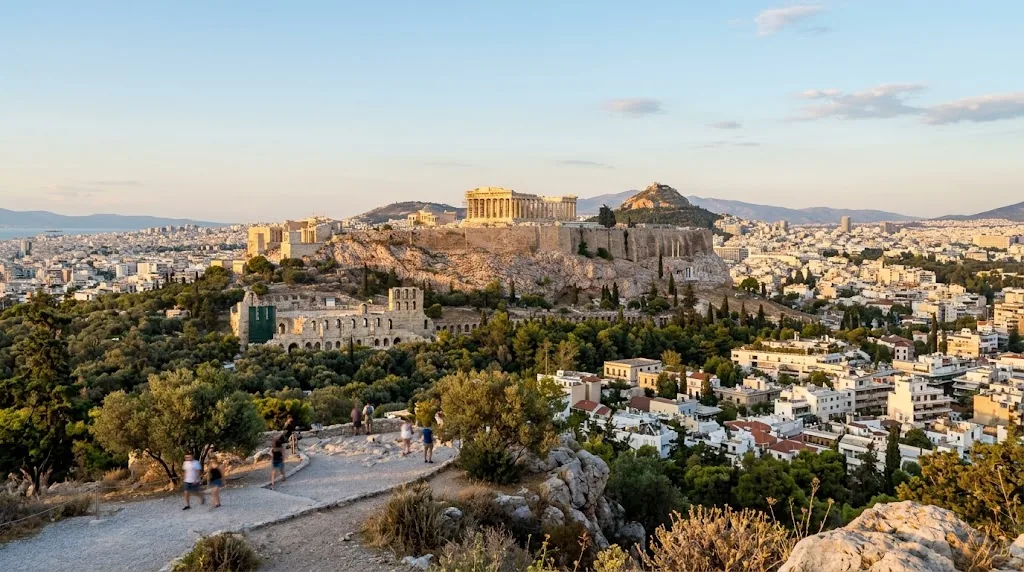
The best time to visit Greece is late May to mid June or September to mid October. In Athens in May the average high is 77.7°F (25.4°C) with 5 rainy days and 12.4 hours of sun, and in September it is 83.3°F (28.5°C) with just 3 rainy days, after the worst of the heat. July is the month we would avoid for sightseeing, because Athens averages 92.1°F (33.4°C) and the Acropolis has little shade.
Greece is a summer country in most people's heads, and the sea is at its warmest from July to September, so beach travellers have a longer window than city travellers. Our numbers come from two cities: Athens, which stands in for the south and most of the islands, and Thessaloniki in the north. We have no data for Crete, Santorini, Corfu or any other island, so we say clearly when we are describing them in general terms.
Best time to visit Greece: Athens and Thessaloniki by month
Highs and lows are daily averages. Rainy days are days with measurable rain. Thessaloniki is consistently cooler and wetter than Athens, and the gap is widest in winter.
| Month | Athens high | Athens low | Athens rainy days | Athens sun (hrs/day) | Thessaloniki high | Thessaloniki rainy days |
|---|---|---|---|---|---|---|
| January | 54.1°F (12.3°C) | 42.1°F (5.6°C) | 8 | 7.4 | 49.1°F (9.5°C) | 8 |
| February | 55.9°F (13.3°C) | 43.3°F (6.3°C) | 8 | 8.2 | 52.9°F (11.6°C) | 8 |
| March | 60.8°F (16.0°C) | 46.4°F (8.0°C) | 7 | 9.7 | 58.6°F (14.8°C) | 11 |
| April | 68.5°F (20.3°C) | 52.2°F (11.2°C) | 6 | 11.5 | 66.4°F (19.1°C) | 9 |
| May | 77.7°F (25.4°C) | 60.3°F (15.7°C) | 5 | 12.4 | 75.4°F (24.1°C) | 9 |
| June | 86.7°F (30.4°C) | 68.5°F (20.3°C) | 4 | 13.7 | 84.6°F (29.2°C) | 8 |
| July | 92.1°F (33.4°C) | 73.2°F (22.9°C) | 1 | 13.6 | 90.0°F (32.2°C) | 4 |
| August | 91.6°F (33.1°C) | 73.0°F (22.8°C) | 2 | 12.9 | 89.4°F (31.9°C) | 5 |
| September | 83.3°F (28.5°C) | 66.9°F (19.4°C) | 3 | 11.4 | 80.2°F (26.8°C) | 7 |
| October | 73.4°F (23.0°C) | 59.2°F (15.1°C) | 4 | 9.4 | 69.4°F (20.8°C) | 7 |
| November | 64.9°F (18.3°C) | 52.3°F (11.3°C) | 7 | 8.2 | 60.6°F (15.9°C) | 8 |
| December | 57.2°F (14.0°C) | 45.9°F (7.7°C) | 8 | 7.2 | 51.6°F (10.9°C) | 8 |
Late May to mid June: our first choice
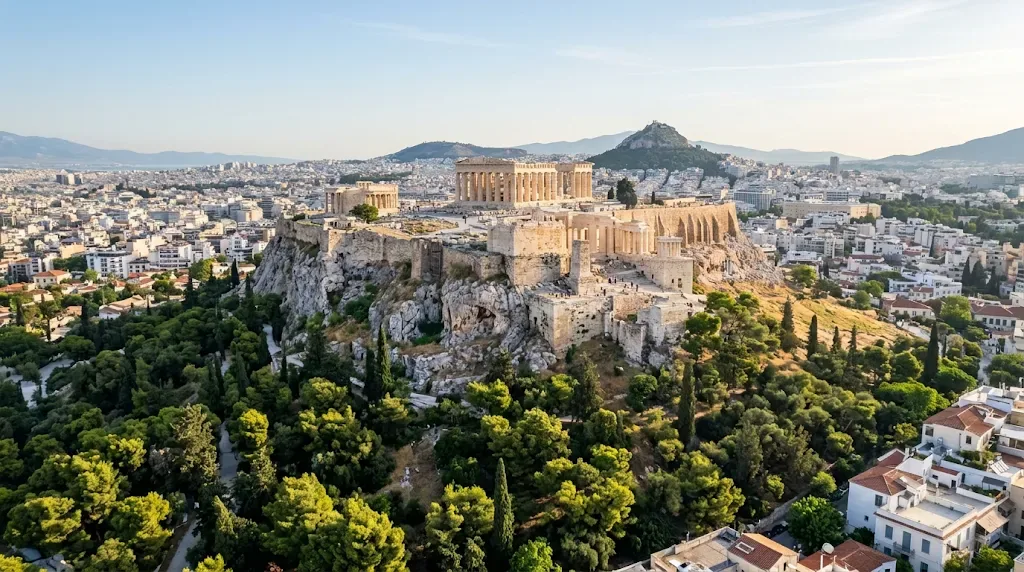
This is when we would go if we could pick any dates. May in Athens is warm without being draining, at 77.7°F (25.4°C) by day and 60.3°F (15.7°C) at night, and humidity drops to 57%. June climbs to 86.7°F (30.4°C), which is hot but manageable if you do your walking before lunch, and it has the longest days of the year at 13.7 hours of sun. Rain is rare in both months, with 5 and 4 rainy days.
The islands are opening up by late May. Ferries move to summer schedules, beach bars and tavernas reopen, and the crowds of July have not arrived yet. The sea is still cool early in the season, so swimmers who mind cold water should lean toward June. Thessaloniki is a good match for this window too: Thessaloniki in June averages 84.6°F (29.2°C), though with 8 rainy days, twice as many as Athens.
July and August: hot, busy and windy
High summer is when most people go, and the weather is very reliable. Athens has 1 rainy day in July and 2 in August. The trouble is heat. July averages 92.1°F (33.4°C) and August 91.6°F (33.1°C), with July nights averaging 73.2°F (22.9°C), and heatwaves well above those averages are common enough that ancient sites sometimes change their opening hours. Look at Athens in July before you plan a city-heavy trip.
On the islands, the summer wind called the meltemi blows from the north across the Aegean, often for days at a time, usually strongest in July and August. It keeps the Cyclades cooler than Athens, but it also makes sea crossings rough and can delay or cancel smaller ferries. August is also the peak of local holidays, and the middle of the month is busy on every island. If you go in summer, we would spend the time on a beach island, not in Athens, and book ferries and rooms well ahead.
September to mid October: warm sea, calmer days
September may be the best single month for a mixed trip. Athens averages 83.3°F (28.5°C) with 3 rainy days, the sea has been warming all summer, and the school holiday crowds have gone home. October is cooler at 73.4°F (23.0°C) and still has only 4 rainy days in Athens, with 9.4 hours of sun. Thessaloniki falls faster, to 69.4°F (20.8°C) in October.
The downside is that the season winds down from mid October. Island ferries cut back, and some hotels and tavernas on smaller islands close for the winter. Crete and Rhodes, in the far south, generally stay warmer and open longer than the Cyclades. Our month pages for Athens in September and Athens in October show both sides.
April and Easter: green and quiet
April is underrated. Athens averages 68.5°F (20.3°C), with 6 rainy days and 11.5 hours of sun, and the countryside is green with wildflowers. It is a fine month for Athens, the Peloponnese and Delphi, when walking around ancient sites is comfortable all day. It is too early for most people to swim.
Greek Orthodox Easter is the biggest holiday of the year. It falls in April in most years and sometimes in early May, and its date often differs from Western Easter. It is a wonderful time to see village traditions, but Greeks travel too, so ferries and rooms fill up that week.
November to March: Athens yes, islands mostly no
Winter in Greece is mild in the south and genuinely cold in the north. Athens averages 54.1°F (12.3°C) in January with 8 rainy days, and December is the wettest month at 2.9 inches (74 mm). It is a perfectly good time for a city break with museums and few queues. Thessaloniki is colder, at 49.1°F (9.5°C) by day and 35.4°F (1.9°C) at night in January, and the mountains in northern Greece get snow. See Thessaloniki in January for the detail.
We would not plan an island holiday from November to March. Many islands go quiet, ferry links shrink to a few a week, and the sea is too cold for most swimmers. The exceptions are the big islands with year-round populations, such as Crete, which works for walking and history in winter.
Islands versus the mainland
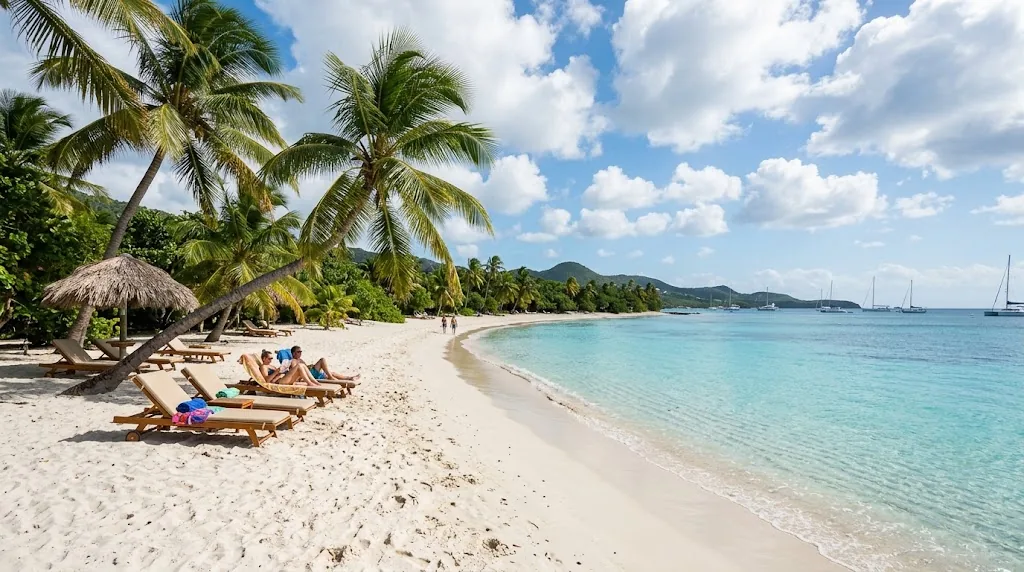
Because we have no island data, here is what we can say in general terms. The Cyclades, including Santorini, Mykonos and Naxos, are dry, sunny and windy in summer. The Ionian islands on the west side, such as Corfu, are greener and noticeably wetter in winter than the Aegean. Crete and Rhodes are the furthest south and have the longest warm season. If you want the most reliable beach weather in late spring or autumn, those southern islands are a better bet than the north.
On the mainland, the gap between Athens and Thessaloniki is a good guide to how things change as you go north. Thessaloniki gets about 27.3 inches (693 mm) of rain a year over 92 days, compared with 17.0 inches (432 mm) over 63 days in Athens. The full breakdown is on the Athens weather page.

Where we would not go, and when
Part of finding the best time to visit Greece is knowing which combinations to avoid. These are the ones we would steer people away from:
- Athens in mid July to mid August as the main event of a trip. With highs of 91.6°F to 92.1°F (33.1°C to 33.4°C), the city is best treated as a stopover of a day or two.
- Small Cyclades islands from November to March, when many hotels close and ferries are infrequent.
- Tight ferry connections in July and August, when the meltemi can cancel sailings. Keep a buffer day before an international flight.
- Thessaloniki and the north in January if you want mild weather. Lows of 35.4°F (1.9°C) are colder than many visitors expect.
- Easter week without bookings, since Greek families travel and ferries and rooms sell out.
Crowds, prices and the shape of the season
The weather and the tourist calendar line up almost perfectly in Greece, which is why the shoulder months are such good value. From November to March, Athens is a working city with short queues at the museums and the Acropolis, and island life is mostly local. April and May bring the first wave of visitors, along with ferry schedules that grow week by week. June is busy but not yet full.
Late July and August are the crunch. European school holidays, Greek holidays and cruise ship calls all overlap, and the most famous islands are crowded at sunset viewpoints and in the old towns. Prices for rooms and ferries are usually at their highest then. September keeps the summer weather and loses much of the crowd, and by late October the islands are emptying fast.
Our advice for a first trip: fly into Athens, spend two days there, then take a ferry to one or two islands rather than five. Fewer crossings mean less exposure to wind delays, and more time actually sitting by the sea, which is what most people came for.
Picking a month by what you want
There is no single best time to visit Greece for everyone, so here is how we would match the months to the trip you have in mind.
- Beaches and swimming: late June to September. The sea is warmest late in summer, and September has fewer crowds than August.
- Sightseeing in Athens and the ancient sites: April, May and October. Highs of 68.5°F to 77.7°F (20.3°C to 25.4°C) in spring are ideal for walking.
- Island hopping: June or September, when ferries run full schedules but the meltemi is usually less persistent than in midsummer.
- Lower prices: April, late October and the winter months in Athens. Summer prices on popular islands are usually highest in late July and August.
- Families: June and September, when the weather suits small children better than the July and August heat.
- Hiking: April, May and October. Midsummer heat makes long hikes in the Peloponnese or on Crete hard work.
If you are deciding between Greece and other spring destinations, our best places to visit in May compares several Mediterranean options, and for autumn see best places to visit in September.
What to pack
What you pack depends on the season you pick. For May to October, pack light, breathable clothes, a wide brimmed hat, sunglasses and strong sunscreen. Athens humidity is low in summer (45% in July), so the heat feels dry, but the sun is relentless. Shoes with good grip help on polished marble paths at ancient sites. A light layer is worth carrying for windy island evenings and ferry decks. Our guide to what to wear in 80 degree weather fits a September trip well.
From November to March, bring a warm jacket, a compact umbrella and closed shoes, especially if you are heading to Thessaloniki or the mountains. Churches and monasteries expect shoulders and knees to be covered, so a scarf or light cover-up is useful year round.
A note on our data
The figures in this guide are WeatherApex 20-year averages for Athens and Thessaloniki, built from historical weather records for 2006 to 2025. They show what a typical month looks like, not a forecast. Summer heatwaves in Greece can push temperatures well above these averages for several days at a time, and island weather can differ from Athens, especially when the wind is up. We have not given figures for any island because we do not have them.
Once you have picked your window, our trip planner can line up the weather for each stop. Our view on the best time to visit Greece comes down to this: book flights for early June or mid September, and plan the ferry legs around them.
Frequently asked questions
What is the best month to visit Greece?
September is our pick for a mixed city and island trip. Athens averages 83.3°F (28.5°C) with 3 rainy days, the sea is warm after the summer, and the August crowds have gone. Early June is a close second at 86.7°F (30.4°C) with 13.7 hours of sun.
Is Greece too hot in July and August?
For sightseeing, often yes. Athens averages 92.1°F (33.4°C) in July and 91.6°F (33.1°C) in August, with nights around 73.2°F (22.9°C), and heatwaves go higher. Beach islands are more comfortable, helped by the summer meltemi wind.
Is it worth visiting Greece in winter?
Athens is worth it for museums and ancient sites without queues, at 54.1°F (12.3°C) in January with 8 rainy days. Most small islands are very quiet from November to March, with reduced ferries and many hotels closed. Thessaloniki is colder, with January lows of 35.4°F (1.9°C).
When does it rain most in Greece?
Rain falls mainly from November to March. In Athens December is the wettest month at 2.9 inches (74 mm) over 8 days, while July has 1 rainy day. Athens gets about 17.0 inches (432 mm) a year, and Thessaloniki about 27.3 inches (693 mm).