Best Time to Visit Thailand: Monthly Weather & Travel Guide
The best time to visit Thailand is November to February, when Bangkok highs average 87.6°F to 88°F with only 3 to 9 rainy days per month.
What is the best time to visit Thailand?
The best time to visit Thailand is between November and February, when Bangkok averages mild highs of 87.6°F to 88°F and low rainfall of just 3 to 9 wet days per month. If you plan your trip outside these cool winter months, prepare for heavy downpours or sweltering humidity that frequently tops 93.7°F.
How do you map out a trip to Southeast Asia without landing in the middle of a torrential downpour? I get this question from American travelers every single week. Planning a flight across the Pacific is a massive investment of time and money, so getting the weather right matters tremendously. Thailand does not follow the standard four seasons you know back home in the United States. Instead, tropical monsoon systems split the year into three distinct windows. Your experience will depend almost entirely on how you feel about intense tropical heat, sudden afternoon cloudbursts, and heavy tourist crowds.
Before you start picking out hotels or mapping routes, take a hard look at the actual numbers. Bangkok sits right in the central plain of the country, making its monthly climate figures a reliable benchmark for overall conditions across mainland Thailand.
| Month | Avg High (°F / °C) | Avg Low (°F) | Rainy Days | Sunshine (hrs/day) |
|---|---|---|---|---|
| January | 87.8°F / 31°C | 71.2°F | 3 | 10.5 |
| February | 90.1°F / 32.3°C | 74.7°F | 5 | 10.7 |
| March | 92.3°F / 33.5°C | 78.1°F | 7 | 10.7 |
| April | 93.7°F / 34.3°C | 80.1°F | 12 | 11.0 |
| May | 91.9°F / 33.3°C | 79.7°F | 21 | 10.2 |
| June | 90.3°F / 32.4°C | 78.8°F | 23 | 9.5 |
| July | 88.5°F / 31.4°C | 78.1°F | 24 | 8.3 |
| August | 88.7°F / 31.5°C | 77.9°F | 24 | 8.2 |
| September | 87.6°F / 30.9°C | 77.0°F | 26 | 8.1 |
| October | 87.3°F / 30.7°C | 75.9°F | 22 | 9.0 |
| November | 88.0°F / 31.1°C | 74.5°F | 9 | 9.9 |
| December | 87.6°F / 30.9°C | 71.8°F | 3 | 10.2 |
Note: Data represents 20-year climate averages from 2006 to 2025.
What is the best time to visit Thailand by season?
Understanding the three regional climate cycles makes itinerary planning far easier. Mainland Thailand goes through a cool dry period, a stifling hot period, and a long rainy period. While these patterns fit Bangkok, central provinces, and northern mountain ranges quite closely, southern islands follow a different drumbeat due to surrounding ocean waters.

The Cool and Dry Season (November to February)
Travelers swarm the country during these months for obvious reasons. Clear skies, moderate gulf breezes, and comfortable evening temperatures mean walking around historic temples won't leave you completely drained. You can browse outdoor street food stalls without feeling like you are standing inside an oven.
Across central regions like Bangkok, daytime highs range from 87.6°F to 90.1°F. Nighttime lows drop down to 71.2°F in peak winter, giving you a noticeable breather after a full day out. Up north in mountain valleys near Chiang Mai, evening temperatures cool off even more, so a light long-sleeve shirt actually feels good. Down on the coasts, both sides of the southern peninsula get sunny days, though eastern Gulf islands can still pick up leftover rain early in November.
The catch? High season means heavy crowds. Popular beaches get packed quickly, boutique hotels fill up months in advance, and flight prices hit annual peaks. If you prefer quiet streets, December might feel overwhelming.
The Hot Season (March to May)
Spring turns up the heat dramatically. Central daytime highs reach 92.3°F in March and peak at an intense 93.7°F in April. If you come from an arid climate like Arizona or Utah, those numbers might not look wild, but combined with thick tropical humidity and nights that hold around 80.1°F, the air feels heavy.
Midday sightseeing during these months requires serious pacing. If you wander out at noon, you will find yourself ducking into air-conditioned convenience stores every twenty minutes. April brings Songkran, the Thai New Year celebration. The entire country engages in a giant multi-day water fight, which happens to be a fantastic way to wash away the spring heat.
The Rainy Season (June to October)
Monsoons sound intimidating, but the actual daily weather is usually far more manageable than expected. Rain ramps up slowly through June and July before hitting its stride in September and October. In September, central areas record an average of 26 rainy days. Yet rain rarely falls continuously all day long. A typical day brings bright morning skies followed by a sharp, heavy hour of rain in the late afternoon, leaving cooler air in its wake.
Honestly, I'd skip September entirely if you hate high humidity and muddy footpaths. If you pack a light poncho and don't mind waiting out a storm in a local cafe, wet season travel brings serious benefits: cheaper flights, quiet beaches, emerald countryside, and heavy resort discounts. Just keep in mind that rough ocean swells can interrupt island ferry routes along the western coast.
How does weather vary across Thailand's top travel destinations?
Assuming the weather is identical across the entire country is a quick way to derail a vacation. Thailand stretches almost 1,000 miles north to south, meaning mountain climate zones behave quite differently from low-lying islands.
Northern Thailand (Chiang Mai, Chiang Rai, Pai)
Northern Thailand is landlocked and mountainous, causing noticeable daily temperature swings. From November through February, northern provinces experience some of the pleasantest travel conditions in Asia. Days are warm and dry, while mountain nights routinely drop into the 50s. It feels wonderfully fresh compared to the coast.
There is a major drawback in spring, though. From late February through early April, agricultural crop burning combines with dry mountain air to create a thick haze across northern valleys. Air quality in Chiang Mai can get rough during this period. If your vacation falls in March or April, focus on southern beaches instead.
Central Thailand (Bangkok, Ayutthaya, Kanchanaburi)
Central Thailand remains warm, flat, and humid throughout the year. Concrete buildings and endless street traffic turn Bangkok into a urban heat trap. When monthly charts list an April high of 93.7°F, city pavement makes it feel closer to 105°F.
When monsoons peak between August and October, central river basins take on massive runoff from the north. Low streets in Bangkok and ruins around Ayutthaya see frequent flash flooding. Water drains off eventually, but a heavy 4:00 PM downpour will paralyze evening traffic across the capital.
Southern Thailand Beaches & Islands
Heading south for white sand and turquoise ocean water? You need to know that southern Thailand is divided into two distinct marine zones: the Andaman Sea on the west and the Gulf of Thailand on the east. Their rainy seasons occur at different times of the year.
- Andaman Coast (Phuket, Krabi, Koh Phi Phi, Koh Lanta): Dry weather prevails from November through April, producing calm seas ideal for boat trips and sea kayaking. The southwest monsoon brings rough waves, strong sea currents, and frequent storms from May through October. Many smaller island ferries pause operations during these summer months.
- Gulf Coast (Koh Samui, Koh Phangan, Koh Tao): Gulf islands follow a different schedule. While Andaman beaches take on summer rain in June and July, Gulf shores remain relatively dry and sunny. Heavy monsoon rains do not hit Koh Samui until late September, running through November. If a summer beach trip in July or August is your goal, the Gulf side is your best target.
Month-by-month guide: What to expect throughout the year
January
January brings dependable climate conditions across mainland Thailand. Central regions enjoy average highs of 87.8°F / 31°C alongside night lows of 71.2°F. Rain is rare, averaging just 3 rainy days, while daily sunshine hits 10.5 hours per day.
What does it feel like? Warm, clear, and easy to explore. You can spend full days touring historic sites without heat exhaustion setting in. Pack lightweight linen shirts, breathable shorts, comfortable walking shoes, and a light wrap for temple dress codes. The downside is clear: tourist crowds peak everywhere, meaning long lines at famous temples and premium prices for hotels. Book your flights and stays months ahead. See more stats on our Bangkok January weather page.
February
February stays dry while afternoon warmth ticks up slightly. Central daytime highs average 90.1°F / 32.3°C, with nighttime lows around 74.7°F. Rainfall remains low with only 5 rainy days, and daily sunshine reaches 10.7 hours per day.
Conditions are fantastic for island hopping, as waters on both sides of the southern peninsula remain peaceful and clear. Northern mountain regions start warming up, making early morning hikes enjoyable before afternoon sun sets in. Expect busy beach resorts and steady tour crowds everywhere you go. Get full details on our Bangkok February weather page.
March
March brings a clear shift into spring heat. Central afternoon averages rise to 92.3°F / 33.5°C, while night temperatures hold at 78.1°F. Rain stays light with 7 rainy days, accompanied by 10.7 hours of bright sunshine daily.
Walking around city streets after midday gets demanding. Do your walking tours, market visits, and temple sightseeing before 10:30 AM, then move inside for air-conditioned lunch spots or museum visits. Pack breathable fabrics, wide-brim hats, polarized sunglasses, and electrolyte powder to stay hydrated. On the negative side, northern provinces begin experiencing seasonal agricultural smoke haze, so inland mountain trips are less appealing. Learn more on our Bangkok March weather page.
April
April ranks as the hottest month on the calendar. Central highs top out at an average of 93.7°F / 34.3°C, with overnight lows holding near 80.1°F. Moisture levels build toward the coming monsoon, bringing 12 rainy days alongside 11 hours of daily sunshine.
Is April worth it? If you come for Songkran from April 13 to 15, the energy is unbelievable. Millions of people hit the streets with water buckets and hose sprayers, turning intense spring heat into a massive national party. Pack quick-drying clothes, plastic waterproof pouches for your phone and cash, and water sandals. If you dislike extreme heat or getting soaked in public, stay home this month. Check regional specifics on our Bangkok April weather page.
May
May functions as a transition bridge into the rainy season. Afternoon highs ease down slightly to 91.9°F / 33.3°C, with night lows staying near 79.7°F. Rainy days jump sharply to 21 days, though daily sunshine still averages a strong 10.2 hours per day.
Rain storms usually hit as sudden afternoon downpours rather than all-day washouts. You can still schedule a full morning of activities if you keep afternoon plans flexible. Tourist numbers drop steeply once Songkran wraps up, so hotel prices drop and major sights grow quiet. Pack a compact travel umbrella and quick-drying shoes. Read more on our Bangkok May weather page.
June
June opens the early shoulder season for monsoon weather. Central highs average 90.3°F / 32.4°C, paired with overnight lows of 78.8°F. Rainy days increase to 23 days per month, while daily sunshine settles at 9.5 hours per day.
Honestly, June is a hidden value month if you stay on the Gulf coast. While western Andaman beaches like Phuket face rough seas and wind, eastern islands like Koh Samui remain mostly warm and dry. Major temple sites in Bangkok are blissfully uncrowded. The main downside is rising humidity, which makes simple walking feel sweaty fast. Explore monthly details on our Bangkok June weather page.
July
July brings typical mid-summer monsoon patterns across mainland provinces. Central highs soften to 88.5°F / 31.4°C, with night lows hovering around 78.1°F. Expect roughly 24 rainy days per month, with daily sunshine averaging 8.3 hours per day.
Rain shows up predictably in the late afternoon. You can easily hit outdoor markets or historic ruins in the morning, retreat to a café or spa when clouds build at 3:00 PM, and head back out for dinner after the sky clears. European family holidays bump crowd numbers up slightly on Gulf beaches. Pack light rain ponchos, breathable clothing, and water-resistant footwear. See full statistics on our Bangkok July weather page.
August
August matches July in temperature and moisture levels. Central highs hold at 88.7°F / 31.5°C, while night temperatures average 77.9°F. Rain stays steady at 24 rainy days per month, leaving daily sunshine at 8.2 hours per day.
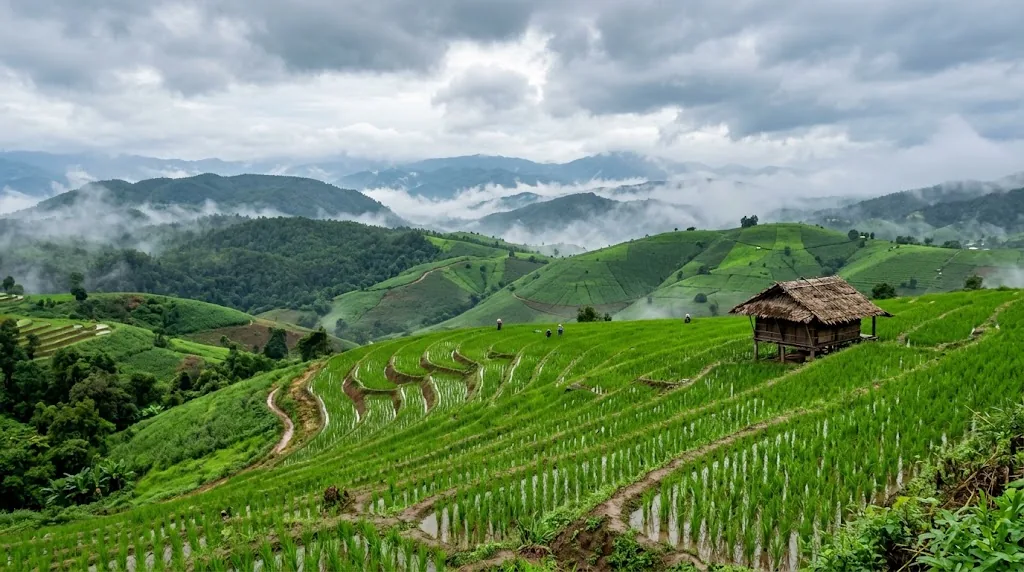
Nature lovers appreciate August because inland waterfalls run at full force and rural rice fields across central and northern provinces reach a vibrant green. On the downside, ocean conditions along the western coast remain choppy, making small boat trips risky or canceled altogether. Keep your plans flexible and stay focused on culture, food tours, and spa visits. Plan ahead using our Bangkok August weather page.
September
September stands as the wettest month of the entire year for central and northern regions. Central highs sit at 87.6°F / 30.9°C, with night lows around 77.0°F. Rainy days hit an annual high of 26 days per month, bringing daily sunshine down to 8.1 hours per day.
Should you book a trip in September? Only if saving money is your top goal. Street flooding in low-lying parts of Bangkok happens often, and coastal weather along the Andaman side is consistently gray and windy. However, luxury urban resorts drop their rates significantly. If you want high-end hotels at low prices and don't mind indoor itineraries, September works. Review wet season trends on our Bangkok September weather page.
October
October serves as late monsoon transition period. Rain clouds begin clearing out from northern and central provinces as cool air arrives from the north. Highs average 87.3°F / 30.7°C, with night lows dropping to 75.9°F. Expect 22 rainy days overall, though daily sunshine bounces back up to 9 hours daily.
Early October remains soggy, but late October delivers fantastic shoulder-season conditions. The countryside is lush, hotel rates remain reasonable, and crowd levels are low before winter tourists arrive. Honestly, I'd book the second half of the month if you want lower prices without nonstop rain. Learn more on our Bangkok October weather page.
November
November sees dry, comfortable weather return to mainland regions. Afternoon highs average 88.0°F / 31.1°C, while night lows drop to a pleasant 74.5°F. Rainy days fall off sharply to just 9 days, while daily sunshine rises back to 9.9 hours daily.
This month brings the famous Loy Krathong and Yi Peng lantern festivals, where thousands of lit paper lanterns fill evening skies in Chiang Mai. Temperatures are comfortable, countryside scenery is green from summer rains, and heat feels easy to manage. The downside? Hotel prices start climbing quickly as winter approaches. Check seasonal details on our Bangkok November weather page.
December
December brings peak dry season conditions from top to bottom. Central highs average a comfortable 87.6°F / 30.9°C, with night lows dropping to 71.8°F, bringing cool breezes to outdoor night markets. Rain is practically non-existent with only 3 rainy days, while daily sunshine hits 10.2 hours per day.
Conditions are prime for every activity imaginable, whether you are hiking northern trails, exploring Bangkok street food, or scuba diving in southern waters. Expect high resort rates and crowded tourist spots around Christmas and New Year. Secure resort bookings and internal domestic flights as early as possible. Read more on our Bangkok December weather page.
How do you pick the best time to visit Thailand for your budget and travel style?
Balancing cost against weather performance is the real key to planning a successful trip. Here is how Thailand's travel seasons align across key travel factors.
| Season | Months | Weather Summary | Crowd Levels | Overall Budget |
|---|---|---|---|---|
| Peak Dry Season | Nov – Feb | Warm days (87.6°F–90.1°F), cool nights, minimal rain (3–9 days) | Very High | Most Expensive |
| Hot Season | Mar – May | Very hot (91.9°F–93.7°F), rising humidity, moderate rain (7–21 days) | Moderate | Moderate Savings |
| Monsoon Season | Jun – Oct | Warm (87.3°F–90.3°F), high humidity, frequent rain (22–26 days) | Low | Cheapest Rates |
If your priority is sunny beach weather without worrying about sudden rainstorms, stick to November through February. You will pay top rates for accommodations and deal with busy attractions, but the weather rewards you with clear skies and manageable humidity.
If you want lower prices without sacrificing your entire vacation to rain, target shoulder months like May, June, or late October. Transpacific flights are far cheaper, top hotels drop their room rates, and popular spots like Bangkok's Grand Palace are pleasant to navigate. You will hit occasional afternoon rain showers, but for budget-conscious travelers, the savings are real.
For help organizing your schedule and routing around monsoon shifts, test out our interactive trip planner tool to build an itinerary tailored to your exact travel dates.
Practical survival tips for Thailand weather
Smart packing makes tropical travel far more enjoyable. Here are proven strategies for handling the climate like an experienced traveler.
- Choose lightweight natural fabrics: Pack linen, loose cotton, or moisture-wicking synthetic gear. Leave heavy denim jeans at home because they take forever to dry in tropical air. Keep in mind that visiting Buddhist temples requires covering both shoulders and knees, so bring lightweight long pants or a maxi dress.
- Adjust your daily routine: Work around heat by starting your day early. Do your walking tours and outdoor sightseeing between 7:30 AM and 10:30 AM. Move inside during peak afternoon heat, then head back out around 5:00 PM when temperatures begin to ease.
- Stay topped up on electrolytes: Constant sweating in 90°F heat drains your system quickly. Grab cheap electrolyte powder packs from any local 7-Eleven and mix them into your water bottle to keep your energy up throughout the day.
- Keep rain protection in your daypack: Even during dry months like February, sudden pop-up showers happen. Pack a compact travel umbrella or lightweight poncho in your bag instead of heavy rain coats that feel uncomfortably hot.
- Verify local island conditions before transferring: Regional marine weather changes fast. Always double-check current ferry schedules and sea forecasts through official channels like the Tourism Authority of Thailand or historical climate updates from NOAA NCEI before heading out on island transfers during shoulder months.
Thailand remains an incredible destination every month of the year. Pick the climate window that fits your personal comfort level, pack light, stay flexible, and you will have an unforgettable trip.
Frequently asked questions
What is the best time to visit Thailand for clear sunny weather?
The best time to visit Thailand for clear sunny skies is between November and February. During this cool dry season, central areas like Bangkok average mild highs around 87.6°F to 88.0°F with just 3 to 9 rainy days monthly, offering ideal beach and sightseeing conditions across the country.
Which month is the hottest month to visit Thailand?
April is statistically the hottest month in Thailand. In Bangkok and central plains, average daily high temperatures peak at 93.7°F (34.3°C) with overnight lows staying around 80.1°F. Combined with high tropical humidity, real-feel midday temperatures frequently exceed 100°F across major inland urban regions.
Is it worth visiting Thailand during the rainy monsoon season?
Yes, visiting during the monsoon season (June to October) offers substantial savings on flights and luxury hotels with far fewer crowds. While September sees up to 26 rainy days in central areas, rain usually falls in brief, intense afternoon downpours rather than continuous all-day storms.
When is the burning season in Northern Thailand?
The agricultural burning season in Northern Thailand typically runs from late February through early April. During this window, smoke from crop clearance gets trapped in mountain valleys around Chiang Mai, causing poor air quality. Travelers visiting in spring should head south to coastal islands instead.