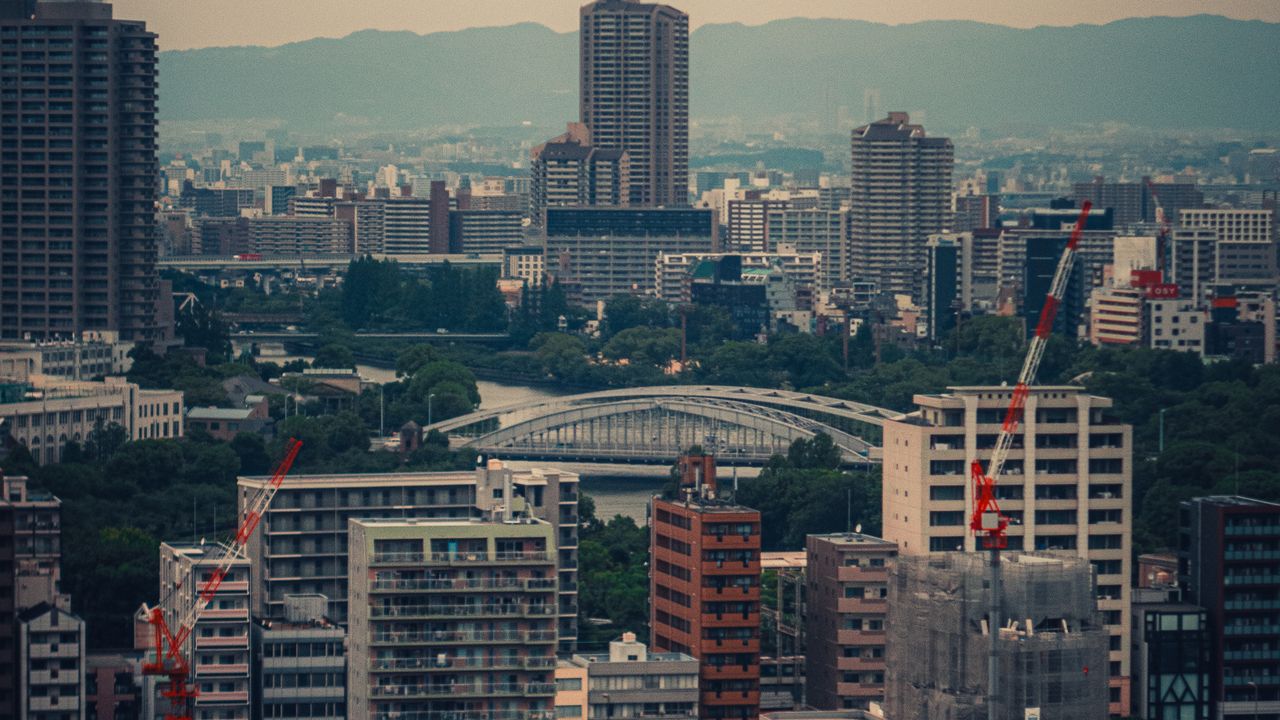
What January feels like in Osaka
January is the coldest stretch of winter in Osaka. The daytime air has a chill to it, though it is rarely bitter. There is little difference between day and night: nights are cold, and evenings feel much like the afternoon. Moisture in the air gives the cold a damp edge.
Rain in Osaka in January
Most days stay dry; rain arrives about one day in 5. Each rainy day adds about 8.5 mm (0.3 in), a proper wetting rather than a sprinkle. That is lighter than the city's yearly norm of about 12.7 mm per rainy day. January is Osaka's driest month of the year.
Daylight and sunshine in January
Mid-month, Osaka gets 10 h 4 min of daylight, from sunrise near 7:05 am to sunset near 5:09 pm. The days are stretching out — 13 min more daylight than mid-December. About 78% of daylight hours are sunny; in short, there are plenty of bright spells.
How January compares to the rest of the year
In Osaka's temperature order, January sits as the coolest month. Compared with December, afternoons are 2.4°C (4.3°F) cooler, with 14 mm less rain. This is the low point, and February starts to warm up. By February, typical highs are 9.7°C (49.5°F).
Who January suits
- Sightseeing: less ideal — it is cold for long walks.
- Parks & outdoor: less ideal — too cool to sit outside for long.
- Beach: less ideal — the sea air is too cool.
Tips for visiting Osaka in January
Warm Layers
A proper winter coat, with gloves and a hat for early starts.
Sunglasses
Frequent sunshine — sunglasses and a light hat.
Quick questions
How warm is Osaka in January?
Afternoons average 8.6°C (47.5°F) and nights about 1.1°C (34°F) — chilly by most people's standards. It is the coolest month of the year.
Does it rain a lot in Osaka in January?
Not especially. There are about 6 rainy days (51 mm), mostly moderate rain.
What should I wear in Osaka in January?
Pack warm layers and sunglasses. There is little need to change for the evening.
Is January or February better for visiting Osaka?
January, narrowly: it ranks #8 of 12 among Osaka's months, against #10 for the other. February is warmer and has more rainy days.