What January feels like in Ankara
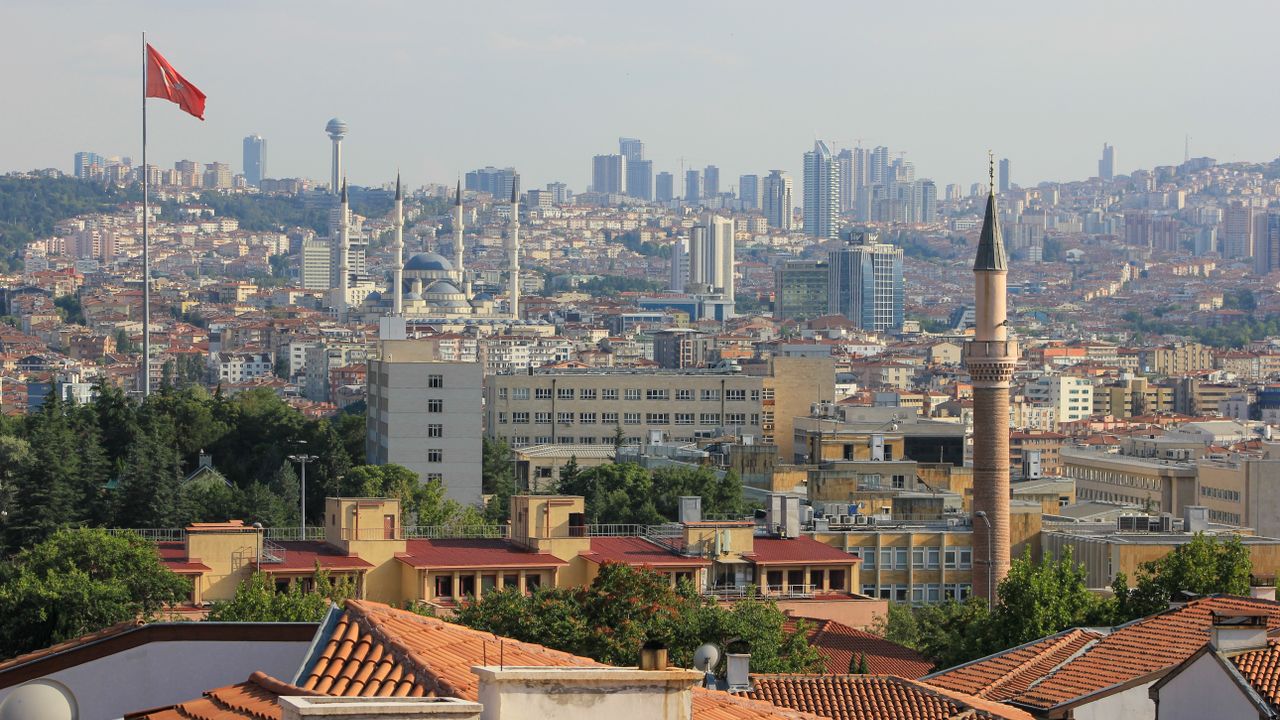
January is the coldest stretch of winter in Ankara. Afternoons reach about 5.6°C (42.1°F), the coolest of the year: coat-and-scarf weather from morning to evening. Nights fall to about -2.6°C (27.3°F), 8.2°C (14.8°F) below the afternoon, so frost is common. Humidity averages 76%, more humid than usual here: damp air makes the cold feel rawer.
Rain in Ankara in January
Expect rain on about 10 of 31 days, with dry spells in between, making this Ankara's wettest month; wet days bring about 5.7 mm (0.2 in), steady rain rather than a passing shower, close to the city's usual 5.3 mm. Some of it may fall as sleet or snow.
Daylight and sunshine in January
Short days: in mid-January, Ankara gets 9 h 38 min of daylight, from sunrise near 8:08 am to sunset near 5:46 pm, 16 min more than in mid-December. Model estimates put sunshine at about 73% of daylight, on the duller side of the year here, so expect bright spells between the wet days.
How January compares to the rest of the year
January is the coolest month of the year; afternoons are 2.2°C (4°F) cooler than in December, with 6 mm more rain. This is the low point: February warms up to about 8.1°C (46.6°F), and it gets drier.
January in Ankara: what 20 years show
Based on monthly averages from 2006–2025, not daily records.
Usual range
In most years January averages 2–8°C (36–47°F) in the afternoon, with 23–104 mm of rain or snow. Rain or snow falls about one day in 3 in an average January.
Records
| Record | Year | Avg high | Rain | Rainy days |
|---|---|---|---|---|
| Warmest January | 2014 | 9.3°C (48.7°F) | 30 mm | 5 |
| Coldest January | 2012 | 1.7°C (35.1°F) | 119 mm | 14 |
| Wettest January | 2012 | 1.7°C (35.1°F) | 119 mm | 14 |
| Driest January | 2008 | 3.1°C (37.6°F) | 10 mm | 5 |
Odds across years
In 5 of 20 years, January had 12 or more wet days. In 4 of 20 years, it had under 35 mm of rain or snow. In 5 of 20 years, the average high reached 7°C (44.6°F) or more. In 6 of 20 years, it stayed below 4°C (39.2°F).
January 2026 was the 11th warmest January since 2006, out of 21 years (6.2°C (43.2°F), 70 mm, 12 wet days).
Who January suits
- Sightseeing: less ideal — it is cold for long walks.
- Parks & outdoor: less ideal — too cold to sit outside for long.
Tips for visiting Ankara in January
Versatile Layers
Mornings and evenings are cold compared with midday, so dress in layers.
Rain Protection
Rain or snow is frequent, so bring a waterproof jacket and boots with grip.
Warm Layers
A proper winter coat, with gloves and a hat for early starts.
Sunglasses
Bright spells are common, so bring sunglasses and a cap.
What to wear in Ankara in January
These are estimates from monthly averages, so read each temperature as "around".
By time of day
- Morning, around -1°C (30°F): a warm jacket and a hat, with a layer underneath.
- Afternoon, around 6°C (42°F): keep the jacket for walking; you can drop the extra layer.
- Evening, around 1°C (35°F): put the layer back on.
Cold year or warm year
In a cold year like 2012, January highs averaged only 1.7°C (35.1°F), so one extra warm layer is worth packing. In a warm year like 2014 they reached 9.3°C (48.7°F), and a lighter layer would do.
Packing for 7 days
Expect about 2 wet days in a week, as rain or snow, with about 5.7 mm (0.2 in) on each.
- A warm jacket and a hat
- 2 warm mid-layers
- A packable rain jacket
- Sunglasses and a light hat
- Warm boots with grip
Travelling on specific dates? Check your exact dates in the Trip Planner.
Quick questions
How warm is Ankara in January?
Afternoons average 5.6°C (42.1°F) and nights about -2.6°C (27.3°F), cold by most people's standards; it is the coolest month of the year.
Does it rain a lot in Ankara in January?
Yes: rain falls about one day in 3 and totals about 57 mm, so an umbrella is worth carrying. Some of it may fall as sleet or snow.
What should I wear in Ankara in January?
Pack versatile layers, rain protection, warm layers and sunglasses, plus a layer for cold mornings and evenings.
Is January or February better for visiting Ankara?
February scores slightly better on our climate ranking (#10 of 12 vs #12). February is warmer and has fewer rainy days.