Best Time to Visit Turks and Caicos: Weather by Month and Storm Season
The best time to visit Turks and Caicos is February to April, when Providenciales gets just 0.9 to 1.2 inches of rain a month and up to 11.9 hours of sun. October is the wettest month at 4.7 inches.
The best time to visit Turks and Caicos is February to April. Providenciales averages only 0.9 to 1.2 inches (22 to 31 mm) of rain a month in that window, with 6 to 7 rainy days, highs of 77F to 78F (25C to 26C) and up to 11.9 hours of sunshine a day. April is our favorite month of all: it is the sunniest of the three, it comes after the winter price peak, and it is months away from the stormy end of hurricane season.
Turks and Caicos is one of the most consistent beach destinations in the Caribbean. It is low, flat and fairly dry, so it does not get the heavy tropical downpours of the mountainous islands further south. Highs only move from 77F to 84F (25C to 29C) through the whole year. That means there is no bad month for warmth. The real variables are storm risk, humidity, crowds and price.
Best time to visit Turks and Caicos: monthly averages
These are WeatherApex 20-year averages (2006 to 2025) for Providenciales, the island most visitors fly into and where Grace Bay is. The other inhabited islands, including Grand Turk, North Caicos and Middle Caicos, follow a similar pattern.
| Month | Avg high F (C) | Avg low F (C) | Rain (in / mm) | Rainy days | Sun hours per day | Humidity |
|---|---|---|---|---|---|---|
| January | 77.4 (25.2) | 75.2 (24.0) | 1.4 / 35 | 7 | 9.9 | 76% |
| February | 77.0 (25.0) | 74.8 (23.8) | 0.9 / 22 | 6 | 10.8 | 76% |
| March | 77.0 (25.0) | 74.5 (23.6) | 1.2 / 30 | 6 | 11.5 | 75% |
| April | 78.1 (25.6) | 75.9 (24.4) | 1.2 / 31 | 7 | 11.9 | 77% |
| May | 80.1 (26.7) | 77.5 (25.3) | 3.0 / 75 | 12 | 11.7 | 80% |
| June | 82.4 (28.0) | 79.9 (26.6) | 2.1 / 54 | 9 | 12.0 | 81% |
| July | 83.1 (28.4) | 80.8 (27.1) | 1.9 / 50 | 9 | 12.1 | 80% |
| August | 83.7 (28.7) | 81.1 (27.3) | 3.3 / 84 | 10 | 11.6 | 80% |
| September | 83.8 (28.8) | 80.8 (27.1) | 4.5 / 115 | 15 | 11.2 | 79% |
| October | 82.9 (28.3) | 79.9 (26.6) | 4.7 / 118 | 16 | 10.3 | 79% |
| November | 80.6 (27.0) | 77.9 (25.5) | 3.3 / 84 | 13 | 10.3 | 77% |
| December | 78.8 (26.0) | 76.5 (24.7) | 1.8 / 46 | 8 | 10.1 | 76% |
The first thing to notice is how narrow the range is. Days run from 77.0F (25.0C) in February and March to 83.8F (28.8C) in September, and nights barely fall: the coolest month still averages 74.5F (23.6C). These lows reflect the ocean around the islands. On land, clear winter nights can feel a little cooler. The second thing is that rain is moderate even at its peak: October, the wettest month, averages 4.7 inches (118 mm). That is a fraction of what many Caribbean islands see in their wet season.
A season by season guide
Winter (December to March): peak season, near perfect weather
Winter is when most people come, and the weather earns its reputation. January averages 77.4F (25.2C) with 7 rainy days and 9.9 hours of sun. February is the driest month of the year, with 0.9 inches (22 mm) over 6 days and 10.8 hours of sunshine. March brings more sun again, at 11.5 hours a day.
The trade winds are steady in these months, which keeps the heat comfortable, though it can make the water choppier on the more exposed beaches. The downside is price and demand. Christmas, New Year, February holidays and spring break are the most expensive weeks of the year, and the best villas sell out far in advance. See the Providenciales in February page for full detail.
Spring (April and May): our pick
April is the month we would book. It has the second-highest sunshine of the year at 11.9 hours, only 1.2 inches (31 mm) of rain over 7 days, and highs of 78.1F (25.6C). The winter crowds start to ease after Easter, and rates usually drop with them. The April weather page has the full numbers.
May is still a good month, but it is a little wetter: rain rises to 3.0 inches (75 mm) over 12 days, and humidity climbs to 80%. Highs reach 80.1F (26.7C). Most showers are short, and you still get 11.7 hours of sun on average. It is a good value pick for anyone who wants warm water without summer heat.
Summer (June to August): hot, sunny and surprisingly dry
Summer is better than many people assume. June and July are actually drier than May, at 2.1 and 1.9 inches (54 and 50 mm), with about 9 rainy days each and the most sunshine of the year at 12.0 to 12.1 hours a day. The water is warm and often very calm, which makes these good months for snorkeling and diving.
The costs are heat and storm season. Highs reach 83.1F (28.4C) in July and 83.7F (28.7C) in August, nights stay above 80F (27C), and humidity holds at 80% or more. The Atlantic hurricane season starts on June 1. Early summer usually carries less risk than the weeks that follow, but August is when the season starts to pick up. More on the July weather in Providenciales page.
Autumn (September to November): the riskiest stretch
September and October are the months we would skip. They are the wettest, at 4.5 and 4.7 inches (115 and 118 mm), with 15 to 16 rainy days, and they sit in the peak of the hurricane season. September is also the hottest month at 83.8F (28.8C). Some resorts and restaurants close for a few weeks during this period, and the islands are at their quietest. See October in Providenciales for the details.
November is a recovery month. Rain falls to 3.3 inches (84 mm), humidity eases to 77%, and highs settle at 80.6F (27.0C). Storm risk fades as the month goes on, and late November, before the holiday rush, can be excellent value.

Does the best time to visit Turks and Caicos change by island?
Not much for the weather, but quite a lot for the experience. The islands are all low and close together, so rain and temperature patterns are broadly the same everywhere. What differs is wind exposure, how busy each place is, and how easy it is to get around in each season.
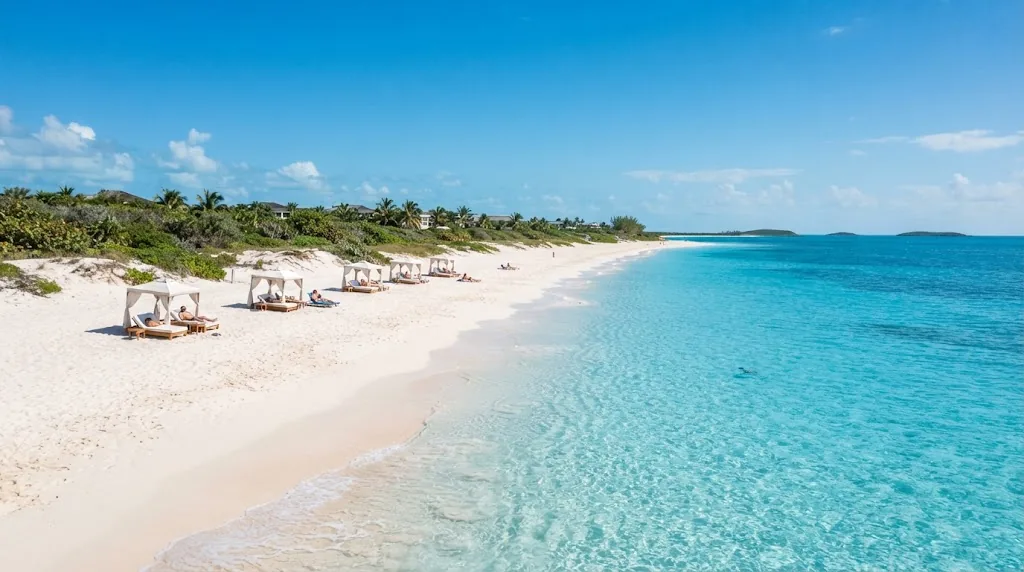
Providenciales is the busy hub, with Grace Bay on its north shore. The beach is sheltered by an offshore reef, so the water stays fairly calm even in the windier winter months. It is also where demand and prices peak from late December to April. North and Middle Caicos are much quieter, with long empty beaches and caves to explore. They are lovely in spring and early summer, when the ferry crossing from Providenciales is usually calm. Grand Turk is the historic capital and a cruise ship stop, so its beaches can be crowded on ship days in the winter season and much calmer the rest of the week.
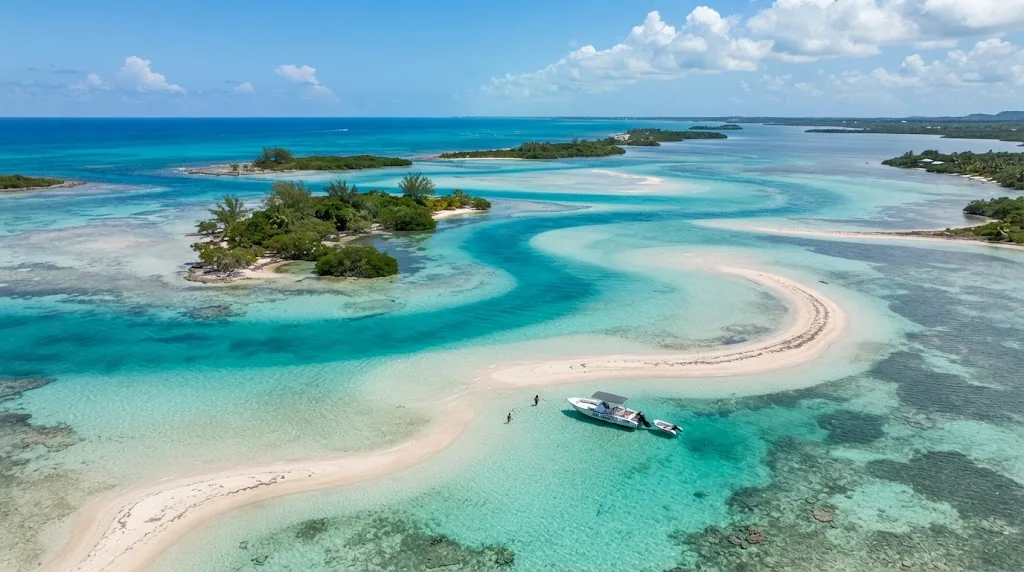
For island hopping and boat trips, the best time to visit Turks and Caicos is usually April to July, when the trade winds tend to be lighter and the sea is often flat. Small boat trips to the cays and sandbars are more pleasant then, and diving visibility is often very good. Winter can still be excellent, but a few windy days a week are normal, and some boat trips get rescheduled.
Hurricane season in Turks and Caicos
The Atlantic hurricane season runs from June 1 to November 30, and the islands sit in its path. Most of the risk is concentrated between August and October. Most years pass without a direct hit, but when a storm does come through the region, it can close the airport, cut power and disrupt plans well beyond the storm's actual arrival.
If you have to travel in the late summer or early autumn, book refundable rooms where you can, take out travel insurance that covers weather disruption, and watch the official tropical outlook in the days before you leave. If your dates are flexible, moving a September trip to June, July or late November keeps most of the warmth and cuts most of the risk. In our view, that makes those shoulder weeks the best time to visit Turks and Caicos for travelers on a budget.
Choosing a month by what matters to you
- Best weather overall: April. Sunny, dry, warm and after the winter peak.
- Driest month: February, with 0.9 inches (22 mm) of rain over 6 days.
- Calmest water for snorkeling and diving: June and July, when the trade winds often ease. Take the heat and early storm season into account.
- Lowest prices with reasonable weather: May, June and late November.
- Avoiding crowds: anything outside mid-December to April, apart from US summer holiday weeks.
- Families: spring break works if you book early. Otherwise, late June and July offer dry, sunny weather and calmer seas for kids.
- Kiteboarding: the windier winter and spring months, roughly December to April, are usually the most reliable.
Comparing islands? The Bahamas sit just to the northwest and are noticeably cooler in winter: Nassau averages 75.4F (24.1C) in January, about 2 degrees F below Providenciales. Our Bahamas weather in January guide covers that side. For a larger island with more variety, see the best time to visit Puerto Rico.
What to pack
- Any month: swimwear, light cotton or linen, reef-safe sunscreen, a sun hat and polarized sunglasses. The white sand and shallow water reflect a lot of light. Our what to wear in 80 degree weather guide covers the basics.
- Winter: a thin long-sleeve layer for breezy evenings and boat trips.
- Summer and autumn: the lightest clothes you own, insect repellent for the evenings, and a compact rain jacket.
- For the water: a rash guard is useful for long snorkeling sessions, since the sun is strong all year.
Where these numbers come from
The figures in this guide come from WeatherApex climate data: daily weather for Providenciales from 2006 to 2025, averaged by month. We weighted storm risk, rain and humidity more heavily than temperature, since it is warm in every month. These are typical conditions, not a forecast, and a single tropical system can make one week far wetter than the average. See every month on our Providenciales weather by month page, or compare your dates in the trip planner. For hurricane outlooks and storm advisories covering the islands, see the National Hurricane Center.
Last tip: if you are set on Grace Bay in April, book flights and rooms by early in the year. April's mix of great weather and slightly lower prices makes it popular with people who know the islands well.
Frequently asked questions
What is the best month to go to Turks and Caicos?
April is the best all round month. Providenciales averages 78.1F (25.6C), 1.2 inches (31 mm) of rain over 7 days and 11.9 hours of sunshine a day. It also comes after the most expensive winter weeks.
What is the rainy season in Turks and Caicos?
The wettest months are September and October, with 4.5 and 4.7 inches (115 and 118 mm) and 15 to 16 rainy days. Even then, totals are low by Caribbean standards, and most rain falls as short showers.
When is hurricane season in Turks and Caicos?
The Atlantic hurricane season runs from June 1 to November 30, with the main risk from August to October. June, July and late November carry less risk while staying warm.
Is Turks and Caicos warm in winter?
Yes. January averages 77.4F (25.2C) by day and stays mild at night, with 7 rainy days and 9.9 hours of sun. It is a little warmer than the Bahamas, where Nassau averages 75.4F (24.1C) in January.