Best Time to Visit St Lucia: Dry Season, Rain and Hurricane Months
The best time to visit St Lucia is February to April, with 1.5 to 1.8 inches of rain a month in Castries and up to 11.8 hours of sun. August and October are the wettest months at 4.6 inches.
The best time to visit St Lucia is February to April. These are the driest months, with 1.5 to 1.8 inches (37 to 46 mm) of rain around Castries, highs of 81.3F to 83.7F (27.4C to 28.7C), and 11.1 to 11.8 hours of sunshine a day. From July to October, rain roughly triples, humidity reaches 80%, and the island sits in the busiest part of hurricane season.
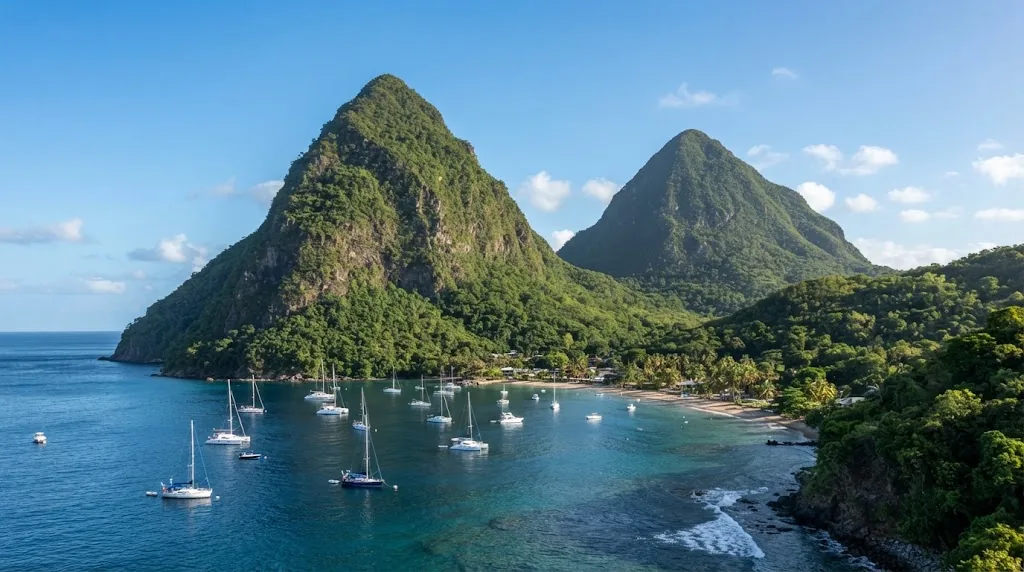
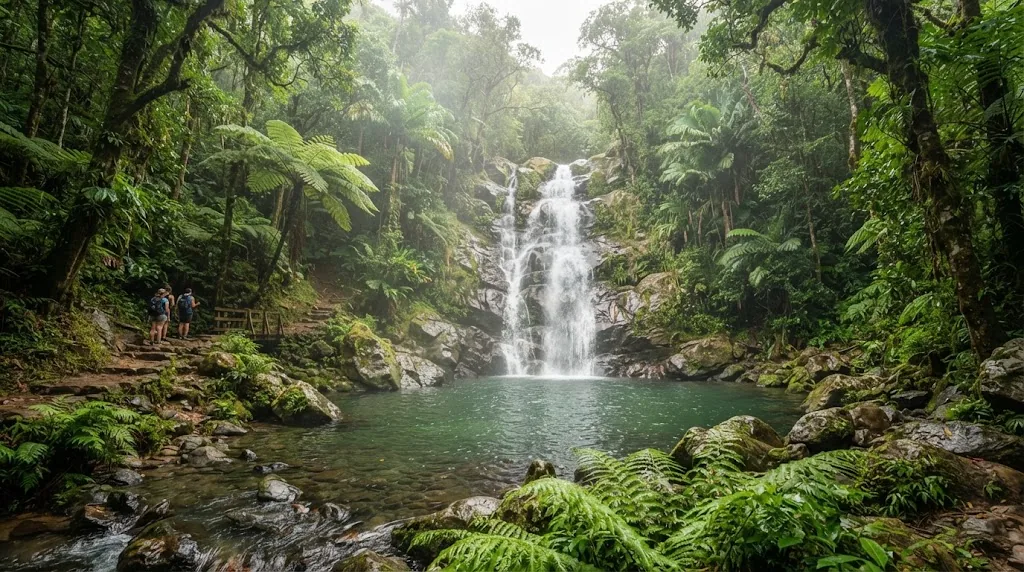
St Lucia is a mountainous, volcanic island, which shapes its weather more than its latitude does. Showers form over the green peaks almost every day, even in the dry season, then clear in minutes. The coast, where most hotels are, is drier than the rainforest in the middle of the island, and the south around Soufrière and the Pitons can see different weather from the north on the same afternoon. With that in mind, here is how the year really breaks down.
Best time to visit St Lucia: monthly weather in Castries
These are WeatherApex 20-year averages (2006 to 2025) for Castries, the capital on the northwest coast, close to Rodney Bay and the main resort area. A "rainy day" here counts any day with measurable rain, and in St Lucia that is often a 10 minute shower followed by sunshine.
| Month | Avg high F (C) | Avg low F (C) | Rain (in / mm) | Rainy days | Sun hours per day | Humidity |
|---|---|---|---|---|---|---|
| January | 80.8 (27.1) | 73.8 (23.2) | 1.8 / 47 | 15 | 10.8 | 75% |
| February | 81.3 (27.4) | 73.4 (23.0) | 1.5 / 37 | 11 | 11.1 | 73% |
| March | 82.4 (28.0) | 73.8 (23.2) | 1.5 / 39 | 13 | 11.6 | 72% |
| April | 83.7 (28.7) | 74.8 (23.8) | 1.8 / 46 | 13 | 11.8 | 74% |
| May | 84.7 (29.3) | 76.3 (24.6) | 2.1 / 54 | 15 | 11.6 | 75% |
| June | 84.6 (29.2) | 76.6 (24.8) | 3.0 / 77 | 18 | 11.5 | 77% |
| July | 84.0 (28.9) | 76.5 (24.7) | 4.2 / 106 | 22 | 11.5 | 79% |
| August | 84.6 (29.2) | 76.6 (24.8) | 4.6 / 117 | 23 | 11.3 | 80% |
| September | 85.5 (29.7) | 77.0 (25.0) | 4.2 / 106 | 20 | 11.1 | 79% |
| October | 84.4 (29.1) | 76.8 (24.9) | 4.6 / 117 | 21 | 10.7 | 80% |
| November | 82.9 (28.3) | 75.7 (24.3) | 3.7 / 94 | 19 | 10.6 | 80% |
| December | 81.9 (27.7) | 74.7 (23.7) | 2.0 / 51 | 15 | 10.7 | 76% |
The temperature line is almost flat: highs move only from 80.8F (27.1C) in January to 85.5F (29.7C) in September, and nights stay between about 73F and 77F (23C and 25C). So the best month is all about rain, humidity and storm risk. February and March are the driest at about 1.5 inches (37 to 39 mm). August and October are the wettest at 4.6 inches (117 mm), with 21 to 23 rainy days.
The dry season (December to May)
December and January: the season begins
December marks the start of the dry season and the start of peak prices. Rain falls to 2.0 inches (51 mm) and humidity eases to 76%. Christmas and New Year are among the busiest weeks of the year on the island, and the best rooms sell out early.
January is drier still, at 1.8 inches (47 mm), with highs of 80.8F (27.1C), the mildest of the year. It still records 15 rainy days, most of them short passing showers carried in on the trade winds. See the Castries weather in January page for details.
February to April: our pick
This is the window we would book. February has the fewest rainy days of the year (11) and the least rain, at 1.5 inches (37 mm). March is close behind and adds sunshine, at 11.6 hours a day, with humidity at its yearly low of 72%. April is the sunniest month at 11.8 hours, with highs of 83.7F (28.7C).
These months combine dry trails, calm seas on the Caribbean coast and clear views of the Pitons. Hiking Gros Piton is easier on dry ground, and boat trips down the coast to Soufrière are more comfortable. The March weather page has the full numbers. The one thing to watch is Easter, when prices and demand rise again.
May: warm, still good value
May is a shoulder month. Highs reach 84.7F (29.3C), and rain edges up to 2.1 inches (54 mm) over 15 days, but sunshine stays high at 11.6 hours a day. After Easter, hotel rates usually start to fall. For many travelers, late May is the best value in the whole year, with weather very close to the peak months.
The wet season (June to November)
June is the transition, with 3.0 inches (77 mm) over 18 days. From July to October, Castries gets 4.2 to 4.6 inches (106 to 117 mm) a month and 20 to 23 rainy days, and humidity sits around 79% to 80%. Even so, sunshine hours stay high, between 10.7 and 11.5 a day. Many wet season days are sunny with a heavy shower or two, rather than grey and rainy all day.
The bigger concern is the Atlantic hurricane season, which runs from June 1 to November 30. St Lucia sits toward the southern edge of the main hurricane belt, so it is hit less often than islands further north, but storms do pass through the region, usually between August and October. A nearby storm can bring torrential rain, landslides on mountain roads and flight cancellations. See September in Castries for the numbers.
July is the exception many people miss. It is the month of Saint Lucia Carnival, with parades, music and street parties, usually in the middle of the month. The weather is wetter than spring, but early in the hurricane season the risk is lower than in September. If Carnival appeals, July is a lively time to go.
November is the recovery month. Rain falls to 3.7 inches (94 mm) over 19 days, and the island gets ready for the winter season. Late November is often a good deal before prices climb in December.
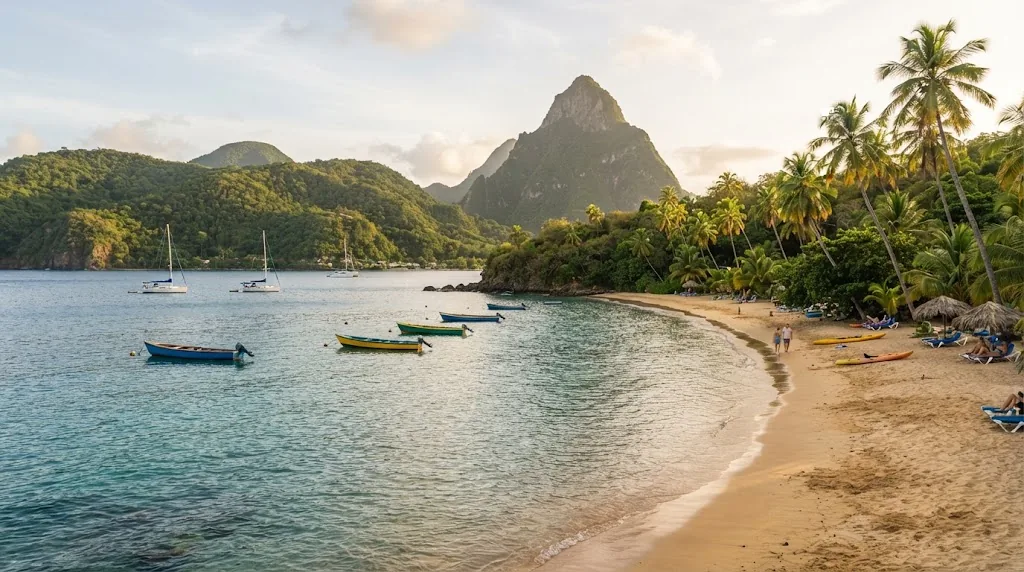
Why the island can be wet in one place and sunny in another
St Lucia's interior rises steeply into rainforest-covered mountains, and the warm, moist trade winds rise over them and drop their rain. That is why the central rainforest is much wetter than the coast, and why a shower over the hills does not always reach the beach. The east coast, facing the Atlantic, is rougher and windier, while the west coast, where most resorts and swimming beaches are, is calmer and more sheltered.
In practice, this means two things. First, a forecast of rain on your phone is less alarming than it looks, because most showers are short and local. Second, plan rainforest hikes and waterfalls for the morning in the dry season, when trails are firmest, and keep the afternoon for the beach.
Crowds and prices: the other half of the decision
Weather and prices move together in St Lucia. The dry season, from mid-December to April, is high season: the most expensive rooms, the busiest beaches and the longest waits for popular tours. The wet season is low season, and rates can drop sharply from September to early December. That makes the best time to visit St Lucia partly a question of budget.
If you want a balance, look at the shoulder weeks. Late April and May give you dry season weather with falling rates. Late November and the first two weeks of December are cheaper again and come just as the rains are easing. June is a reasonable gamble: the wet season has started, but storm risk is lower than later in the summer and the island is quiet.
For weddings and honeymoons, which are a big part of travel to the island, spring is the safest bet. Outdoor ceremonies need a dry afternoon, and March and April give you the best odds, with the fewest showers and the longest sunny spells. If you are planning a wedding in the wet season, choose a venue with a covered backup and schedule the ceremony for the morning, when showers are less likely to build.
Whatever month you choose, the best time to visit St Lucia's famous spots, such as the drive-in volcano, the botanical gardens near Soufrière and the beaches beneath the Pitons, is early in the day. Tour buses and cruise groups usually arrive by late morning.
Choosing the best time to visit St Lucia for your trip
- Best weather overall: February to April. Driest, sunniest and least humid.
- Honeymoons: March and April. Clear views of the Pitons and calm water for boat trips and snorkeling.
- Hiking the Pitons and rainforest: February and March, when trails are driest.
- Best value with good weather: late May and early June, after Easter and before the wetter months.
- Festivals: July for Carnival.
- Lowest prices: September and October, with heavy showers and real storm risk. Book flexibly.
- Families: late December to April fits most school holidays and the best weather, but it is the most expensive period.
Comparing Caribbean islands for the same dates? Our best time to visit Puerto Rico guide covers a larger island further north, and you can compare its numbers directly on the San Juan in March page.
What to pack for St Lucia
- Any month: light, breathable clothing, swimwear, reef-safe sunscreen, a hat and insect repellent. Highs never fall below 80F (27C). Our what to wear in 80 degree weather guide fits all year.
- For hiking: proper shoes with grip, since rainforest trails are often muddy even in the dry season, and a small towel or change of clothes.
- Wet season: a thin rain jacket or umbrella, and a dry bag for phones on boat trips.
- Evenings: smart casual clothes. Many resort restaurants expect more than beachwear at dinner.
How we chose the best time to visit St Lucia
All figures here come from WeatherApex climate data: daily weather for Castries from 2006 to 2025, averaged by month. Because temperatures hardly change, we weighted rain, rainy days, humidity and hurricane season most heavily. The interior and the south of the island are wetter than Castries, so treat these numbers as a guide to the coastal resorts. They describe typical conditions, not a forecast. For every month in detail, see Castries weather by month, or compare dates with the trip planner. For official forecasts and weather warnings, see Saint Lucia Meteorological Services.
Final practical note: most international flights land at Hewanorra, in the far south of the island, and the drive to the northern resorts around Rodney Bay takes well over an hour on winding roads. Factor that into where you stay, especially if you arrive late in the day.
Frequently asked questions
What is the best month to visit St Lucia?
March is the best all round month. Castries averages 82.4F (28.0C), 1.5 inches (39 mm) of rain, 11.6 hours of sun and 72% humidity, the lowest of the year. February is slightly drier, and April is slightly sunnier.
When is the rainy season in St Lucia?
The wet season runs from about June to November. From July to October, Castries gets 4.2 to 4.6 inches (106 to 117 mm) of rain a month over 20 to 23 rainy days, often as short heavy showers between sunny spells.
Does St Lucia get hurricanes?
It can, though it sits near the southern edge of the main hurricane belt and is hit less often than islands further north. The Atlantic season runs from June 1 to November 30, with most risk from August to October.
Is St Lucia hot all year?
Yes. Highs range from 80.8F (27.1C) in January to 85.5F (29.7C) in September, and nights stay between about 73F and 77F (23C and 25C). Humidity is the bigger change, from 72% in March to 80% in late summer.