What to Wear in 40 Degree Weather: Outfit Guide & Packing Tips
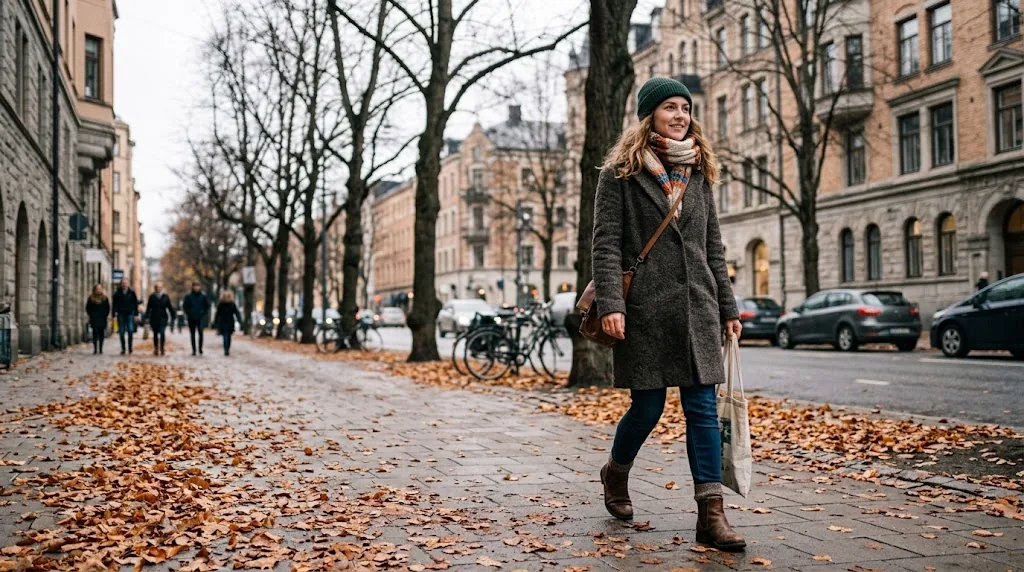
Dressing for 40°F weather requires smart layers. Expect daytime highs around 40°F to drop down to lows like 25°F at night.
What to Wear in 40 Degree Weather: The Ultimate Packing Guide
Figuring out what to wear in 40 degree weather means preparing for temperatures right around 40°F (about 4°C to 6°C), where the difference between a crisp sunny afternoon and a freezing evening can catch you completely off guard. The trick to staying comfortable is smart layering, picking wind-resistant outerwear, and keeping your head, hands, and feet warm before the cold sneaks in.
That 40-degree mark sits right on the fence between chilly and genuinely cold. Put on a heavy winter parka while walking around downtown NYC and you will end up drenched in sweat ten minutes later. Wear a light sweater without a windproof shell in Chicago or Toronto, though, and you'll end up shivering inside the nearest coffee shop waiting for your core temperature to recover. How do you plan for weather that shifts from brisk to freezing in a matter of hours?
To help you pack without overpacking, this guide covers exact outfits for men and women, breaks down different conditions from rainy afternoons to freezing nights, and looks at how 40°F weather actually feels across top destinations in North America and Europe.
Where and When Will You Experience 40 Degree Weather?
Temperatures hovering around 40°F are standard across early spring, late autumn, and mild winter months in many major American and European cities. The most important thing to look at when checking forecasts isn't just the daytime high—it's the average low. A day that peaks at 43°F often drops down to 25°F after dark. Honestly, I'd skip packing light jackets if your evenings involve long outdoor walks.
Here is a breakdown of 20-year climate averages (2006–2025) across popular destinations where 40-degree weather is the norm:
| Place | Month | Avg High °F / °C | Avg Low °F / °C | Rainy Days | Sunshine (hrs/day) |
|---|---|---|---|---|---|
| New York, USA | January | 39.0°F / 3.9°C | 25.2°F / -3.8°C | 9 | 6.5 |
| New York, USA | February | 41.0°F / 5.0°C | 25.0°F / -3.9°C | 9 | 7.2 |
| Chicago, USA | March | 43.0°F / 6.1°C | 30.0°F / -1.1°C | 10 | 8.3 |
| Toronto, Canada | March | 40.1°F / 4.5°C | 25.9°F / -3.4°C | 10 | 8.0 |
| Montreal, Canada | November | 42.4°F / 5.8°C | 31.1°F / -0.5°C | 12 | 5.6 |
| Montreal, Canada | March | 37.2°F / 2.9°C | 20.7°F / -6.3°C | 11 | 8.0 |
| Berlin, Germany | December | 40.5°F / 4.7°C | 33.1°F / 0.6°C | 12 | 2.6 |
| Berlin, Germany | February | 41.2°F / 5.1°C | 30.4°F / -0.9°C | 10 | 4.9 |
| Amsterdam, Netherlands | January | 43.0°F / 6.1°C | 35.6°F / 2.0°C | 14 | 3.7 |
As you can see, 40°F acts very differently depending on where you land. In Toronto in March, you get an average high of 40.1°F alongside 8 full hours of bright sunshine, but the low plunges down to 25.9°F. Meanwhile, Amsterdam in January sits at 43°F with 14 rainy days and barely 3.7 hours of sun, meaning dampness makes that 43°F feel noticeably colder on your skin.
If you're mapping out an itinerary across several cold-weather cities, try using our trip planner tool to track temperature drops before finalizing your suitcase.
City-by-City Breakdown: What 40°F Feels Like in Real Destinations
A single temperature number on paper never tells the full story. Local winds, cloud cover, and proximity to water change how that ambient air feels against your face.
New York, USA (January)
Expect average highs of 39.0°F and lows around 25.2°F. Nine rainy days pop up throughout the month, alongside 6.5 hours of daily sun. Shadows stretched between Midtown skyscrapers make street corners feel sub-zero. I'd avoid booking rooftop tours during these weeks unless the venue has solid glass enclosures. Walking down Fifth Avenue hits fine during peak sun hours, but nightfall brings a quick freezing air shaft down Broadway. Pack wool socks and heavy leather boots to handle slush on crosswalk corners. Museum hopping at the Met or MoMA keeps you warm inside, but you need a jacket you can carry easily through coat checks.
New York, USA (February)
The daytime high bumps up slightly to 41.0°F, but nighttime drops down to 25.0°F keep things icy. You gain an extra bit of daylight with 7.2 hours of sunshine per day. Rain or slush hits on roughly 9 days. February brings brutal winds coming off the Hudson River straight down West Street. The crowd levels in Lower Manhattan drop compared to December holidays, which means shorter lines at major spots. Downside? The wind chills down around the Oculus can pull heat right out of your core within minutes. Keep a lined scarf tucked deep inside your coat zipper.
Chicago, USA (March)
March in the Windy City hits an average high of 43.0°F, while the low rests around 30.0°F. You get 8.3 hours of sunshine, though 10 rainy days keep roads slick. Lake Michigan whips brisk gusts right down Michigan Avenue. Honestly, I'd skip the lakefront trail entirely on windy afternoons. The sun gives a false sense of heat behind glass windows. Once you step outside onto Millennium Park plaza, that 43°F drops under wind pressure. Pack a windproof outer layer above everything else. The best city activities include ducking into Art Institute galleries or taking in indoor architecture tours.
Toronto, Canada (March)
Toronto marks an average high of 40.1°F and a sharp low of 25.9°F in March. Expect 8 hours of daily sun paired with 10 wet days. Snow mounds from earlier months sit around sidewalk edges, slowly melting into cold puddles. Walking through the underground PATH network helps you dodge cold breezes between office towers. Out on street level near Nathan Phillips Square, cold shadows dominate long blocks. Downside: slush splashes are common, so leave light canvas shoes at home. Pack insulated waterproof boots with thick soles if you plan to explore Queen Street West on foot.
Montreal, Canada (November)
November brings an average high of 42.4°F and an icy low of 31.1°F to Montreal. Sun hours sink down to 5.6 a day, with wet weather hitting on 12 days. Damp autumn air settles into Old Montreal's cobblestone streets. Walking up toward Mount Royal view points gets your blood pumping, but damp winds at the summit bite quickly. You'll find quiet cafes along Saint-Denis to warm up in, but street walking requires a fleece-lined mid-layer under a long jacket. The main drawback is overcast skies that dominate mid-afternoon hours, making 42°F feel bleak if you lack thermal underwear.
Montreal, Canada (March)
March averages a brisk high of 37.2°F and a bone-chilling low of 20.7°F. Despite 8 hours of sunshine, 11 wet days mean messy street melt. This month tests your winter gear setup. Daytime sun melts rooftop ice, sending drops into cool shade below. Walking around Mile End demands thick wool headwear and sturdy shoes that handle salt stains. The downside? Freezing morning lows mean ice patches hide under fresh puddles. Stick to warm indoor spaces like Jean-Talon Market when cold afternoon winds sweep through.
Berlin, Germany (December)
December in Berlin sits at an average high of 40.5°F and a low of 33.1°F. Sunshine drops to a sparse 2.6 hours a day, alongside 12 rainy days. Dark skies set in by 4:00 PM. Christmas markets along Gendarmenmarkt keep spirits high, but standing still on cold brick cobblestones pulls warmth from your feet. Frankly, I'd order a hot drink the moment you feel your toes go numb. The lack of daylight is the biggest hurdle here. Pack thick shearling insoles, a heavy scarf, and an insulated jacket that blocks light drizzle during night walks through Mitte.
Berlin, Germany (February)
February sees a high of 41.2°F and a low of 30.4°F in Berlin. Sun hours improve to 4.9 per day, with wet days lingering around 10. Cold winds roll flat across public spaces like Alexanderplatz. Museum Island provides warm shelter, but open walks between sites feel drafty. Downside: low humidity combined with gray skies creates a biting chill that settles in quickly. Wear thermal tights or long underwear under trousers if you plan on taking long walking tours through West Berlin shopping districts.
Amsterdam, Netherlands (January)
January averages a high of 43.0°F and a low of 35.6°F in Amsterdam. High humidity, 14 rainy days, and just 3.7 hours of sun make this one of the dampest months. Moist air off canals penetrates light cotton layers immediately. Biking through town during a damp gust is a mistake unless you wear fully windproof trousers. The downside? Constant light drizzle makes sight-seeing bridges slippery and cold. Pack a long waterproof jacket with a structured hood so you can walk through museum neighborhoods comfortably without carrying a flimsy umbrella.
What to Wear in 40 Degree Weather for Women?
The golden rule for women dressing for 40°F is avoiding bulky single-layer pieces. Wearing one massive oversized sweater over a light top leaves you stuck with no mid-range option when you walk indoors to a heated museum or restaurant.
Core Base Layers
Start with a fitted long-sleeve top made from merino wool, modal, or a thermal microfiber blend. Avoid standard thin cotton T-shirts if you plan on doing lots of walking, as cotton traps moisture against your skin. For pants, fleece-lined leggings, heavy denim, or tailored wool trousers work best. Fleece-lined tights under a midi skirt or sweater dress give you a sleek look without freezing your legs off.
Mid-Layers
A classic cashmere or wool crewneck sweater, a structured cardigan, or a medium-weight fleece vest works wonders. A vest is underrated for city trips—it protects your chest from chill while leaving your arms free and unencumbered under a coat.
Outerwear Choices
- Mid-Length Wool Coat: Great for dry days in New York or Berlin. It looks polished, blocks light breeze, and covers your thighs.
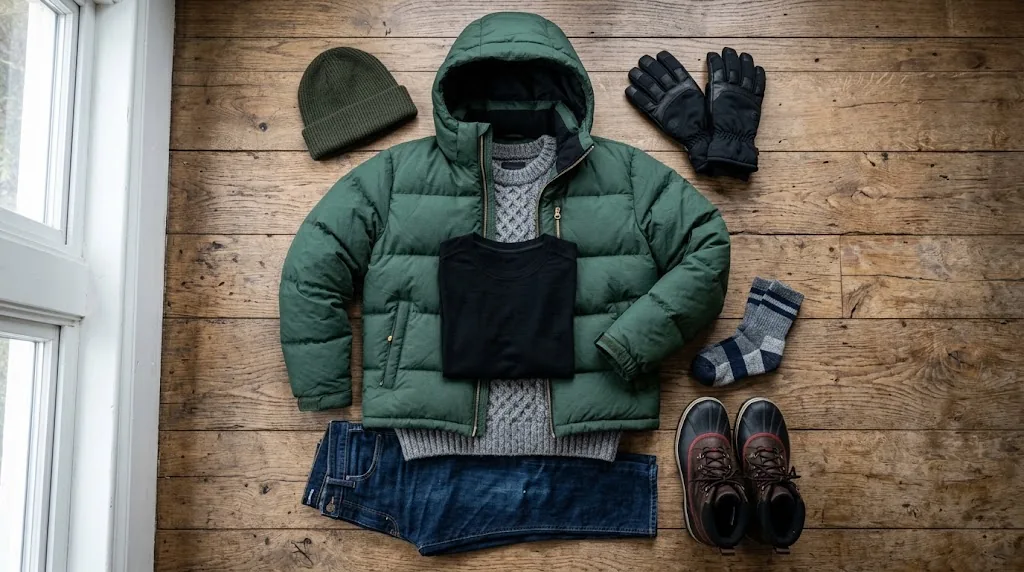
- Light Puffer Jacket: Down or synthetic down with a weather-resistant shell. Ideal when moving between outdoor sights and warm trains.
- Trench Coat with Removable Liner: Excellent for rainy, damp cities like Amsterdam.
Footwear and Accessories
Leather or waterproof suede ankle boots with lug soles are your best choice. Pair them with medium-weight wool socks. Carry a soft knit beanie, a medium-weight scarf, and leather or fleece-lined gloves that tuck easily into your purse when daytime sun hits.
What to Wear in 40 Degree Weather for Men?
Men often make the mistake of wearing a heavy winter parka on 40-degree days, only to get uncomfortably warm within ten minutes of walking around town. Alternatively, underestimating the wind leads to freezing mornings. What works without cluttering your suitcase?
Base and Mid-Layers
A crisp long-sleeve henley, a thermal crewneck, or a merino wool button-down provides a solid foundation. On top, wear a medium-weight knit sweater, a quarter-zip pullover, or an overshirt. Flannel shirts layered over fitted thermals offer a reliable casual style that stays comfortably warm.
Pants
Heavyweight denim (12 oz or higher), corduroy pants, or thick chino trousers. Avoid thin cotton dress pants unless you wear thin thermal tights underneath. If you are doing outdoor activities or walking near waterfronts, wind-blocking canvas trousers are ideal.
Coats and Outerwear
- Peacoat or Wool Overcoat: Timeless look for city evenings. Blocks wind well and pairs easily with formal or casual clothing.
- Quilted Field Jacket or Waxed Canvas Coat: Ideal for crisp, dry days with light wind.
- Packable Down Jacket: Keeps bulk low while delivering great warmth-to-weight ratio.
Footwear
Leather boots (Chukkas, Chelsea boots, or service boots) with sturdy rubber soles. Leather resists chilly breezes far better than porous canvas sneakers. Pair with crew-length merino wool socks.

How to Layer for Different Weather Conditions at 40°F
A static 40°F readout on your phone app doesn't tell the full story. Bright sunshine, cutting wind, and freezing dampness completely alter how your outfit feels on the street.
Sunny 40°F Days
In places like Chicago in March (8.3 hours of daily sun) or Montreal in March (8.0 hours of sun), direct sunlight makes 43°F feel more like 50°F when you are out of the wind.
What to adjust: Wear a lighter mid-layer like a cotton-wool blend sweater, paired with an open wool overcoat or an unbuttoned jacket. Don't skip sunglasses—late-winter and early-spring glare off city pavement can be blinding.
Rainy or Damp 40°F Days
Dampness amplifies cold. Take Amsterdam in January, which sees 14 rainy days and high humidity. Water conducts heat away from your body 25 times faster than dry air.
What to adjust: Swap wool overcoats for a waterproof shell or a parka with a sealed DWR (Durable Water Repellent) coating. Wear synthetic or wool thermal base layers—never cotton. Opt for waterproof leather boots and carry a wind-resistant umbrella.
Windy 40°F Days
Wind chill drops a 41°F high down into the low 30s rapidly. New York in February and Montreal in November are notorious for wind tunnels carved between high-rise buildings.
What to adjust: Focus on your outer layer. A tight-weave wool coat or a wind-proof softshell coat is necessary. Secure your neck with a tight scarf and wear a knit hat that covers your ears securely.
Outfit Ideas for Specific Activities
Matching your clothing to your movement level keeps you from getting sweaty during heavy walking or chilling during seated meals.
1. Sightseeing and City Walking
Walking three to five miles across Berlin or Manhattan generates internal heat, but stepping into chilly plazas drops your temperature fast.
- Outfit: Comfortable leather boots, comfortable pants (fleece tights or heavy denim), a thermal crewneck base, a breathable knit sweater, and a medium-weight coat with deep pockets.
- Tip: Keep your scarf and beanie stored inside a small crossbody bag or backpack when ducking into heated museums.
2. Business Travel or a Workday
Balancing professional expectations with crisp commutes requires clean lines and warm fabrics.
- Men: Wool dress trousers, tailored button-down shirt, fine-gauge merino sweater, structured wool peacoat, and leather dress shoes with rubber soles (avoid leather-soled shoes on cold or icy pavement).
- Women: Tailored wool slacks or a heavy knit dress with thermal tights, knee-high leather boots, silk/wool blend top, blazer, and a long tailored coat.
3. Evening Dinners and Nightlife
Evening temperatures plummet dramatically. Look at New York in January: the daytime high averages 39°F, but nighttime lows sink to 25.2°F. Berlin in February drops from a 41.2°F high down to 30.4°F at night.
- Outfit: Up the warmth of your layers. Add a cashmere scarf, tailored wool outerwear, and lined gloves. Swap casual sneakers for insulated dress boots.
- Tip: If you are waiting outside for a taxi or table confirmation, keep your core completely covered with a buttoned or zipped long coat.
4. Hiking and Outdoor Parks
Out on trail paths, staying dry is far more important than high fashion.
- Outfit: Synthetic moisture-wicking base layer top and bottoms, mid-weight fleece sweater, windproof and water-resistant softshell jacket, trail pants (or thermal tights under hiking shorts), trail boots, and wool hiking socks.
- Avoid: Heavy down coats that trap sweat during uphill climbs. You want breathable layers you can unzip as you heat up.
Common Packing Mistakes to Avoid in 40°F Weather
Packing for transitional spring and late-fall weather is tricky. Avoid these standard blunders when filling your suitcase:
Honestly, I'd skip light canvas sneakers entirely unless you love cold toes. Canvas offers zero insulation and lets freezing breezes slice right through.
Do not pack just one giant heavy winter coat. You will end up roasting during daytime walks or indoor shopping trips. Having two lighter, stackable layers gives you far more control than one bulky parka.
Ignoring nighttime drops is another classic mistake. In Berlin in December, daytime temperatures average 40.5°F under dark skies (just 2.6 hours of sunshine), and drop down to 33.1°F at night with 12 rainy days in the month. If you only dress for the afternoon peak, you will be miserable by 6:00 PM.
For more advice on dressing for slightly warmer transitional days, check out our companion breakdown on what to wear in 50 degree weather.
According to official seasonal guidance from the National Weather Service, layered clothes trap insulated air pockets between fabrics far more effectively than a single thick clothing layer. Keeping these principles in mind ensures you stay warm, flexible, and comfortable wherever your travels take you.
Frequently asked questions
Is 40 degrees Fahrenheit considered cold enough for a heavy winter coat?
A heavy arctic parka is usually too warm for a daytime high of 41°F while active, but essential at night when temperatures drop down to 25°F. A mid-weight wool coat or layered packable puffer works best during the afternoon.
Can you wear jeans in 40 degree weather?
Yes, standard heavyweight denim works well around 40°F. However, if nighttime temperatures sink toward 25°F or high winds are forecasted, pairing your jeans with thin thermal leggings underneath helps trap essential body heat.
What shoes should I wear in 40 degree weather?
Leather ankle boots or sturdy closed footwear paired with medium-weight wool socks are ideal. Avoid canvas sneakers or thin breathable running shoes, as they allow freezing winds and damp morning moisture to seep straight through.
How should I dress for a rainy 40 degree day?
Dampness makes a 43°F day feel much colder. Wear synthetic or wool thermal base layers under a waterproof jacket with a hood. Leather boots with solid rubber traction are necessary to keep wet streets from chilling your feet.