What to Wear in 70 Degree Weather: The Ultimate Packing Guide
Wondering what to wear in 70 degree weather? Learn how to master daily temperature swings ranging from a 70.3°F afternoon high to a chilly 54.1°F evening low.
Figuring out what to wear in 70 degree weather can honestly drive you crazy, especially when a comfortable 70.3°F afternoon low turns into a chilly 54.1°F evening before you even finish dinner. Seventy degrees sounds like pure magic on paper, but how it actually feels depends entirely on whether the sun is blazing or a damp wind is blowing off the water.
You get this exact temperature split all over the globe, from spring strolls in Europe to autumn getaways in Asia. Let us break down what works, what fails miserably, and how to pack without overstuffing your suitcase.
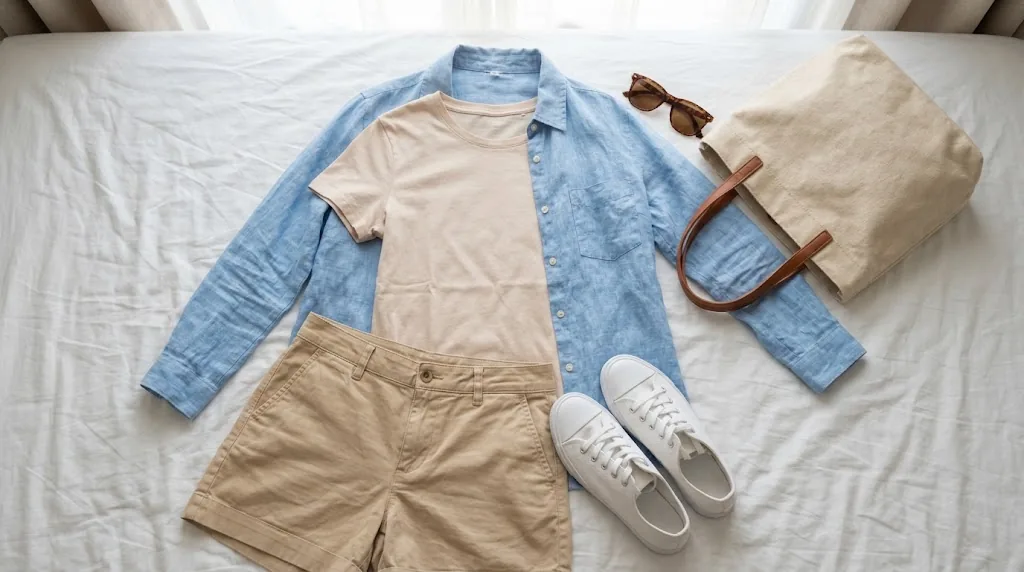
What to Wear in 70 Degree Weather: The Quick Answer
| Place | Month | Avg high °F/°C | Avg low | Rainy days | Sunshine |
|---|---|---|---|---|---|
| New York, USA | May | 70°F / 21.1°C | 53.1°F | 11 | 9.9 hrs |
| Barcelona, Spain | May | 70.2°F / 21.2°C | 56.5°F | 8 | 12.5 hrs |
| Tokyo, Japan | October | 70.2°F / 21.2°C | 57.9°F | 13 | 7.1 hrs |
| Paris, France | September | 70.3°F / 21.3°C | 54.1°F | 8 | 8.8 hrs |
| San Diego, California | November | 69.6°F / 20.9°C | 53.2°F | 4 | 9.4 hrs |
| Barcelona, Spain | October | 70.7°F / 21.5°C | 58.8°F | 9 | 9.0 hrs |
| London, UK | August | 70.7°F / 21.5°C | 56.5°F | 10 | 9.8 hrs |
| Lisbon, Portugal | May | 71.4°F / 21.9°C | 58.1°F | 4 | 12.5 hrs |
| London, UK | June | 68.5°F / 20.3°C | 53.1°F | 10 | 11.3 hrs |
What to Wear in 70 Degree Weather: Core Principles
The golden rule for packing for this temperature range is simple: layers are your best friend. Honestly, if you pack only heavy sweaters or only t-shirts, you are going to be miserable at some point during the day. A day that hits a pleasant high often starts out brisk and drops fast once the sun goes down.
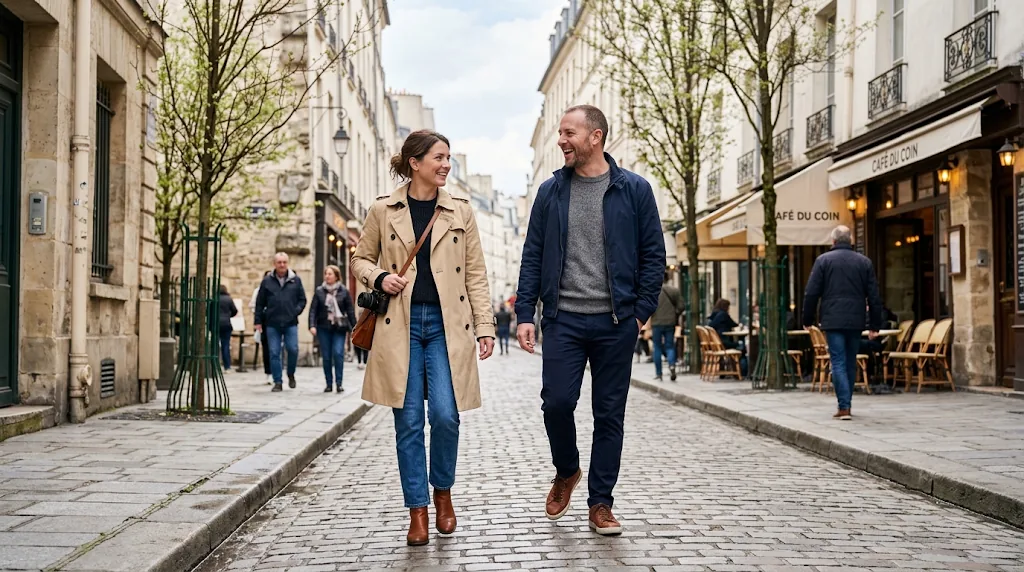
Take Paris in September, for example. The average high sits right at 70.3°F, but the average low drops to 54.1°F. That is nearly a sixteen-degree swing. If you walk out of your hotel in just a linen shirt at nine in the morning, you will freeze. But if you wear a thick winter coat at two in the afternoon while climbing steps, you will sweat through it. Honestly, I always tell people to carry a backpack just so you have somewhere to shove your extra layers when the afternoon sun finally hits you.
September in Paris brings 8 rainy days and 8.8 hours of sunshine a day. Crowds at major sights like the Louvre or the Eiffel Tower thin out slightly compared to August, but you still deal with long lines if you do not buy tickets weeks ahead. One honest downside is that rainy days can catch you off guard, turning a nice sidewalk cafe lunch into a scramble for cover.
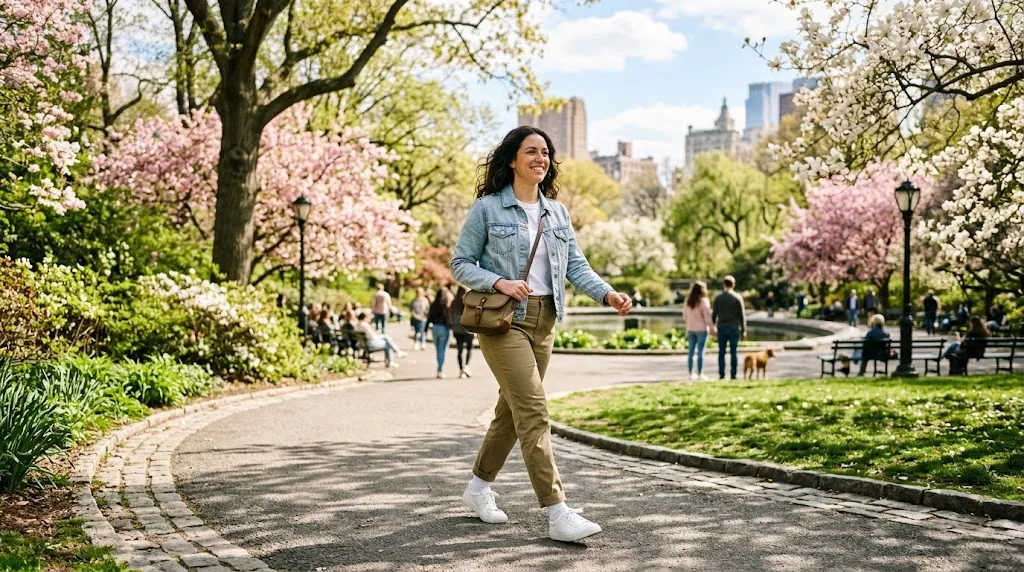
Let us look at New York, USA in May. You get an average high of 70°F and an average low of 53.1°F. Spring in the city means 11 rainy days and 9.9 hours of sunshine daily. Central Park looks incredible with blooming flowers, but park paths get muddy fast after a spring shower. You want sturdy footwear here because walking twenty blocks on wet concrete ruins flimsy flats in minutes.
Moving over to Barcelona, Spain in May, temperatures sit at an average high of 70.2°F and an average low of 56.5°F. You get 8 rainy days and a massive 12.5 hours of sunshine a day. Sunlight that strong makes seventy degrees feel much warmer than it does on paper. You can easily wear sunglasses and short sleeves by noon. However, the coastal breeze keeps the 56.5°F low feeling quite brisk once you step away from the beach.
Then consider Tokyo, Japan in October. The average high is 70.2°F, but the low drops to 57.9°F. You face 13 rainy days and just 7.1 hours of sunshine daily. Tokyo autumns are wonderful for walking through gardens like Shinjuku Gyoen, but frequent rain means you need a serious umbrella. Honestly, buying a cheap convenience store umbrella is a rite of passage there, but packing a compact travel shell saves you the hassle.
What about San Diego, California in November? You enjoy an average high of 69.6°F and an average low of 53.2°F. Rain is rare with only 4 rainy days, and you get 9.4 hours of sunshine. Balboa Park and coastal cliffs are stunning this month without summer tourist hordes. The catch is that ocean air brings a heavy morning marine layer, meaning your early morning jogs require a sweatshirt even if the afternoon warms up nicely.
Look at Barcelona, Spain in October next. The average high reaches 70.7°F with a warm average low of 58.8°F. You deal with 9 rainy days and 9 hours of sunshine. Swimming in the Mediterranean might be too chilly for most Americans, but sitting outside eating tapas in a light jacket is absolute perfection. Crowds are manageable, though sudden autumn storms can flood narrow alleys in the Gothic Quarter.
Consider London, UK in August. Summer brings an average high of 70.7°F and an average low of 56.5°F. You get 10 rainy days and 9.8 hours of sunshine. Tourists pack every museum and pub, making advance bookings essential for spots like the British Museum or popular West End shows. One major downside is that many historic London hotels lack air conditioning, so a 70-degree day can trap stuffy heat inside your room at night.
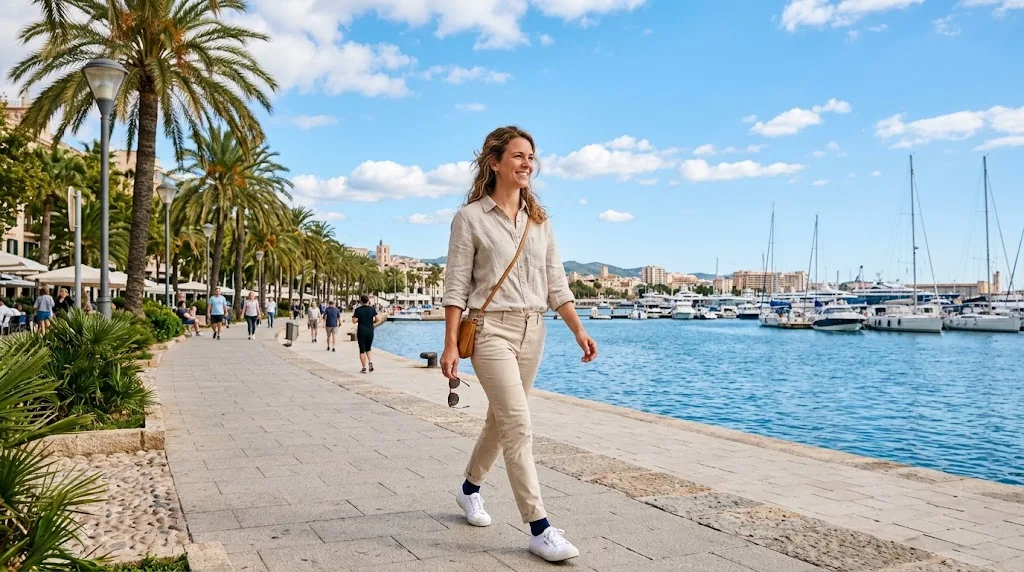
Down in Lisbon, Portugal in May, you hit an average high of 71.4°F and an average low of 58.1°F. With only 4 rainy days and 12.5 hours of sunshine, it feels practically summer-like during peak afternoon hours. Walking up the steep hills of Alfama will heat you up fast, so breathable fabrics are non-negotiable. The downside is that Lisbon tram lines get slammed with tourists by mid-morning, so you have to start your sightseeing early.
Finally, check out London, UK in June. The average high drops slightly to 68.5°F with an average low of 53.1°F. You still get 10 rainy days, but sunshine increases to 11.3 hours daily. Gardens in Kew are at their absolute peak. Pack for unpredictable shifts because a sunny morning can turn into a torrential downpour by lunchtime without warning.
Understanding how fabric choices interact with humidity is half the battle when packing for a seventy-degree day. Synthetic polyester shirts trap body heat and sweat instantly if you walk under direct sunlight in places with high humidity. Natural fibers like linen, cotton, and lightweight merino wool allow air circulation around your skin, keeping you cool when the sun peaks at midday but insulating you when shade arrives.
Let us look closer at how morning and evening shifts affect your daily wardrobe choices. When you step outside at eight in the morning in New York, USA in May, you face that 53.1°F morning chill. By two in the afternoon, the temperature climbs to the 70°F high. If you only wear a tank top, you will shiver during your morning commute. If you wear a heavy fleece, you will carry it like a sack of bricks by midday. The secret lies in a three-part layering system where each piece can stand entirely on its own.
Sun versus shade exposure changes your physical comfort dramatically at this temperature. In Barcelona, Spain in May, 12.5 hours of sunshine mean that standing directly in the sun feels like eighty degrees, while stepping into a narrow medieval alleyway drops the perceived warmth instantly. You want sunglasses and breathable cotton on hand for the sunlit plazas, but a light denim jacket waiting in reserve for the shady streets.
What Layering Pieces Do You Actually Need?
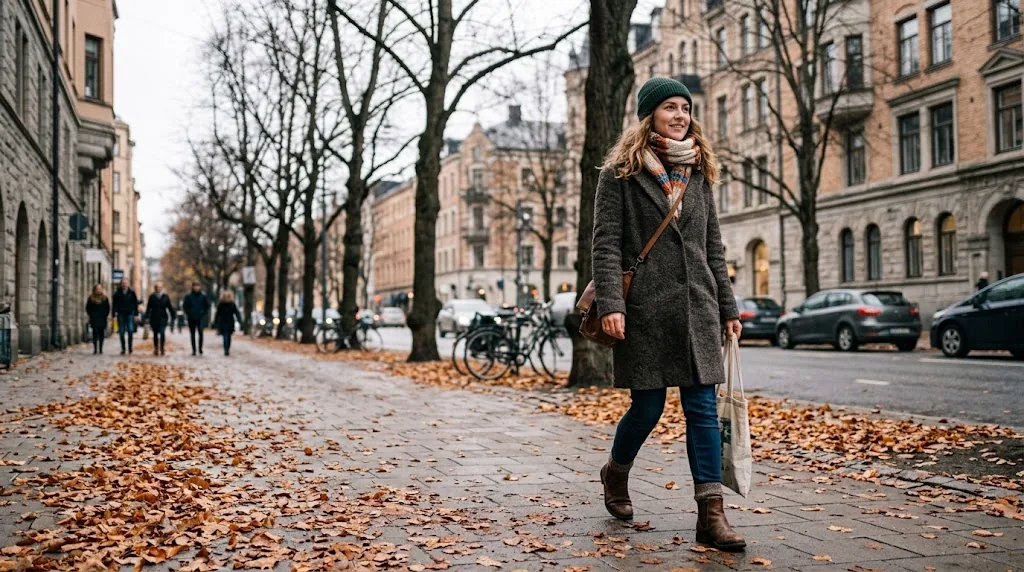
You need a base that breathes, a middle layer that traps warmth without looking bulky, and an outer shell that blocks wind or light rain. Leave the heavy wool parkas at home unless you are heading somewhere with brutal night drafts.
- Base layer: Cotton tees, lightweight long-sleeve shirts, or breathable blouses.
- Mid layer: Denim jackets, lightweight cardigans, flannel shirts, or fleece pullovers.
- Outer shell: A trench coat, a water-resistant windbreaker, or a tailored blazer.
If you are planning a longer trip, you can check out resources like the National Weather Service to monitor shifts before you board your flight. For organizing your broader itinerary around packing needs, look at our trip planner tool.
What To Wear For Men and Women During Day vs Evening
Daytime activities demand comfort and flexibility. If you are pounding the pavement in a city, your outfit needs to transition smoothly from a sun-drenched plaza into a shaded museum.
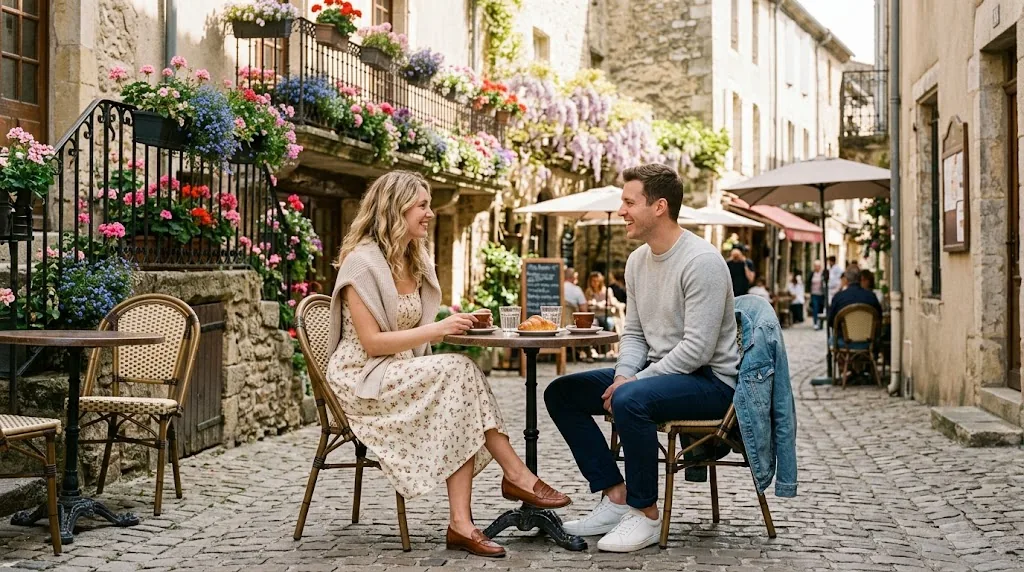
For women, a midi dress paired with a denim jacket and clean white sneakers works wonders. If pants are more your speed, try straight-leg chinos or comfortable jeans with a tucked-in tee and a cardigan thrown over your shoulders. For men, slim-fit chinos paired with a short-sleeve polo or an Oxford shirt with the sleeves rolled up hit the exact right note.
Transitioning your outfit from afternoon sightseeing to an evening out requires strategic planning. Women can swap daytime canvas sneakers for ankle boots and add a structured blazer over a simple silk camisole. Men can button their rolled-up sleeves, tuck in their shirt, and pull on a lightweight wool sport coat over their chinos. Honestly, wearing dark-wash denim instead of faded daytime jeans instantly elevates your entire look for a sit-down dinner.
Let us explore four specific outfit combinations tailored for different parts of your itinerary. For a busy workday or professional meeting, women should wear tailored ankle-length trousers, a lightweight silk blouse, and a sharp blazer, paired with loafers. Men should choose pressed cotton dress trousers, a long-sleeve button-down shirt, a knit tie, and leather derby shoes, keeping a wool overcoat ready for the morning commute.
For a relaxed weekend outing exploring local markets or parks, women thrive in stretch denim jeans, a breathable cotton crewneck sweater, a utility jacket, and supportive walking sneakers. Men can wear comfortable athletic-fit chinos, a short-sleeve crewneck tee, a zip-up fleece hoodie, and casual leather kicks. This combination keeps you comfortable during hours of standing and walking while adapting easily to sudden temperature drops.
For a heavy travel and transit day involving flights, trains, and walking through stations, comfort is paramount. Women should wear high-stretch leggings or joggers, an oversized cotton tee, a long cardigan, and slip-on walking shoes for easy security checks. Men should opt for elastic-waist travel trousers, a breathable merino wool sweater, a packable rain shell, and comfortable slip-on sneakers.
For an elegant evening out at a nice restaurant or theater, women can wear a midi-length knit dress, fleece-lined sheer tights, a tailored trench coat, and heeled boots. Men should wear dark tailored wool trousers, a crisp dress shirt, a leather jacket, and clean dress shoes. These options ensure you look refined while staying completely warm when nighttime temperatures plummet.
How Do You Dress For The Evening Drop?
As soon as the sun dips below the horizon, that 70-degree warmth vanishes. If you are heading out to dinner in London in August, where the average high of 70.7°F drops to a chilly 56.5°F evening low, short sleeves alone will not cut it.
Women should swap casual cardigans for a structured trench coat or a leather jacket worn over a sweater dress. Men should add a lightweight wool sport coat or a sturdy chore jacket over their daytime shirt. Honestly, keeping a light scarf in your bag is a total game changer when evening breezes pick up near the water.
Outfit Ideas For Different Activities
Different activities require different clothing strategies. You cannot wear hiking gear to a nice restaurant, and you definitely should not wear stiff dress shoes on a ten-mile city walk.
City Walking
You will log miles of walking in places like Tokyo in October, where you face an average low of 57.9°F alongside 13 rainy days. Footwear is everything here. Wear broken-in leather sneakers or supportive walking shoes. Pair them with stretch denim or athletic-casual joggers and a breathable hoodie under a packable rain shell.
A Work Day or Casual Meeting
If you need to look professional without overheating during the afternoon, stick to natural fibers. Linen blends or lightweight wool trousers keep you cool when the temperature peaks. Layer with a sharp blazer that you can easily take off if your meeting room gets stuffy.
A Nice Dinner Out
Evenings call for an upgrade in texture. Think dark-wash jeans or tailored trousers paired with silk blouses or fine-knit sweaters. Bring a smart overcoat because nighttime temperatures drop fast across almost every destination on our list.
A Day Hike
Hit the trails in places like San Diego in November, where you get an average high of 69.6°F and 4 rainy days. Wear moisture-wicking athletic wear, trail runners, and pack a windproof fleece. The sun feels hot when you are climbing, but mountain or coastal breezes can turn freezing in seconds.
Common packing mistakes ruin travel itineraries faster than bad weather. Many travelers assume seventy degrees means summer clothing exclusively, leaving sweaters and jackets at home. Another frequent mistake is packing brand-new shoes that cause painful blisters during long sightseeing walks. Always break in your walking shoes at home before taking them on a trip.
To help you pack efficiently without overpacking, here is a quick packing list checklist for a one-week trip in 70 degree weather. Bring three breathable base layer t-shirts, two long-sleeve shirts, one lightweight sweater or cardigan, one denim or leather jacket, one waterproof rain shell, two pairs of comfortable trousers or jeans, one pair of versatile shorts or a skirt if visiting very sunny destinations, five pairs of moisture-wicking socks, and two pairs of broken-in walking shoes.
Dealing With Rain and Wind in 70 Degree Weather
Seventy degrees can feel freezing if it comes with sideways rain and biting wind. London in June averages 10 rainy days with an average high of only 68.5°F, proving that summer does not automatically mean tropical heat.
Never trust a forecast that just shows the high temperature. If a city has ten or more rainy days in a month, you need waterproof footwear and a reliable shell jacket. Leave the suede shoes in your closet. Pack Gore-Tex boots or treated leather sneakers that can handle sudden puddles without soaking your socks.
Wind is another hidden trap. A 70.2°F day in Barcelona in May with 12.5 hours of daily sunshine feels entirely different from the same temperature in Lisbon in May if coastal gales are sweeping across the coast. Always pack one wind-blocking layer, even if the weather app looks promising.
Final Thoughts On Packing For 70 Degrees
Packing for this temperature range is all about respecting the daily range. Look at both the high and the low before you throw items into your bag. If you pack versatile layers, comfortable shoes, and a solid rain shell, you will stay comfortable whether you are exploring bustling streets or sitting outside at a quiet café.
Frequently asked questions
Is a 70 degree day considered warm or cold?
Seventy degrees is generally comfortable, but it feels different depending on the sun and wind. In places like Paris in September with an average high of 70.3°F, afternoons feel warm while evenings drop to a cool 54.1°F, requiring you to wear versatile layers throughout the day.
What kind of jacket should I pack for 70 degree weather?
Pack a lightweight, versatile outer layer like a denim jacket, trench coat, or windbreaker. Evening temperatures often drop significantly, such as in London in August where a 70.7°F high drops to a 56.5°F low, making a light jacket essential after dark.
Are shorts appropriate when it is 70 degrees outside?
Shorts work well during peak afternoon sunshine, especially in sunny spots like Lisbon in May with its 12.5 hours of daily sunshine. However, bring long pants or jeans because you will likely feel chilly once the sun sets or if unexpected rain hits.
How should I dress for a city walking tour in 70 degree weather?
Wear broken-in walking shoes, stretch denim or chinos, and a breathable top layered with a flannel or cardigan. Tokyo in October averages 70.2°F with 13 rainy days, so comfortable footwear and a packable rain shell are crucial for long walking days.