Best Places to Visit in Portugal, Matched to the Right Month
The best places to visit in Portugal each have their own season: Lisbon in May or September at 71.4°F to 77.9°F (21.9°C to 25.5°C), Porto in July and August, and Madeira all winter at 62.6°F (17.0°C).
The best places to visit in Portugal are Lisbon with Sintra and Cascais, Porto and the Douro valley, the Algarve coast, and the island of Madeira, with the Azores and the Alentejo as strong second trips. Time them differently. Lisbon is at its best in May and September, when it averages 71.4°F (21.9°C) and 77.9°F (25.5°C) with only 4 rainy days each. Porto wants summer, because it gets about 51.7 inches (1,313 mm) of rain a year and only July and August are reliably dry. Madeira works all year, with Funchal still averaging 62.6°F (17.0°C) in January.
Portugal is small enough that people try to see all of it in one week, and that usually means a lot of time on trains and motorways. We would rather pick two or three of the places below and match each to the month you can travel. If you only need the month question answered, our best time to go to Portugal guide compares Lisbon and Porto month by month. This article is the where to go companion.
Best places to visit in Portugal: the short list
Our data covers three cities: Lisbon, Porto and Funchal on Madeira. Every number below comes from one of those three, and the last column says which. Sintra, the Douro, the Algarve, the Alentejo and the Azores are not in our data, so for those we name the nearest data city and describe the general pattern without figures.
| Place | Best for | Best months | Typical number (data city) |
|---|---|---|---|
| Lisbon | Viewpoints, trams, food, nightlife | May, June, September | May high 71.4°F (21.9°C), 4 rainy days (Lisbon) |
| Sintra and Cascais | Palaces, gardens, coast day trips | May, June, September | Nearest is Lisbon; Sintra is usually cooler and mistier |
| Porto | Riverside old town, port lodges | June to September | August: 3 rainy days, high 77.9°F (25.5°C) (Porto) |
| Douro valley | Vineyards, river cruises, harvest | Late May, June, September | Nearest is Porto; inland summers are usually much hotter |
| Algarve | Beaches, cliffs, coastal walks | May, June, September | No data; usually warmer and sunnier than Lisbon |
| Evora and the Alentejo | Roman ruins, quiet towns, cork country | April, May, October | Nearest is Lisbon; inland summers are fierce |
| Madeira | Levada walks, gardens, mild winters | All year; April to June for walking | January high 62.6°F (17.0°C) (Funchal) |
| The Azores | Crater lakes, whale watching, hiking | June to September | No data; mild, humid and changeable |
Lisbon and the coast west of it
Lisbon
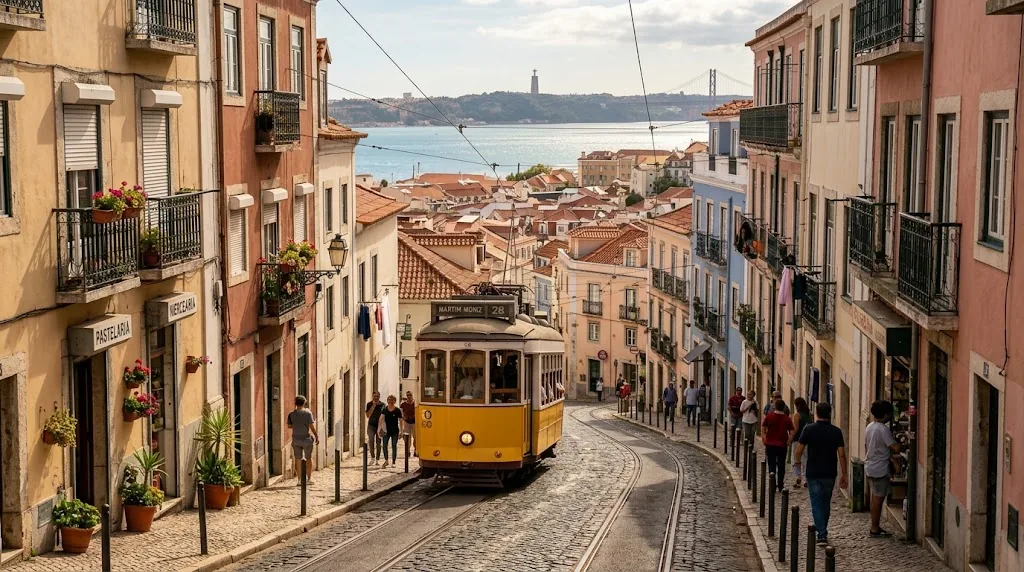
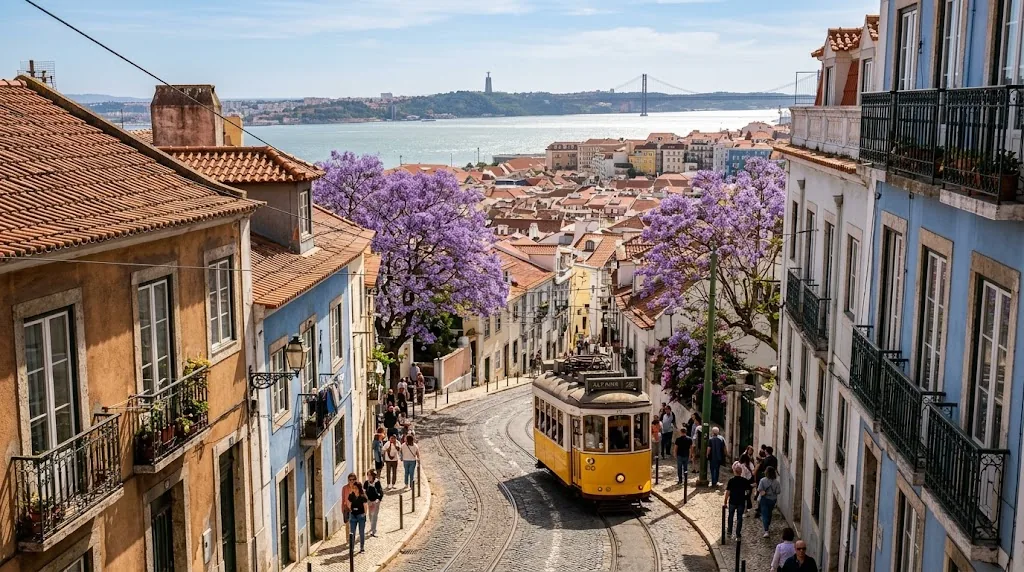
Lisbon is the obvious first stop and the most forgiving city in Portugal for weather. It gets about 23.0 inches (584 mm) of rain a year, less than half of Porto's total, and most of it falls between October and April. May is our favourite month: 71.4°F (21.9°C), 4 rainy days, 12.5 hours of sun and humidity down at 71%. June adds warmth (75.9°F, or 24.4°C) and is famous for the city's street festivals, which usually peak around the middle of the month.
September is the other sweet spot, at 77.9°F (25.5°C) with 4 rainy days and 11.1 hours of sun. July and August are dry (1 rainy day each) and hot on the hills, with August averaging 81.7°F (27.6°C). Lisbon's hills are steep, and climbing them at 3 pm in August is less fun than it sounds. See Lisbon in May and Lisbon in September for the details.
Winter is mild rather than warm. January averages 57.4°F (14.1°C) with 9 rainy days, and November is the wettest month at 3.6 inches (91 mm). It is still a decent city break in winter if you like museums and long lunches, and the queues for the famous trams and viewpoints shrink.
Sintra and Cascais
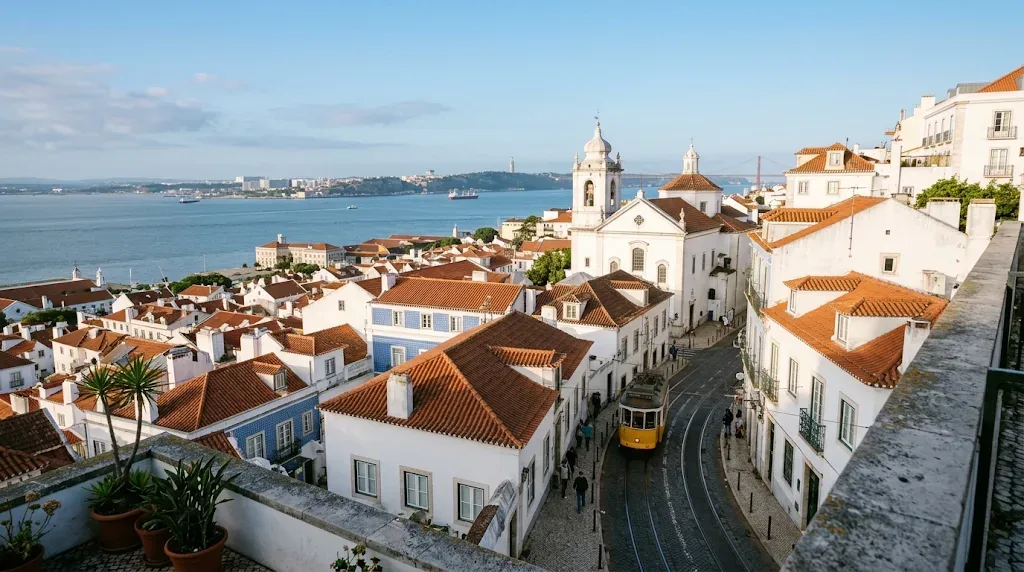
Sintra is a hill town of palaces and romantic gardens about 40 minutes from Lisbon by train, and Cascais is the seaside town at the end of the coastal line. We have no separate data for either, so Lisbon is the reference. Sintra sits higher and catches Atlantic cloud, and it is often cooler and mistier than the capital, even on a clear summer day in Lisbon. Bring a layer. The crowds at the main palaces are heavy in July and August, so a weekday in May or September is the better plan. Cascais is at its best for the beach from June to September.
Porto and the Douro valley
Porto
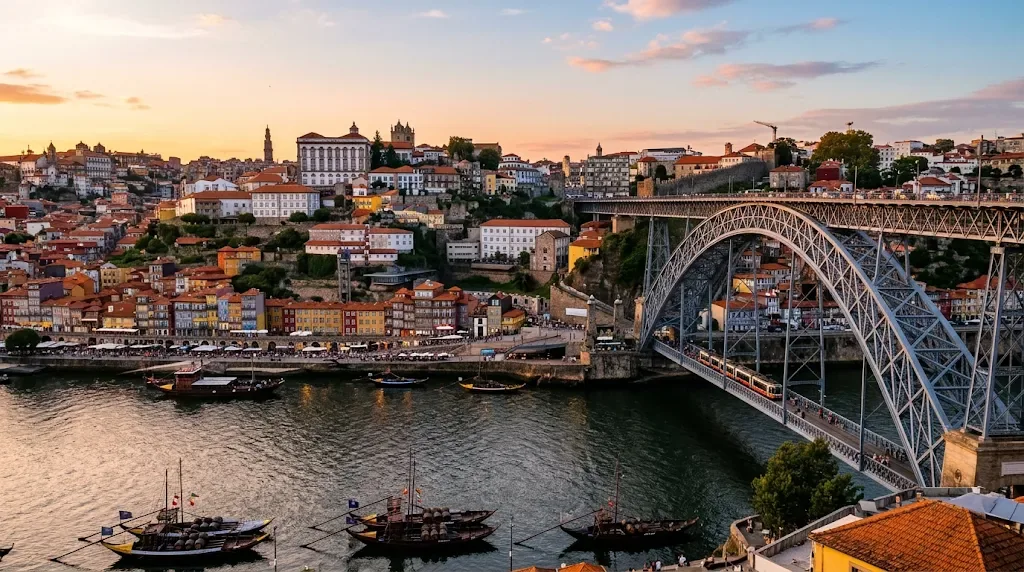
Porto is a granite city stacked above the Douro river, with the port lodges across the water in Vila Nova de Gaia. It is our pick for summer in Portugal, because the rest of the year it is wet. October, November and December each bring 6.8 to 6.9 inches (173 to 175 mm) of rain over 12 to 13 days, and January brings 6.5 inches (165 mm). Even April has 12 rainy days.
Summer turns that around. July averages 77.0°F (25.0°C) with 4 rainy days and 13.5 hours of sun, and August 77.9°F (25.5°C) with 3. Porto stays a few degrees cooler than Lisbon in summer, which makes it easier for walking. June is a fine compromise at 72.7°F (22.6°C) and 7 rainy days, and the city's big midsummer festival is usually on the night of 23 June. Look at Porto in June for the full month, or Porto in October if you want to see how quickly it turns.
The Douro valley
Upriver from Porto, the Douro is a valley of terraced vineyards, small quintas and slow river boats. We have no data for it. The nearest data city is Porto, but the valley is inland and sheltered, and summers there are usually much hotter and drier than on the coast. The grape harvest usually runs from September into early October, which is the most interesting time to visit and also the busiest at the estates. Late May and June are greener and calmer. We would avoid midsummer if you plan to walk between vineyards, because the heat in the valley is a different thing from Porto's breezy 77°F.
The Algarve and the Alentejo
The Algarve
The Algarve is the south coast: cliffs, sea caves, sandy coves and a long line of resort towns from Lagos to the Spanish border. We have no data city there. As a general pattern it is warmer, sunnier and drier than Lisbon, with a long beach season. The sea is Atlantic, though, so it is cooler than the Mediterranean, and it is warmest late in the summer.
For most people the best months are May, June and September. July and August are reliable but crowded, and prices rise sharply when European school holidays start. Winter is quiet and mild, good for coastal walking and golf, not for swimming. Many beach restaurants close for part of the off season.
Evora and the Alentejo
The Alentejo is the big, rolling interior between Lisbon and the Algarve: cork oaks, white villages, wine and the Roman temple in Evora. It is our pick for travellers who want Portugal without the crowds. It is not in our data, and Lisbon is the nearest data city, but inland summers there are known to be very hot. Go in April, May or October, when the countryside is pleasant and the towns are walkable in the afternoon.
The islands
Madeira
Madeira is the answer for anyone who wants warmth in winter without flying long haul. Funchal averages 62.6°F (17.0°C) in January, about 5 degrees Fahrenheit warmer than Lisbon, and the January low of 55.8°F (13.2°C) is mild enough that you rarely need more than a light jacket in town. The trade-off is rain: winter brings 9 to 10 rainy days a month, and December is the wettest at 3.4 inches (87 mm). See Funchal in January for the detail.
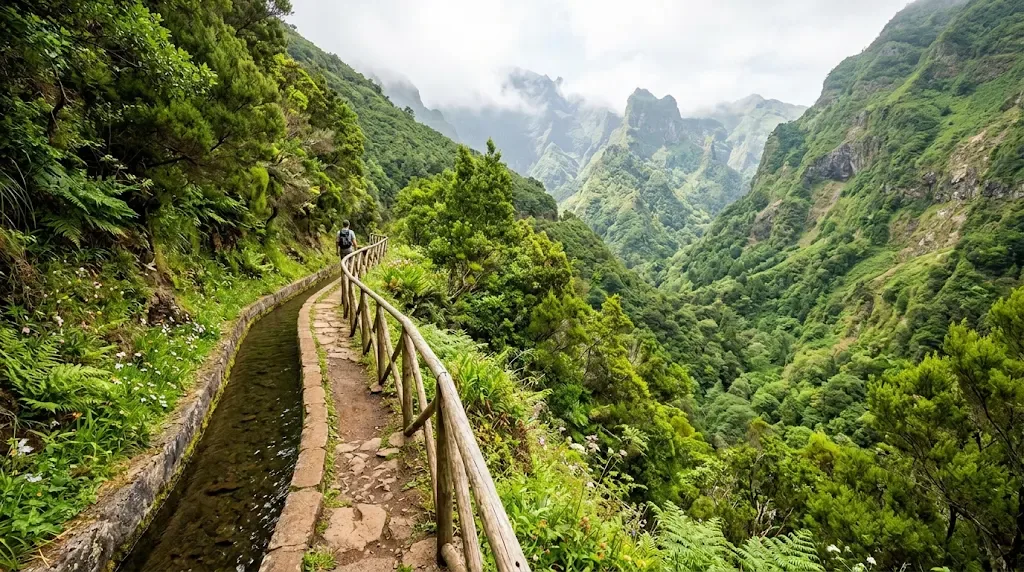
For the famous levada walks along old irrigation channels, we like April to June, when the island is green and the days are long (12.6 hours of sun in May). Summer is the driest stretch, with 2 rainy days in July and 3 in August, and August is the warmest month at 78.6°F (25.9°C). Note that the mountains in the middle of the island are much cooler and cloudier than Funchal, so our numbers describe the south coast. The Funchal weather page has every month.
The Azores
The Azores are nine islands in the middle of the Atlantic, known for crater lakes, hot springs, green pasture and whale watching. They are not in our data. The climate is mild all year but humid and changeable, and you can see sun, cloud and rain on the same afternoon. June to September is the usual window for hiking and boat trips, and the hydrangeas that line the roads usually bloom in early summer. In winter the sea is rough and some inter-island flights and ferries are affected by weather, so leave slack in your plans.
Which place suits which month
If your dates are fixed, this is how we would match them to the best places to visit in Portugal.
- December to February: Madeira first, Lisbon second. Funchal is the warmest of our three cities in every winter month. Skip Porto unless you are happy with 11 to 13 rainy days.
- March and April: Lisbon, the Alentejo and Madeira. Lisbon has 9 rainy days in both months, but April brings 11.3 hours of sun.
- May and June: nearly everywhere. Lisbon, Sintra, the Algarve, the Douro and Madeira are all in good shape.
- July and August: Porto, the Azores and the Algarve beaches. Avoid the Alentejo and the Douro at midday.
- September: Lisbon, the Douro for the harvest, and the Algarve once the school holidays end.
- October and November: Lisbon and Madeira. October in Lisbon is still 72.3°F (22.4°C), but rainy days jump from 4 to 9.
Three ways to split a week or two
Most trips combine two or three of the best places to visit in Portugal. These are the combinations we think work, with the months that suit each.
One week, first visit: four nights in Lisbon with a day each in Sintra and Cascais, then three in Porto. May, June or September.
Ten days with a beach: Lisbon, a night in Evora, then five days on the Algarve. Best in June or September.
A winter escape: a week on Madeira with a long weekend in Lisbon on the way. January to March, when Funchal averages 62.2°F to 63.5°F by day.
Trains link Lisbon, Porto and the Algarve well, but the Douro, the Alentejo and the Sintra hills are much easier with a car or a tour. Our trip planner can check the weather along your route for the dates you have in mind. If you are combining Portugal with its neighbour, see our best time to visit Spain guide, and for a wider view of the continent there is our list of the best places to visit in Europe.
Where we would skip, and when
- Porto from October to January, unless you are fine with rain most days.
- The Douro and Alentejo in July and August if you want to be outdoors in the afternoon.
- Sintra on summer weekends, when the palace queues are at their longest.
- The Algarve beaches from November to March if swimming is the point. It is pleasant, not warm.
Packing for Portugal
The country has three moods, and your bag should follow the places you choose. For Lisbon and the Algarve in summer, think light linen, a sun hat and shoes with real grip, because the polished stone pavements are slippery. For Porto outside summer, a waterproof jacket and shoes that can take a wet day matter more than anything else. For Madeira, pack proper walking shoes for the levadas and a warm layer for the mountains, even in August. A light sweater is useful everywhere in the evening, since Lisbon's August low is still only 65.5°F (18.6°C) and the coast can be breezy.
About the numbers
The best places to visit in Portugal on this list were chosen for variety: one big city, one river city, one coast, one interior and two island groups. Every temperature, rainfall and sunshine figure is a WeatherApex 20-year average for Lisbon, Porto or Funchal, covering 2006 to 2025. Averages describe a typical month, not your week, and a single wet spell or heatwave can move a real trip a long way from them. For the Algarve, Sintra, the Douro, the Alentejo and the Azores we have only used well-known general patterns, so check a local forecast before you book outdoor plans there.
If your trip falls in the colder months and you are weighing Madeira against other options, our guide to where in Europe is warm in January compares it with the rest of the south.
Frequently asked questions
Where is the warmest place in Portugal in winter?
Of the three cities in our data, Funchal on Madeira is the warmest in winter. It averages 62.6°F (17.0°C) in January with a low of 55.8°F (13.2°C), compared with 57.4°F (14.1°C) in Lisbon. Expect around 9 to 10 rainy days a month there from December to February.
Is Porto or Lisbon better to visit?
It depends on the month. Lisbon is drier, with about 23.0 inches (584 mm) of rain a year against 51.7 inches (1,313 mm) in Porto, so it is the safer choice outside summer. In July and August Porto is pleasant at 77.0°F to 77.9°F (25.0°C to 25.5°C) and a few degrees cooler than Lisbon.
When is the best time to visit the Algarve?
We have no data city on the Algarve, but May, June and September are usually the best balance of warm weather and manageable crowds. July and August are reliably dry and busy. For comparison, Lisbon to the north averages 75.9°F (24.4°C) in June with 3 rainy days, and the Algarve is generally a little warmer and sunnier.
What is the best month for walking on Madeira?
April to June is our pick for the levada walks. Funchal averages 65.1°F to 72.0°F (18.4°C to 22.2°C) in those months, May has 12.6 hours of sun, and rainy days fall from 10 in April to 6 in June. The mountain interior is cooler and cloudier than the coast, so pack a warm layer.