

Best Time to Visit Spain: Three Climates, Seven Cities, One Calendar
The best time to visit Spain is May or late September to October, when Madrid averages 74.3°F (23.5°C) in May and Seville 81.9°F (27.7°C). Seville hits 97.3°F (36.3°C) in July, so summer belongs to the coasts and the north.
For most trips, the best time to visit Spain is May or the last week of September into October. In May, Madrid averages 74.3°F (23.5°C), Seville 81.9°F (27.7°C) and Valencia 75.6°F (24.2°C), with only 4 to 6 rainy days and close to 13 hours of sun. Late September and October give you similar warmth, a sea that is still swimmable and far fewer people than August.
The trouble with any single answer is that Spain is really three climates sharing a passport. The interior bakes in summer and gets properly cold at night in winter. The Mediterranean coast stays mild almost all year. And the Atlantic north around Bilbao is green for a reason: it rains there in every month. So this guide splits the country by climate first and by season second. Our numbers cover seven cities: Madrid, Barcelona, Seville, Valencia, Malaga, Palma and Bilbao.
The Best Time to Visit Spain, City by City
Here is the quick answer for each city. The three temperature columns are average daily highs for May, July and October, which is the fastest way to see how much each place heats up in summer.
| City | Best months | May high °F (°C) | July high °F (°C) | October high °F (°C) | Wettest month |
|---|---|---|---|---|---|
| Madrid | May, late Sep to Oct | 74.3 (23.5) | 92.1 (33.4) | 70.0 (21.1) | October, 2.5 in / 64 mm |
| Seville | Mar to May, late Oct to Nov | 81.9 (27.7) | 97.3 (36.3) | 79.3 (26.3) | March, 3.2 in / 81 mm |
| Barcelona | Late May to June | 70.2 (21.2) | 82.6 (28.1) | 70.7 (21.5) | October, 3.6 in / 91 mm |
| Valencia | May to June, late Sep to Oct | 75.6 (24.2) | 87.3 (30.7) | 75.0 (23.9) | September, 2.8 in / 71 mm |
| Malaga | April to June, Sep to Oct | 74.1 (23.4) | 86.0 (30.0) | 74.3 (23.5) | November, 3.1 in / 79 mm |
| Palma | May to June, September | 73.9 (23.3) | 88.3 (31.3) | 74.1 (23.4) | November, 2.3 in / 59 mm |
| Bilbao | July to September | 65.8 (18.8) | 74.7 (23.7) | 68.9 (20.5) | November, 6.0 in / 153 mm |
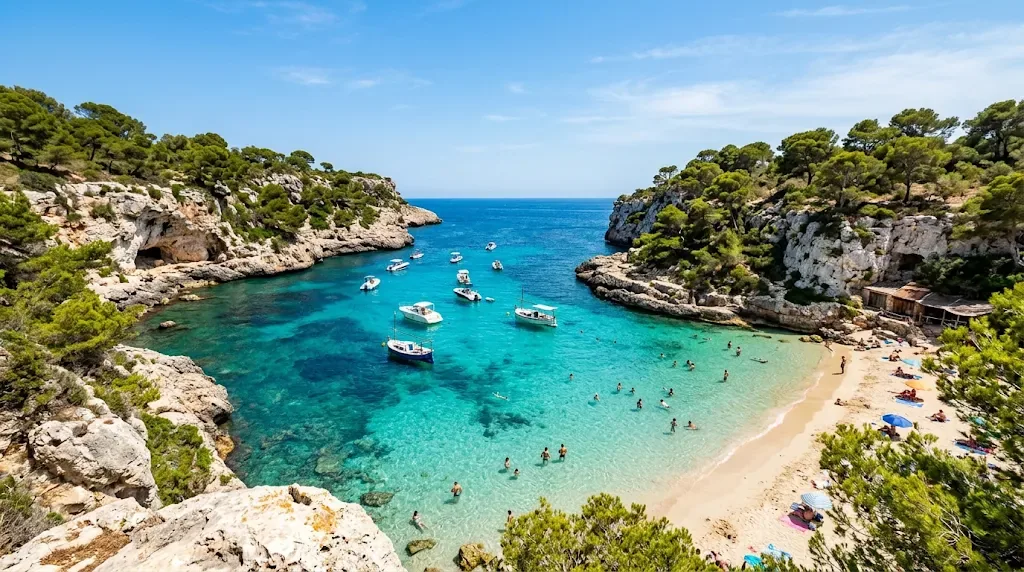
The pattern is easy to read once you see it laid out. Spring and autumn are the safe bets almost everywhere. Summer splits the country: Seville and Madrid get too hot for comfortable sightseeing, the coasts are warm and busy, and the north finally dries out. Winter is a good season only in the south and along the Mediterranean.
The Hot Interior: Madrid and Seville
Madrid
Madrid sits high on the central plateau, and that altitude explains its swings. July averages 92.1°F (33.4°C) with just 1 rainy day and 31% humidity, so it is dry heat, but it is relentless, and the city empties out in August as residents head for the coast. Some smaller shops and restaurants close for part of the month. January, on the other hand, averages 49.8°F (9.9°C) for a high and a low of 34.3°F (1.3°C), colder than many visitors expect from Spain.
Our favorite stretch is late September through October. September still reaches 80.2°F (26.8°C) with 4 rainy days, and October settles at 70.0°F (21.1°C), which is perfect for long days between the big art museums and the terraces. October does bring the year's most rain, 2.5 inches (64 mm) over 7 days, so it is not bone dry. The Madrid October weather page shows a typical month in detail.
Seville
Seville is the hottest city in our set and one of the hottest in Europe. July and August both average 97.3°F (36.3°C), with 0 rainy days, and nights stay warm at 71.1°F to 72.0°F (21.7°C to 22.2°C). We would not plan a sightseeing trip here in midsummer. If you are stuck with August dates, sightsee before 11am, take the afternoon off and go out again after dark like the locals do.
Spring is the reason to go. April averages 73.0°F (22.8°C) and May 81.9°F (27.7°C), the orange trees are in blossom, and the city's big spring events usually fall in this period: Holy Week processions around Easter and the April Fair a couple of weeks later. Expect high hotel prices on those dates. One surprise in the data is that March is Seville's wettest month at 3.2 inches (81 mm) over 9 days, so April is the safer spring pick. See Seville in April for the details.
Late autumn is the quieter alternative. November averages 67.1°F (19.5°C), and even January reaches 60.1°F (15.6°C), which makes Seville one of the better winter city breaks in Europe.
The Mediterranean Coast: Valencia, Malaga and Barcelona
Valencia
Valencia is the most balanced city on this list. It is warm without the inland extremes, with a May high of 75.6°F (24.2°C), 5 rainy days and 12.8 hours of sun. Summer is hot but manageable at 87.3°F (30.7°C) in July and August, and the beaches are right in the city. Mid March is the time of Las Fallas, the huge street festival with fireworks and burning sculptures. It is loud, crowded and unforgettable, and March weather is fine at 65.5°F (18.6°C).
Be a little careful with early autumn. September is the wettest month, with 2.8 inches (71 mm), and that rain tends to come in short, heavy bursts rather than drizzle. Winter is dry and mild: January sees only 4 rainy days, and February just 0.8 inches (20 mm) of rain. The Valencia May weather page is a good place to start.
Malaga and the Costa del Sol
Malaga is the winter sun pick. January averages 60.6°F (15.9°C) for a high and 48.9°F (9.4°C) for a low, the warmest nights of any city here, with 8.1 hours of sun. It is not beach weather, but it is long walk and outdoor lunch weather while most of Europe is gray. Our guide to where Europe is warm in January compares it with other options. Details are on the Malaga January weather page.
For the beach, aim for June or September. June reaches 81.0°F (27.2°C) with 2 rainy days and 13.7 hours of sun, the sunniest month of Malaga's year. September keeps 80.2°F (26.8°C) with a warm low of 68.4°F (20.2°C) and the sea at its warmest. July and August are hot at 86.0°F to 86.2°F (30.0°C to 30.1°C) and very busy. November is the one month to avoid if you want sun, with 3.10 inches (79 mm) of rain.
Barcelona
Barcelona follows its own rhythm, with late spring the sweet spot and a wetter autumn than most people expect. Rather than repeat it here, we covered the city month by month in our best time to visit Barcelona guide.
The Islands: Palma de Mallorca
Palma is a beach destination first, so the calendar is about warm water and how many people you are willing to share it with. June is our pick: 82.6°F (28.1°C), 4 rainy days and 13.5 hours of sun, before the school holidays fill the island. July is the hottest at 88.3°F (31.3°C) with only 2 rainy days, and it is peak season in every sense.
September is lovely for swimming, at 81.0°F (27.2°C), but rain picks up to 8 rainy days and 2.26 inches (57 mm). Late summer storms on the Balearics can be short and dramatic. From December to March the island is quiet and cool, with highs between 57.9°F and 62.1°F (14.4°C and 16.7°C), good for hiking and cycling and not much else. The Palma June weather page has more.
The Canary Islands are not in our dataset, so we have no figures for them, but they sit far south in the Atlantic and are the usual choice for winter beach weather in Spain.
The Green North: Bilbao and the Basque Coast
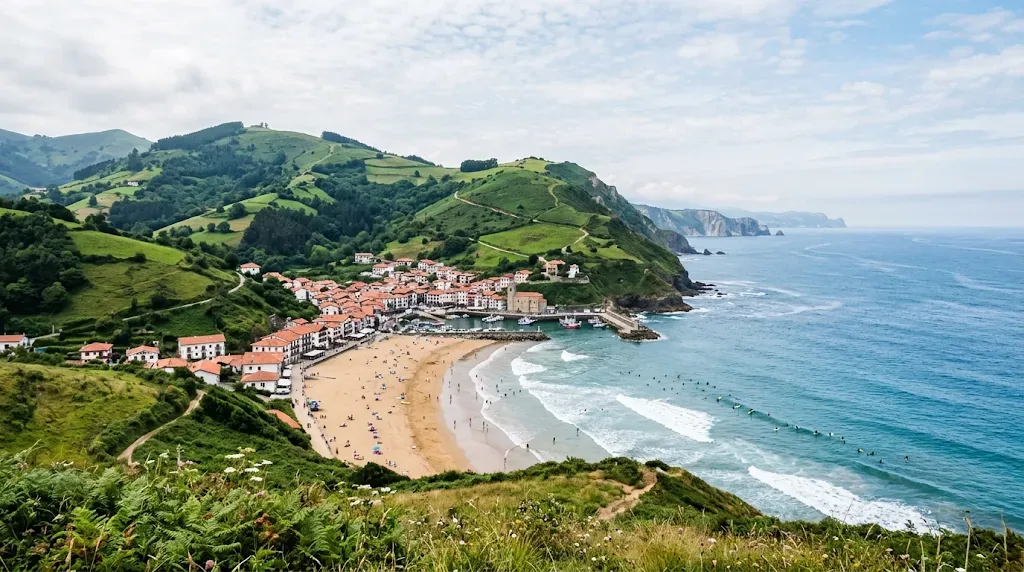
The north is a different country, weather wise, and the best time to visit Spain's Atlantic coast is the opposite of the south. Bilbao gets rain in every single month, from 10 rainy days in July and August to 16 in November, January and March. November is the wettest at 6.03 inches (153 mm). If you dislike rain, the only reliable window is July to September, when highs are a comfortable 73.2°F to 75.9°F (22.9°C to 24.4°C).
That mild summer is exactly why the north is worth knowing about. In August, when Seville sits at 97.3°F (36.3°C), Bilbao averages 75.9°F (24.4°C). For food, green hills and beach towns with surf, summer in the Basque Country beats sweating in Andalusia. See the Bilbao August weather page for a typical month.
Season by Season Across Spain
- Spring (March to May): the best all round season, and for a first trip, the best time to visit Spain. Andalusia is at its best in April and May, Valencia in May, Madrid in May. Easter week is busy and pricey everywhere.
- Summer (June to August): beaches and the north. Avoid inland cities in July and August unless you are fine with siesta hours. August is Spain's own holiday month, so coastal towns are packed.
- Autumn (September to November): late September and October are excellent on the coasts and in Madrid. Watch for autumn rain on the Mediterranean in September and October and in the north and south from November.
- Winter (December to February): mild in Malaga, Seville and Valencia, cold in Madrid at night, wet in Bilbao. Good for cheap city breaks; not a beach season on the mainland.
Choosing by Trip Type
Beach holiday: June or September on the Costa del Sol or in Mallorca. You trade a few degrees of sea warmth in June for much lighter crowds.
Cities and museums: Madrid and Seville in spring or October. Cool enough to walk all day.
Cheapest: November to February, except around Christmas and New Year. Seville and Malaga keep highs around 60°F (16°C) in January, and flights and hotels are usually at their lowest.
Families: early July on the coast or in the north. If school holidays force you into August, pick Bilbao or the Basque coast over the south.
Avoiding crowds: late October to early December, or the weeks after Easter but before June.
Planning a wider Iberian trip? Our best places to visit in Portugal guide fits neatly with Seville and Malaga, and best places to visit in Europe covers more cities across the continent.
What to Pack for Spain
For spring and autumn, pack layers: a T shirt for the afternoon, a light sweater or jacket for evenings, which drop to 51.1°F (10.6°C) in Madrid in October. For summer, light, loose clothes, a hat and serious sunscreen; Spanish churches and some monasteries ask for covered shoulders and knees, so a light scarf helps. For winter in Madrid, a warm coat. For the north in any season, a rain jacket and shoes that can take a soaking.
A Note on the Data
All the figures here are WeatherApex 20-year averages, 2006 to 2025, from the Open-Meteo historical archive, for the seven cities named above. They describe a typical month, not a forecast, and individual years vary a lot: heat waves in Seville and Madrid now regularly push past the July averages, and a single autumn storm can drop a month's rain on Valencia in a day. Use the averages to pick the best time to visit Spain for your route, then check the forecast a week before you fly.
A last practical point. Spain runs late: lunch around 2pm and dinner after 9pm are normal, and in summer that schedule is the smartest way to beat the heat. Plan museums and long walks for the morning, rest through the hottest hours, and save the old towns for the evening when the streets fill up again.
Frequently asked questions
What is the best month to visit Spain?
May is the best all round month. Madrid averages 74.3°F (23.5°C), Seville 81.9°F (27.7°C) and Valencia 75.6°F (24.2°C), with 4 to 6 rainy days and more than 12 hours of sun. October is the next best, with Madrid at 70.0°F (21.1°C).
Is Spain too hot in July and August?
Inland, yes for most sightseers. Seville averages 97.3°F (36.3°C) in both July and August and Madrid 92.1°F (33.4°C) in July. The coasts are cooler, Malaga at 86.0°F (30.0°C) in July, and Bilbao in the north averages just 74.7°F (23.7°C).
Where is warmest in Spain in winter?
Of the cities we track, Malaga and Seville. Malaga averages 60.6°F (15.9°C) in January with a mild low of 48.9°F (9.4°C), and Seville reaches 60.1°F (15.6°C). Madrid is much colder, at 49.8°F (9.9°C) with nights near freezing.
What is the rainiest part of Spain?
The north. Bilbao has rain in every month, with 16 rainy days in November, January and March and 6.03 inches (153 mm) in November. By contrast, Seville averages 0 rainy days in July and August.