Best Time to Visit California: Why Fall Beats Summer on the Coast
The best time to visit California is late September to October. San Francisco peaks at 71.2°F (21.8°C) in September and San Diego averages 77.5°F (25.3°C), each with just 1 rainy day.
The best time to visit California's big coastal cities is late September through October. San Francisco has its warmest month in September at 71.2°F (21.8°C), San Diego averages 77.5°F (25.3°C), and Los Angeles cools to 81.9°F (27.7°C) by October, with only 1 to 3 rainy days a month in all three. April and May are the runner up, greener and a little cooler, before the summer crowds.
California is big enough to have several climates at once, and the coast alone has two calendars. Southern California warms steadily into August. San Francisco barely warms at all until the fog backs off in early fall. Add the deserts and the Sierra Nevada, which have completely different seasons again, and "summer" means something different every few hours of driving. The figures below cover three cities, Los Angeles, San Francisco and San Diego, using WeatherApex 20-year averages. For the deserts and mountains we stick to well known patterns, without numbers.
Best Time to Visit California: Three Cities Side by Side
This table puts the average high and rainy days for each city in one place. The thing to notice is how differently the three curves move through the year.
| Month | Los Angeles high °F (°C) | Los Angeles rainy days | San Francisco high °F (°C) | San Francisco rainy days | San Diego high °F (°C) | San Diego rainy days |
|---|---|---|---|---|---|---|
| January | 66.7 (19.3) | 5 | 56.8 (13.8) | 9 | 63.9 (17.7) | 5 |
| February | 67.8 (19.9) | 5 | 58.3 (14.6) | 8 | 63.7 (17.6) | 6 |
| March | 70.0 (21.1) | 6 | 59.4 (15.2) | 10 | 64.4 (18.0) | 6 |
| April | 74.5 (23.6) | 3 | 61.5 (16.4) | 4 | 66.9 (19.4) | 3 |
| May | 77.0 (25.0) | 2 | 64.4 (18.0) | 2 | 68.2 (20.1) | 2 |
| June | 82.9 (28.3) | 0 | 67.8 (19.9) | 0 | 71.8 (22.1) | 0 |
| July | 88.2 (31.2) | 0 | 68.2 (20.1) | 0 | 75.7 (24.3) | 1 |
| August | 89.8 (32.1) | 1 | 69.4 (20.8) | 0 | 77.7 (25.4) | 1 |
| September | 88.0 (31.1) | 1 | 71.2 (21.8) | 1 | 77.5 (25.3) | 1 |
| October | 81.9 (27.7) | 2 | 69.1 (20.6) | 3 | 74.5 (23.6) | 2 |
| November | 74.5 (23.6) | 3 | 61.9 (16.6) | 6 | 69.6 (20.9) | 4 |
| December | 66.0 (18.9) | 5 | 56.1 (13.4) | 10 | 63.7 (17.6) | 6 |
Three patterns jump out. First, the rain is almost entirely a winter affair: from May to September, each city averages 0 to 2 rainy days a month. Second, San Francisco's year is remarkably flat, with highs between 56.1°F and 71.2°F (13.4°C and 21.8°C). Third, Los Angeles gets genuinely hot in late summer, peaking at 89.8°F (32.1°C) in August. Our Los Angeles figures reflect the wider city; right on the beach in Santa Monica or Malibu, summer afternoons are usually several degrees cooler than inland neighborhoods.
Why the Coast Has Two Summers
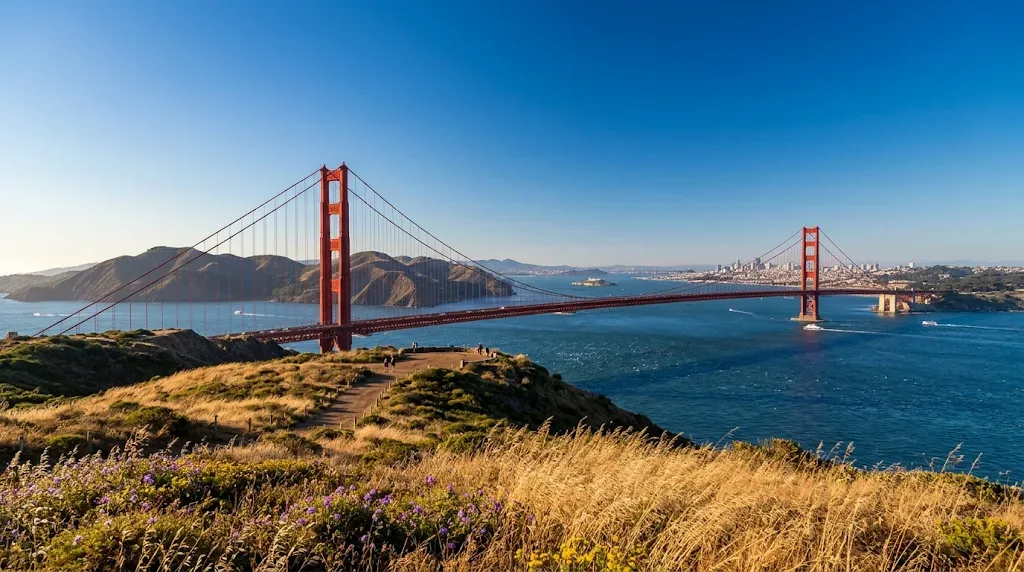
If you remember one thing about California weather, make it this. Cold ocean water runs down the coast, and in late spring and summer it chills the air above it into a thick marine layer. Locals call the gloomy mornings it causes "May Gray" and "June Gloom" in Southern California. In San Francisco the fog is more stubborn, and it often pours through the Golden Gate on summer afternoons. That is why July in San Francisco averages 68.2°F (20.1°C), cooler than September, and feels colder than that in the wind.
By September the pattern weakens, the fog thins out, and the coast finally gets its warm, clear stretch. That is the real reason September and October win. It is also why so many visitors pack for a California summer and end up buying a sweatshirt at Fisherman's Wharf.
Season by Season
Fall (September to November): our pick
If we had to name a single best time to visit California, it would be the second half of September. It is the most reliable month on the whole coast. San Diego averages 77.5°F (25.3°C) with 1 rainy day, San Francisco 71.2°F (21.8°C) with 1 rainy day, and Los Angeles 88.0°F (31.1°C), still hot but drying out. The ocean is at its warmest of the year in late summer and early fall, and once school is back in session, beaches and theme parks get quieter on weekdays.
October keeps most of that. Los Angeles drops to 81.9°F (27.7°C) with a low of 57.9°F (14.4°C) and just 2 rainy days. San Diego sits at 74.5°F (23.6°C). San Francisco is still at 69.1°F (20.6°C) with only 3 rainy days, perfect for walking the hills and the waterfront. See San Francisco in September and Los Angeles in October for the details.
Two honest caveats. Fall is the season for Santa Ana winds in Southern California, hot, dry gusts that can push temperatures well above average for a few days. And late summer and fall are also when wildfire risk usually peaks across the state. Most trips are never affected, but it is worth checking local conditions and air quality before you go. November is a transition month: Los Angeles is still a pleasant 74.5°F (23.6°C), but San Francisco cools to 61.9°F (16.6°C) and the first real rain arrives, 2.1 inches (53 mm) over 6 days.
Spring (March to May): green and uncrowded
Spring is our second choice, and for some trips, especially ones built around national parks, it is the best time to visit California. After the winter rain, the hills are green and wildflowers usually bloom across the inland valleys and deserts from late winter into spring. April is the turning point: rainy days drop to 3 in Los Angeles and San Diego and 4 in San Francisco, and Los Angeles reaches 74.5°F (23.6°C) with 11.5 hours of sun.
May is drier still, with just 2 rainy days in each city, but this is when the marine layer starts to build. Expect gray mornings along the coast, especially in San Diego, where May averages 68.2°F (20.1°C). They usually burn off by early afternoon. March is more of a gamble, with 6 rainy days in Los Angeles and San Diego and 10 in San Francisco.
Summer (June to August): south yes, San Francisco maybe
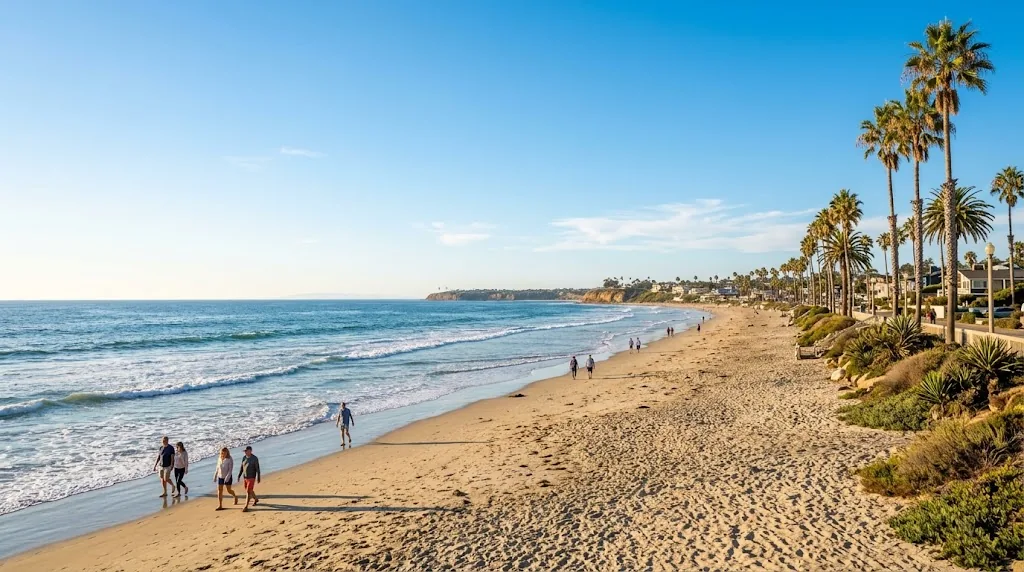
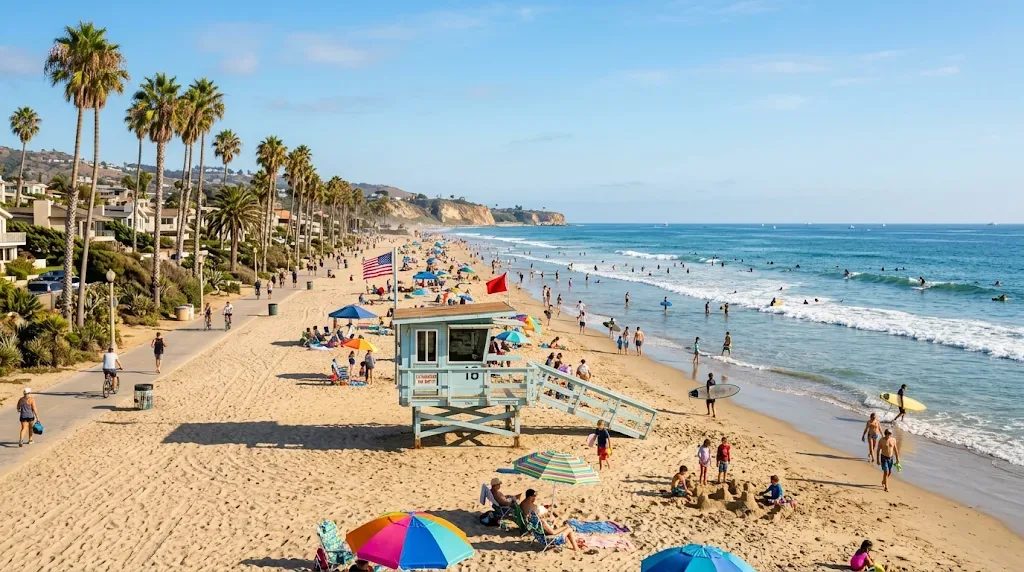
Summer is peak season in California, and for Southern California beaches it is excellent. San Diego averages 75.7°F (24.3°C) in July and 77.7°F (25.4°C) in August, with essentially no rain. Los Angeles runs hotter, at 88.2°F (31.2°C) in July and 89.8°F (32.1°C) in August. Theme parks and beaches are at their busiest, and prices for coastal hotels follow. The San Diego July weather page is a good snapshot.
San Francisco is the odd one out. With highs from 67.8°F to 69.4°F (19.9°C to 20.8°C) from June to August and lows around 54.0°F to 56.7°F (12.2°C to 13.7°C), it is jacket weather, especially by the water. It is still a fine city to visit in summer, just not a warm one. Check San Francisco in July before you pack.
Winter (December to February): mild, with rain
Winter is California's rainy season, though rainy here is relative. San Francisco takes the most, with 4.2 inches (107 mm) over 10 rainy days in December and 3.8 inches (97 mm) in January. Los Angeles gets 2.9 inches (74 mm) in December and 2.7 inches (69 mm) in January, but over just 5 rainy days each, so storms come in short bursts with plenty of clear days between them.
For winter sun, Southern California is one of the best options in the country. Los Angeles averages 66.7°F (19.3°C) in January and San Diego 63.9°F (17.7°C), though nights fall to around 45°F to 47°F (7°C to 8°C), so you will want a warm layer after dark. It is not beach swimming weather for most people, but it is ideal for hiking, museums and long lunches outdoors. See Los Angeles in January, and our list of the warmest places in the US in February for how it compares nationally.
Beyond the Three Cities: Desert, Mountains and Wine Country
We have no figures for these regions, so treat this as a general guide and check local sources for your dates.
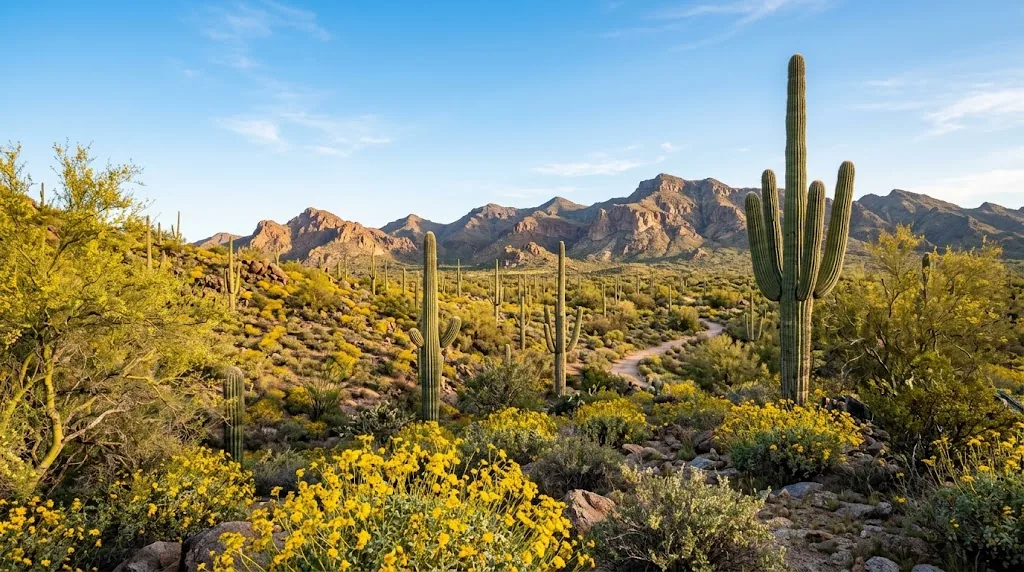
The deserts (Palm Springs, Joshua Tree, Death Valley) flip the calendar. Late fall through early spring is the season, with warm days and cold nights. Summer heat in the low deserts is extreme and genuinely dangerous for hiking, especially in Death Valley.
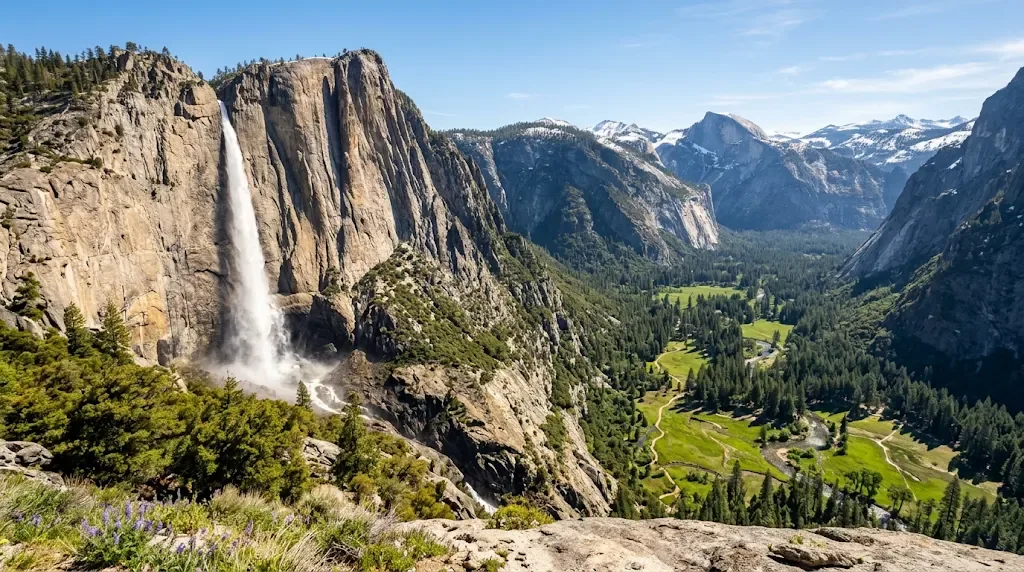
The Sierra Nevada (Yosemite, Lake Tahoe, Sequoia) is a winter snow destination and a summer hiking one. Yosemite's waterfalls are usually at their fullest in late spring as the snow melts, while high mountain roads such as Tioga Pass typically open only in late spring or early summer and close again with the first big snows in fall. Summer is also peak crowd season in the big parks, so reservations matter.
Wine country (Napa and Sonoma) is warmer than San Francisco in summer and at its busiest during the harvest, usually from late summer into October. Early fall is lovely here for the same reason the coast is good: warm, dry and settled.
Matching the Month to Your Trip
- Road trip down the coast: mid September to mid October, the best time to visit California by car. San Francisco and San Diego are both at or near their best.
- Beach holiday: August to September in San Diego or Los Angeles.
- Families and theme parks: late spring before schools break, or weekdays in September.
- Avoiding crowds and saving money: January to early March outside holiday weekends, accepting a few rainy days.
- National parks: spring for the deserts and Yosemite's waterfalls, summer to early fall for the high Sierra.
Combining California with other states? Our roundup of the best places to visit in the US pairs well with this guide, and the best time to visit New York lands in the same September and October window, which makes a coast to coast trip easy to time. For Hawaii as an add on, see our best time to visit Hawaii guide.
Packing for California
Layers, always, and in every season. A July day in San Francisco averages a low of 55.4°F (13.0°C) and a high of only 68.2°F (20.1°C), while Los Angeles reaches 88.2°F (31.2°C), so San Francisco can feel like a different season from Los Angeles on the same afternoon. Pack a light jacket or fleece even in August, a sun hat and strong sunscreen, comfortable walking shoes, and a swimsuit if you are heading south. Our guides to what to wear in 60 degree weather and 70 degree weather cover most of the coast for most of the year.
Where These Numbers Come From
All city figures here are WeatherApex 20-year averages (2006 to 2025) for Los Angeles, San Francisco and San Diego, drawn from the Open-Meteo historical weather archive. They describe a typical month, not a forecast, and California's weather swings a lot between wet and dry years. Microclimates matter too: a few miles inland from the ocean can mean a very different afternoon. Use these averages to choose the best time to visit California for your route, then check the forecast a week out, or line up cities and dates in our trip planner.
A final tip for coastal drives: plan the scenic stretches for the afternoon in late spring and summer, after the marine layer has lifted. Views along Big Sur or the Southern California cliffs are often hidden at 9am and wide open by 2pm.
Frequently asked questions
What is the best month to visit California?
September. San Francisco has its warmest month at 71.2°F (21.8°C), San Diego averages 77.5°F (25.3°C), and both see just 1 rainy day. Los Angeles is hot at 88.0°F (31.1°C) but cools to 81.9°F (27.7°C) in October.
Why is San Francisco so cold in summer?
Cold ocean water and summer fog keep the city cool. July averages only 68.2°F (20.1°C) with a low of 55.4°F (13.0°C), cooler than September at 71.2°F (21.8°C). Bring a jacket, especially near the water.
When is the rainy season in California?
Roughly November to March. San Francisco gets 4.2 inches (107 mm) over 10 rainy days in December, and Los Angeles 2.9 inches (74 mm) over 5 days. From June to September all three cities we track average 0 to 1 rainy days a month.
Is California warm in winter?
Southern California is mild. Los Angeles averages 66.7°F (19.3°C) in January and San Diego 63.9°F (17.7°C), though nights fall to about 45°F to 47°F (7°C to 8°C). San Francisco is cooler at 56.8°F (13.8°C) and wetter.