
Best Time to Visit Chicago: Month-by-Month Weather (and When to Skip)
September is our pick: a 72.7°F average high, 9 rainy days and 9.9 hours of sun a day. Here is how each season in Chicago compares, from 80.2°F in July to 31.1°F in January.
The best time to visit Chicago is September. The average high is 72.7°F (22.6°C), there are only 9 rainy days, and you still get 9.9 hours of sun a day. That is fewer wet days than any month from April to August, and the heat and the festival crowds have both eased off. June comes second at 76.1°F (24.5°C), and July and August are the choice if you want the full summer street-festival experience and can live with highs near 80°F (26.8°C).
Chicago is a city where the calendar matters more than most. The gap between the warmest month and the coldest is 49.1°F in average highs (July at 80.2°F against January at 31.1°F), and the city is a different place at each end. Below is what each stretch of the year is actually like, who it suits, and the months we would steer most visitors away from.
Best time to visit Chicago: the quick answer
Every month, using 20-year averages for the city. Rainy days means days with measurable precipitation, and that includes snow in the cold months.
| Month | Avg high | Avg low | Rainy days | Sunshine |
|---|---|---|---|---|
| January | 31.1°F (-0.5°C) | 19.4°F (-7°C) | 9 | 5.5 h |
| February | 32.5°F (0.3°C) | 19°F (-7.2°C) | 8 | 7 h |
| March | 43°F (6.1°C) | 30°F (-1.1°C) | 10 | 8.3 h |
| April | 53.2°F (11.8°C) | 39.7°F (4.3°C) | 13 | 9.1 h |
| May | 64.8°F (18.2°C) | 51.3°F (10.7°C) | 12 | 10.5 h |
| June | 76.1°F (24.5°C) | 62.6°F (17°C) | 12 | 11.8 h |
| July | 80.2°F (26.8°C) | 68°F (20°C) | 11 | 12.1 h |
| August | 79°F (26.1°C) | 67.3°F (19.6°C) | 11 | 11.6 h |
| September | 72.7°F (22.6°C) | 61°F (16.1°C) | 9 | 9.9 h |
| October | 60.4°F (15.8°C) | 48.9°F (9.4°C) | 11 | 7.7 h |
| November | 47.1°F (8.4°C) | 36.3°F (2.4°C) | 8 | 6.1 h |
| December | 36.7°F (2.6°C) | 26.1°F (-3.3°C) | 10 | 4.8 h |
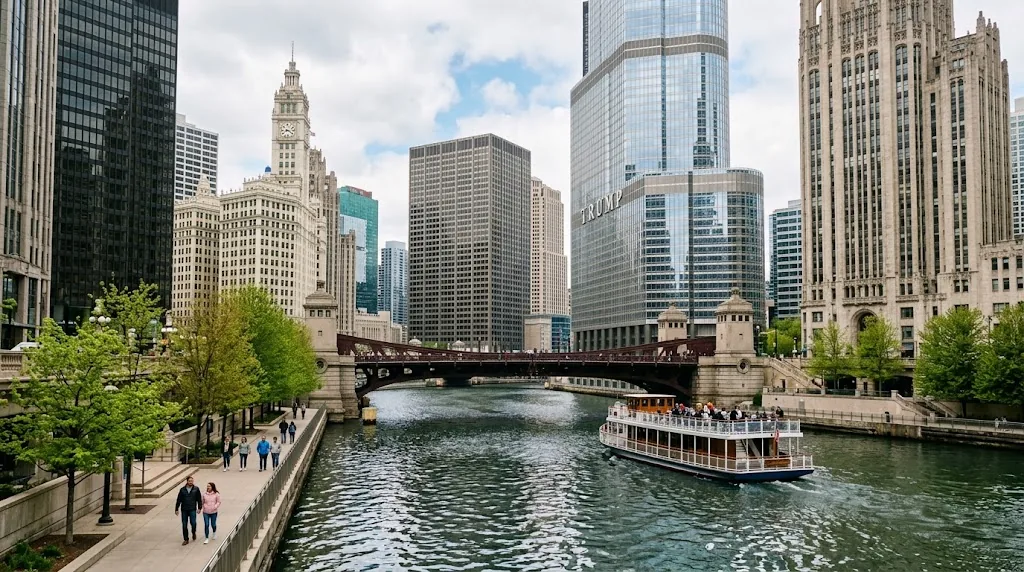
Two things stand out. Humidity barely moves, sitting between 71% and 76% all year, so the "muggy" feeling in summer comes from heat and the sun angle rather than a seasonal spike. And April, not a winter month, has the most rainy days (13). People assume Chicago's worst weather is January. For rain, it is April.
Summer in Chicago: festival season, with a price tag
If you define the best time to visit Chicago as the time the city is most itself, June to August is when it opens up. Highs run from 76.1°F (24.5°C) in June to 80.2°F (26.8°C) in July, and lows stay mild at 62.6°F to 68°F (17°C to 20°C), so evenings outdoors are easy. Sunshine peaks at 12.1 hours a day in July. The lakefront fills with people, the river tours run full, and there are outdoor concerts and street festivals on most weekends. If you picture Chicago in your head, this is probably the version you are picturing.
The downsides are real, though. Summer is the expensive, crowded season for hotels, and weekends book up early. Rain does not go away either: June has 12 rainy days and July and August have 11 each, usually as short storms that blow through rather than all-day drizzle. A heat wave can push well past those averages for a few days at a time, and the city can feel close when it does. Our July weather page for Chicago shows the month in more detail, and June and August are close to it.
Our take: June beats July and August for most people. It is 4 degrees cooler on average (76.1°F against 80.2°F), the daylight is the longest of the year, and the festival calendar is already running. August is fine, but it is the month we would book last.
September and October: the shoulder season we would book
September
This is the month we keep coming back to. The average high drops to 72.7°F (22.6°C), nights are around 61°F (16.1°C), and the rainy days fall to 9, the lowest count between March and November except for November itself at 8. Daylight is still decent at 9.9 hours of sun. You can eat outside, walk the lakefront without sweating through your shirt, and the summer crowds thin once schools are back. Early September can still feel like August, and the second half starts to feel like fall. See Chicago weather in September.
October
October is a gamble on the weather that is often worth taking. The average high is 60.4°F (15.8°C) and the low is 48.9°F (9.4°C), with 11 rainy days and 7.7 hours of sun. That is a 12-degree drop in highs from September, and the cold arrives quickly in the second half of the month. Fall color in the parks tends to peak in the middle of the month, and the city hosts a large road marathon in October that fills hotels for a weekend, so check dates before booking. A warm jacket and a rain layer are not optional. Details are on the October page.
Spring: the slow, wet, uneven season
Spring is where Chicago tests your patience. March averages 43°F (6.1°C), with lows still below freezing at 30°F (-1.1°C). April is 53.2°F (11.8°C) and the wettest month by days, at 13. May finally feels like spring at 64.8°F (18.2°C), with 12 rainy days and 10.5 hours of sun.
The lake matters here. Lake Michigan stays cold long after the air warms up, and on a spring afternoon with the wind coming off the water, the lakefront can feel noticeably colder than neighborhoods a mile or two inland. Dress for the lake, not for the number on the weather app. That same effect works in reverse in early winter, when the lake holds heat and softens the first cold snaps a little. And it is part of why Chicago gets lake-effect cloud and snow in winter when the wind is right, though we do not have snowfall totals in our dataset, so we will not put a figure on it.
Which spring month is the best time to visit Chicago? May, clearly, and the second half of it in particular. We would skip April unless you are going for a specific event or a baseball game and can handle chilly rain. March is for people who want low prices and do not mind bundling up. The river dyeing for St. Patrick's Day usually draws a crowd in March, which is a fun reason to go if you can handle highs of 43°F. Weather by month: April and May.
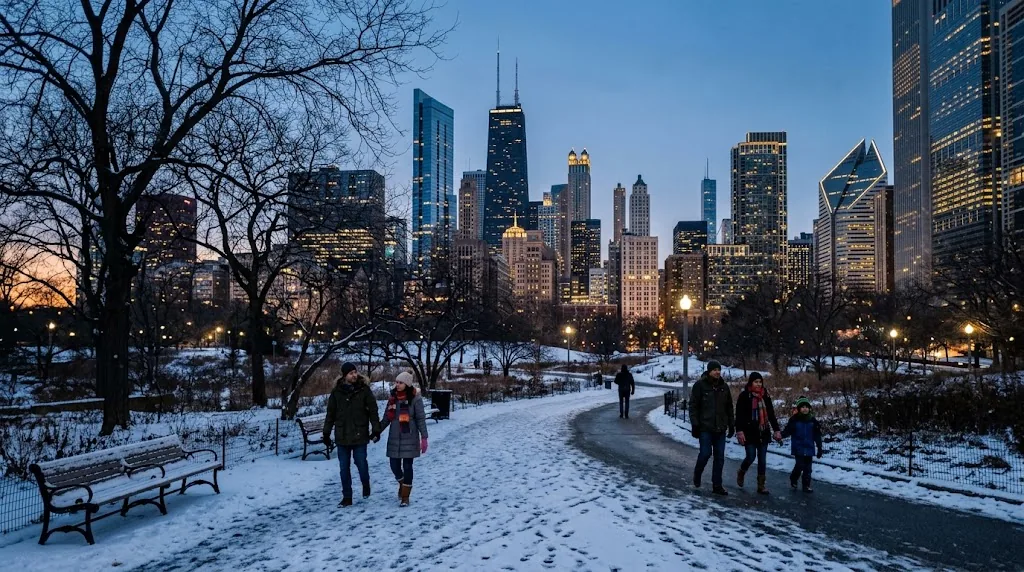
Winter in Chicago: when the cold is the point
January and February are the coldest months. January averages 31.1°F (-0.5°C) for the high and 19.4°F (-7°C) for the low; February's low is 19°F (-7.2°C). Sunshine is thin at 5.5 hours in January, and December is the greyest month of the year at 4.8 hours. Those are averages. Individual cold snaps can be far harsher, and wind off the lake makes it feel worse than the thermometer says.
So who should go? Not many first-time visitors. But there is a case for it. Museums are quieter, hotel rates drop, and the city's food scene does not take a winter break. A weekend of museums, deep-dish pizza and a hot drink works fine at 31°F as long as you are dressed for it. If you want the holiday version, the Christmas markets and the lights usually run from late November through December. November itself is cold but not brutal, with a high of 47.1°F (8.4°C) and 8 rainy days. December drops to 36.7°F (2.6°C). Bring serious boots, a hat and gloves, and a coat that blocks wind. Our guide to what to wear in 40 degree weather is a good starting point, and you will want to go a layer warmer than that in January. Check the January page before you pack.
If you are asking about the best time to visit Chicago for a first trip, we would avoid late January and February. The cold is the deepest, the days are short, and the outdoor parts of the city, which are the best parts, are mostly off the table.
The best time to visit Chicago for your kind of trip
- First visit, best all-round weather: September, or the second half of June.
- Festivals, concerts and the lakefront at full volume: July, with June as the cheaper-feeling alternative.
- Sightseeing and architecture walking: May and September. Highs of 64.8°F and 72.7°F (18.2°C and 22.6°C) are comfortable for long days on foot.
- Lowest hotel prices: January and February, with the caveat that you are paying for it in cold. Prices are not in our dataset, so check rates for your dates.
- Families with school-age kids: late June to mid-August is the realistic window, and the beaches are the draw. Book early and plan indoor backups for stormy afternoons.
- Avoiding crowds: late April and May, or November. Fewer visitors, though you trade away warmth.
- Holiday atmosphere: early to mid December, with a hat and a good coat.
What to pack
For June to August, pack light layers, a rain shell, comfortable walking shoes and sunscreen, plus a sweater for air-conditioned venues and breezy evenings by the water. For May and September, add a medium jacket. With highs near 70°F (21°C), our what to wear in 70 degree weather guide covers the daytime, and the evenings often feel cooler than that. In April, October and November, the 50s and low 60s call for a warm coat and an umbrella, and the 50 degree weather guide helps. December to February needs thermal layers, insulated boots and a windproof outer layer. Pack one more layer than you think you need, and you will usually be right.
If Chicago is too cold for your dates
If you are weighing Chicago against other northern cities, the same seasonal logic applies. Our guides to the best time to visit Toronto and the best time to visit Montreal cover cities with a similar summer-and-winter split. Use the trip planner to compare your dates once you have a shortlist.
How we picked: a note on the data
The numbers here come from WeatherApex climate data for Chicago: 20-year averages from 2006 to 2025 for temperature, rainy days, sunshine hours and humidity. They describe what is typical, not what will happen on your dates. A June week can be cool and grey or hot and stormy, and a January can bring a thaw. Use the averages to pick a month, then look at the forecast a week or so before you go and adjust your packing. You can see the full year at a glance on the Chicago weather overview.
A few small things shape how a trip feels, and none of them show up in a monthly average. Sunset comes before 5 pm for much of December, so plan indoor afternoons and save the skyline views for early evening. In summer the opposite is true: with 12.1 hours of sun a day in July, you can pack a morning of museums, an afternoon on the lakefront and still have light for a river walk after dinner. And because humidity stays in the low-to-mid 70s all year, you should not expect winter to feel dry or summer to feel tropical. It is the temperature and the wind that decide how the day goes.
One practical tip to finish: if you are torn between two months, choose the one with the better weather and book your hotel with free cancellation. Chicago rewards flexibility, and a good forecast two weeks out is worth more than any average.
Frequently asked questions
What is the best month to visit Chicago?
September is the best all-round month. The average high is 72.7°F (22.6°C), there are 9 rainy days and about 9.9 hours of sun a day. June is a close second at 76.1°F (24.5°C), and May works if you want fewer crowds.
How cold does Chicago get in winter?
January averages a high of 31.1°F (-0.5°C) and a low of 19.4°F (-7°C), and February is similar at 32.5°F and 19°F. December is the greyest month with only 4.8 hours of sun a day. Wind off Lake Michigan makes it feel colder than those averages.
Is Chicago too hot in summer?
Not on average. July is the warmest month at 80.2°F (26.8°C) with lows near 68°F (20°C), and August is 79°F. Heat waves can push beyond that for a few days, and July still brings about 11 rainy days, usually as short storms.
When is the cheapest time to visit Chicago?
Hotel rates are usually lowest in January and February, when the average high is only about 31°F to 33°F (-0.5°C to 0.3°C). November is a milder budget option at 47.1°F (8.4°C) with 8 rainy days. Check actual rates for your dates, since we do not track prices.