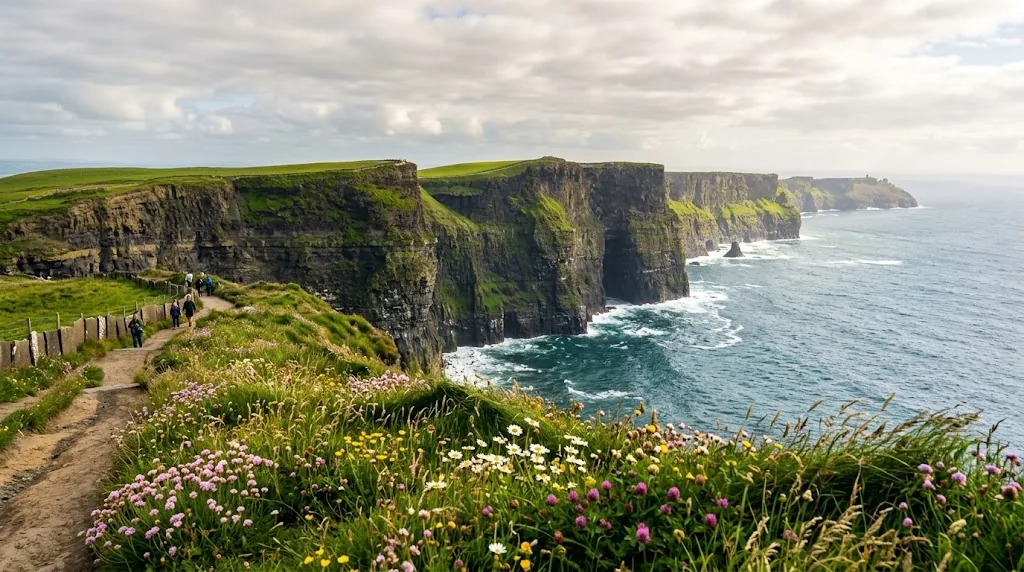
Best Time to Visit Ireland: Monthly Weather Guide & Travel Tips
Discover the best time to visit Ireland. May brings high average temperatures of 58.8°F / 14.9°C in Dublin and 11.1 daily sunshine hours.
The best time to visit Ireland is during May and June, when Dublin sees average high temperatures reaching 58.8°F / 14.9°C to 63.7°F / 17.6°C alongside a year-high 11.1 to 11.3 hours of daily sunshine. If you want mild air, green hills, and long daylight hours without standard summer crowd surges, targeting this late-spring window hits the exact sweet spot.
Planning a trip across the Atlantic takes real strategy. Most American travelers default to booking mid-summer flights. Then they arrive and find packed tour buses at the Cliffs of Moher alongside premium price tags on rental cars. Ireland's weather operating system doesn't quite work like standard American climates. There is no brutal summer heat wave. You won't find a completely dry month either. Instead, you're constantly balancing daylight, rain frequency, temperature, and tourist crowds.
Wondering how to time your big trip? Here is your complete, honest breakdown of Irish weather throughout the year, raw monthly numbers, and exact advice on when you should hop on a plane.
What is the best time to visit Ireland for great weather?
May, June, and July offer the warmest temperatures and the longest daylight hours of the year. June brings average highs of 63.7°F / 17.6°C in Dublin and 63.5°F / 17.5°C in Cork. More importantly, June delivers 11.3 hours of sunshine per day in Dublin, giving you clear evening skies past 10:00 PM. That extra light turns long coastal drives into pure enjoyment rather than a race against sunset.
Here is how weather averages break down month-by-month across the island, based on 20-year historical data from 2006 to 2025:
| Month | Avg High (°F / °C) | Avg Low (°F) | Rainy Days | Sunshine (hrs/day) |
|---|---|---|---|---|
| January | 46.2°F / 7.9°C | 38.1°F | 13 | 4.2 |
| February | 47.5°F / 8.6°C | 38.8°F | 12 | 5.5 |
| March | 49.8°F / 9.9°C | 39.6°F | 13 | 7.5 |
| April | 53.6°F / 12°C | 42.4°F | 12 | 9.7 |
| May | 58.8°F / 14.9°C | 47.5°F | 13 | 11.1 |
| June | 63.7°F / 17.6°C | 52.5°F | 14 | 11.3 |
| July | 66.6°F / 19.2°C | 55.6°F | 15 | 10.5 |
| August | 65.7°F / 18.7°C | 55.2°F | 14 | 9.6 |
| September | 62.2°F / 16.8°C | 52.3°F | 12 | 8.2 |
| October | 57.2°F / 14°C | 48.6°F | 13 | 6.1 |
| November | 50.7°F / 10.4°C | 43°F | 13 | 4.7 |
| December | 47.5°F / 8.6°C | 39.7°F | 14 | 3.7 |
Down south in Cork, conditions track remarkably close to Dublin. January in Cork averages 47.3°F / 8.5°C with 13 rainy days and 4.2 hours of sunshine. By July in Cork, you'll experience highs averaging 66.2°F / 19°C and 13 rainy days. Notice something constant? Rain happens every single month. September in Cork drops to 10 rainy days—its lowest of the year—with crisp daytime highs around 62.2°F / 16.8°C.
Honestly, I'd skip waiting around for a dry spell that won't happen. You pack a quality rain jacket, accept a few passing showers, and enjoy the green hills.
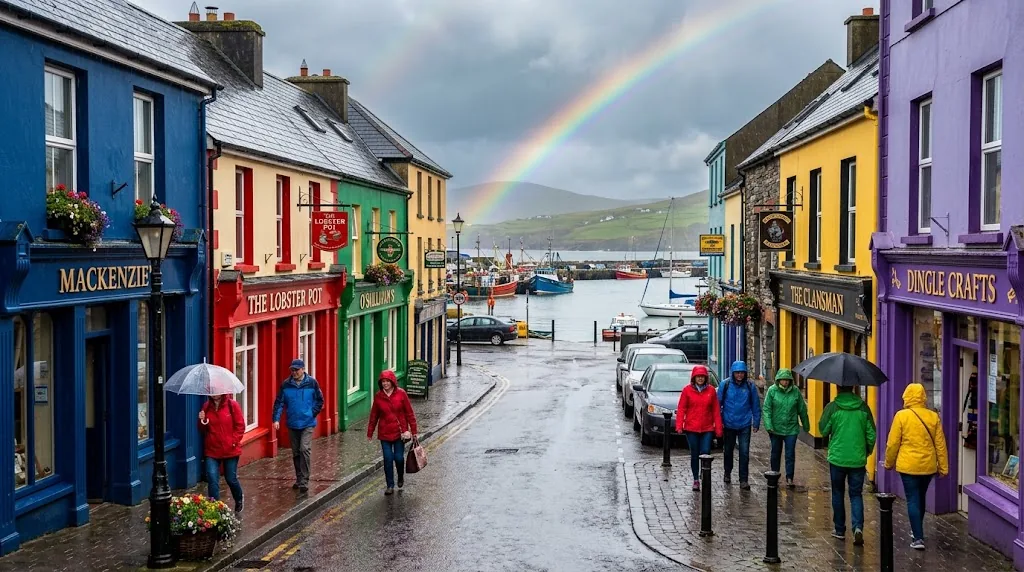
When is the best time to visit Ireland to avoid crowds?
Shoulder season gives you the best breathing room. April, May, September, and October hit that sweet balance between manageable weather and empty footpaths. During April in Dublin, average highs top 53.6°F / 12°C with 12 rainy days and 9.7 daily sunshine hours. You get crisp skies, manageable air, and noticeably shorter queues at major spots.
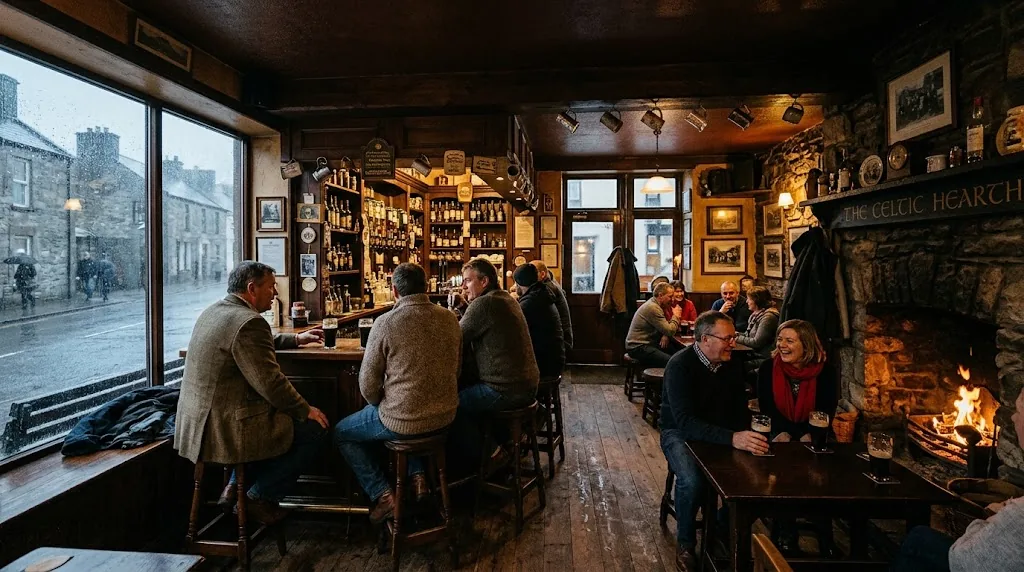
September stands out as another prime choice. September in Dublin sees 62.2°F / 16.8°C highs, just 12 rainy days, and 8.2 daily hours of sun. The summer holiday rush clears out after August. Flight prices drop. Local pubs return to their natural atmosphere instead of feeling packed shoulder-to-shoulder with tour groups.
Skip July and August if narrow roads and busy parking lots stress you out. July in Dublin tops out at 66.6°F / 19.2°C. That makes it the warmest month on paper, but it also brings 15 rainy days. That's the highest precipitation frequency of the year. You end up paying maximum rates for rental cars and accommodations while dodging frequent summer drizzles.
How does Irish weather vary by month?
Every single month in Ireland brings a distinct feel, a specific set of challenges, and clear advantages. Understanding these nuanced monthly shifts lets you pick the exact travel window that matches your priorities.
January
January sits right in the thick of winter. January in Dublin registers average highs of 46.2°F / 7.9°C and overnight lows of 38.1°F. Rain hits on 13 days, while daily sunshine lingers at 4.2 hours. January in Cork presents almost identical conditions with a 47.3°F / 8.5°C high, 39°F low, 13 rainy days, and 4.2 sunshine hours.
What does it feel like on the ground? Damp, raw, and dark fairly early. Daylight vanishes by 4:30 PM. Strong winds off the Atlantic make that 46°F high feel significantly chillier, especially along open coastlines or unshaded ruin sites. Pack thermals, fleece layers, waterproof boots, and a heavy windproof coat.
Crowds disappear entirely. You'll have museum halls and castle yards virtually to yourself. Hotel rates plummet to yearly lows, making January ideal for budget travelers focused on Dublin galleries, cozy pub hearths, and indoor heritage sites. The main downside? Short daylight hours severely limit long rural road trips, and smaller seasonal tours in rural regions often close down completely.
February
February brings minor daylight gains, though temperatures stay cool. February in Dublin climbs slightly to an average high of 47.5°F / 8.6°C with lows around 38.8°F. Rainy days drop to 12, while daily sunshine jumps to 5.5 hours. Down in County Cork, February in Cork tracks closely with a 48.2°F / 9°C average high, 39.6°F low, 12 rainy days, and 5.2 hours of sun.
Early signs of spring emerge across rural pastures as early snowdrops bloom. The air remains crisp and damp. You still need thick wool socks, warm layers, and reliable waterproof gear. Late afternoon sunlight stretches past 5:30 PM, giving you extra leeway for light scenic driving.
Foot traffic stays very low across primary attractions like Blarney Castle or Trinity College. It works well for urban exploration, road trips focused on historic sites, and budget-conscious travel. The main drawback remains chilly, unpredictable weather that can bring mist, sudden cloudbursts, and damp air back-to-back.
March
Spring begins taking hold during March. March in Dublin pushes average highs up to 49.8°F / 9.9°C while lows hold at 39.6°F. Rain lands on 13 days, but daily sunshine rises significantly to 7.5 hours. Over in Munster, March in Cork reaches 50.2°F / 10.1°C with a 39.7°F low, 13 rainy days, and 7 sunshine hours.
Air temperatures feel noticeably milder under direct sun, though brisk winds persist. You'll want to pack a versatile rain jacket, medium sweater layers, and sturdy walking shoes. St. Patrick's Day mid-month causes flight rates and hotel prices to spike around Dublin, so book well ahead if visiting mid-month.
Honestly, I'd book the second half of the month if you want to dodge high holiday hotel surcharges. March delivers solid daylight for outdoor walking routes before major international tourist surges arrive. On the downside, weather can swing wildly from bright morning sun to sudden hail or rain within two hours.
April
April opens up prime shoulder-season travel opportunities. April in Dublin reaches an average high of 53.6°F / 12°C with lows climbing to 42.4°F. Rain falls on just 12 days, while daily sunshine leaps to 9.7 hours. Down south, April in Cork averages 54.3°F / 12.4°C for highs, 42.8°F for lows, 12 rainy days, and 9.2 sunshine hours.
The landscape brightens quickly. Wildflowers begin sprouting along roadside hedgerows. Temperatures are comfortable for walking around rock ruins or exploring urban neighborhoods without heavy winter clothing. Pack mid-weight jackets, light sweaters, waterproof shoes, and an accessible shell jacket.
Crowd levels remain moderate. You can explore iconic routes along the Wild Atlantic Way without getting stuck behind endless lines of rental vans. Prices for lodging stay reasonably grounded compared to summer averages. A clear disadvantage is that coastal breezes still carry a cold edge, especially on cliff walks like Moher or Howth Head.
May
May stands out as one of the single finest periods for an Irish road trip. May in Dublin averages a warm 58.8°F / 14.9°C high and 47.5°F low, paired with 13 rainy days and a brilliant 11.1 hours of sunshine. May in Cork matches this performance closely, posting a 59°F / 15°C high, 47.3°F low, 14 rainy days, and 10.1 sunshine hours.
Long days mean daylight lingers well past 9:00 PM. Hillsides turn deep green, daylight seems endless, and outdoor walking paths dry out. Bring light layers, short-sleeve shirts, a fleece sweater, and a light rain jacket for brief showers. You won't need heavy thermal gear anymore.
May is superb for long coastal drives, national park hikes, and outdoor photography. Crowd numbers are higher than in April, but they remain far below July peaks. If you must pick a flaw, rental car rates begin climbing upward toward high-season pricing, making early vehicle reservations necessary.
June
June kicks off summer with long daylight hours and warm weather. June in Dublin delivers average highs of 63.7°F / 17.6°C, lows of 52.5°F, 14 rainy days, and a yearly peak of 11.3 daily sunshine hours. June in Cork hits 63.5°F / 17.5°C highs, 52°F lows, 12 rainy days, and 10.6 hours of sunshine.
It feels genuinely comfortable outdoors. Sunlight stretches until nearly 10:00 PM, giving you extra hours to explore scenic loops after dinner. Pack t-shirts, light long-sleeve layers, comfortable walking sneakers, and a light waterproof layer. Sunscreen becomes a smart addition, too.
June provides maximum daylight for rural sightseeing, kayaking along southern inlets, and dining at outdoor pub tables. Tourist volume increases noticeably around big sights like Killarney National Park or Kylesmore Abbey. The downside? Popular hotels fill up quickly, pushing nightly room rates higher across major tourist hubs.
July
July marks the high-season peak for international travelers. July in Dublin brings average highs of 66.6°F / 19.2°C, lows of 55.6°F, 10.5 hours of daily sunshine, and 15 rainy days. Meanwhile, July in Cork sees 66.2°F / 19°C highs, 55°F lows, 13 rainy days, and 9.9 hours of daily sun.
Temperatures feel pleasant and warm without turning hot. However, notice that Dublin's rainy day count reaches 15. That means short passing showers happen on roughly half the days of the month. Pack breathable, light clothing, comfortable shoes, sunglasses, and a rain shell.
July is a busy time for coastal beach walks, open-air music gatherings, and vibrant street life in places like Galway city. But expect dense traffic on narrow peninsula roads like the Ring of Kerry. Accommodation costs hit peak levels island-wide. If you dislike waiting in lines or fighting for parking spots at trailhead lots, July will test your patience.
August
August keeps summer warmth going strong. August in Dublin records average highs of 65.7°F / 18.7°C, lows of 55.2°F, 14 rainy days, and 9.6 hours of sun daily. August in Cork records 65.3°F / 18.5°C highs, 54.9°F lows, 13 rainy days, and 9.2 daily sunshine hours.
Ocean waters reach their yearly warmth peak, making coastal swimming popular among locals. The air remains comfortable for all day sightseeing. Pack light summer clothing along with your usual waterproof shell and sturdy walking shoes for damp turf paths.
It's great for mountain hikes, island ferry trips to the Aran Islands, and lively evening pub sessions. However, European family vacation schedules keep crowd numbers high through late August. You must secure car reservations and tour tickets weeks ahead. The downside remains steep accommodation pricing across major tourist corridors.
September
September is a brilliant month for an atmospheric Irish vacation. September in Dublin averages 62.2°F / 16.8°C for highs, 52.3°F for lows, 12 rainy days, and 8.2 sunshine hours. Over in Cork, September in Cork hits 62.2°F / 16.8°C highs, 52.2°F lows, 7.6 hours of daily sun, and just 10 rainy days—Cork's lowest rain count of the year.
The summer crowds thin out fast as schools reopen. Air remains warm enough for long outdoor excursions, while autumn colors begin appearing across mountain passes. Pack medium sweaters, comfortable pants, a reliable rain shell, and waterproof walking footwear.
September works exceptionally well for peaceful road trips, food festivals, and unhurried village stays. You get mild air without battling summer bus traffic along coastal routes. The main drawback? Sunset pulls back toward 7:30 PM by month's end, shortening evening driving schedules compared to mid-summer.
October
October brings distinct autumn vibes, rich foliage, and cooler air. October in Dublin posts an average high of 57.2°F / 14°C, low of 48.6°F, 13 rainy days, and 6.1 sunshine hours. October in Cork records matching temperature numbers at 57.2°F / 14°C and 48.7°F, paired with 13 rainy days and 5.6 daily sunshine hours.
Leaves shift to deep bronze and orange across woodland areas like Wicklow Mountains National Park. Crisp breeze and morning mist create a traditional cozy autumn setting. You'll want warm knitwear, flannel shirts, a windproof rain coat, and insulated waterproof footwear.
Honestly, I think October is underrated if you enjoy quiet countryside drives, fireplace pub meals, and Halloween heritage celebrations like the Derry Halloween festival. Tourism drops off, driving down lodging costs across small towns. On the negative side, daylight drops quickly, and outdoor attractions trim back their late-afternoon operating hours.
November
November ushers in late autumn chill and quiet streets. November in Dublin sees average high temperatures fall to 50.7°F / 10.4°C with lows around 43°F. Rain lands on 13 days, while daily sunshine drops to 4.7 hours. November in Cork sits nearby with a 51.3°F / 10.7°C average high, 43.2°F low, 13 rainy days, and 4.6 hours of sunshine.
The air turns cold, damp, and breezy. Daylight hours contract significantly, with dark skies settling in by 4:30 PM. Pack warm thermal undershirts, thick sweaters, winter scarves, beanies, and a strong rainproof jacket.
It suits urban travelers who prefer indoor city sights, food halls, historical museums, and atmospheric pub music without crowds. Hotel rates hover near off-season lows. The primary drawback is short, often overcast days that leave little daylight for long countryside driving itineraries.
December
December closes out the year with dark, damp weather and festive city atmosphere. December in Dublin records average highs of 47.5°F / 8.6°C, overnight lows of 39.7°F, 14 rainy days, and just 3.7 daily hours of sunshine. December in Cork averages 48.4°F / 9.1°C for highs, 40.8°F for lows, 14 rainy days, and 3.4 daily sunshine hours.
Cities and towns light up with festive holiday displays, market stalls, and crowded pub gatherings. Damp air makes the cold cut deep, even when temperatures remain above freezing. Pack heavy winter coats, thermal layers, warm hats, gloves, and water-resistant footwear.
December works well for urban city breaks focused on shopping, historical sites, and traditional music sessions. You get genuine holiday cheer across Dublin, Kilkenny, and Cork. The downside? You get the shortest daylight window of the entire year, so outdoor nature tours require strict morning planning.
What should you pack for a trip to Ireland?
Packing for Ireland comes down to smart layering strategies. Temperatures rarely get burning hot or freezing cold, but conditions shift fast within a single afternoon. You can easily start your morning under bright sunlight, catch a misty shower by lunch, and finish with clear skies by dinner.
- Waterproof shell: Bring a true windproof and waterproof rain jacket equipped with a deep hood. Cheap umbrellas break easily against strong coastal winds along western sea cliffs.
- Breathable layers: Pack lightweight wool sweaters, fleece jackets, and comfortable cotton long-sleeve tees you can layer or shed quickly as conditions shift.
- Sturdy footwear: Waterproof hiking shoes or treated leather boots keep your feet dry when walking across wet castle grounds or muddy trails.
- Warm accessories: A light beanie and scarf come in handy even during late spring or early autumn when ocean breezes pick up along the shore.
- Power adapter: Ireland uses Type G electrical outlets, so bring an adapter for your phone chargers and electronics.
Honestly, I'd leave bulky winter parkas at home unless you're traveling in deep winter. A good fleece layer zipped underneath a waterproof coat provides all the insulation you need for standard Irish weather.
How do you plan your trip around the best time to visit Ireland?
First, figure out your core travel priority. Want late evenings, open outdoor attractions, and vibrant town life? Target May or June. Looking to stretch your travel budget with lower flight rates and quieter historic sites? Aim for April, September, or October.
Second, lock in your rental car early if you plan to visit rural counties like Kerry, Clare, or Donegal. Automatic transmission cars sell out fast across Irish rental desks during summer peak windows.
Third, don't overpack your daily driving schedule. Distances look small on Google Maps, but narrow, winding regional roads take much longer to traverse than standard American highways. Leave space in your afternoon schedule to duck into a cozy tearoom or roadside pub when rain passes through.
Ready to structure your precise itinerary day by day? Use our free trip planner to map out your routes, match your destinations with regional weather trends, and build a balanced schedule.
For additional official travel resources and entry guidance, check out Tourism Ireland or check real-time weather forecasts directly via Met Éireann.
Frequently asked questions
What is the best month to travel to Ireland?
May and June are ideal overall months. In May, Dublin sees average highs reaching 58.8°F / 14.9°C alongside a bright 11.1 hours of sunshine per day, combining comfortable daytime weather with low crowds.
Which month has the least rain in Ireland?
April, February, and September tie for fewer rainy days in Dublin with 12 days each. September in Cork records just 10 rainy days with pleasant average daytime highs around 62.2°F / 16.8°C.
Is July or August better to visit Ireland?
July is slightly warmer with Dublin average highs of 66.6°F / 19.2°C compared to 65.7°F / 18.7°C in August. However, July sees 15 rainy days, making August slightly drier with 14 rainy days.
How cold does Ireland get in the winter?
Winter temperatures remain moderate near coastal cities. January in Dublin records average low temperatures of 38.1°F and daytime highs of 46.2°F / 7.9°C, meaning severe freezes are relatively rare.