Finding the Warmest Place in Alaska for Your Next Trip
Curious about the warmest place in Alaska? Summer highs in Anchorage reach 64.8°F in July, making it great for travelers.
If you are trying to find the warmest place in Alaska, you might be surprised to learn that summer highs in Anchorage regularly hit 64.8°F in July. People always picture the Last Frontier as a giant block of ice year round, but the reality is way more complex depending on when and where you drop your bags.
Honestly, I find that folks planning a trip up north spend way too much time worrying about freezing to death and not enough time planning for actual weather shifts. Alaska is massive. Weather patterns here are wildly different if you are sitting on a coastal beach, deep in a river valley, or tucked down south among the islands. You cannot treat a trip to the North like a standard weekend getaway to Florida or California. The geography dictates everything from your packing list to your daily energy levels.
Let us break down what you actually need to know before booking your flights. First off, forget everything you saw in movies about frozen wasteland living. Parts of this state get genuinely warm during peak months, while other regions stay stubbornly chilly. If you want to avoid shivering through your entire vacation, you have to look closely at the calendar and the regional geography.
Warmest Place in Alaska: The Quick Answer
Let us look at the raw numbers for Anchorage so you have a solid baseline. All numbers here are 20-year averages from 2006 to 2025. You cannot pack right without looking at these realities.
| Month | Avg high °F/°C | Avg low | Rainy days | Sunshine |
|---|---|---|---|---|
| January | 20.5°F / -6.4°C | 12.2°F | 12 | 2.9 hours a day |
| February | 24.6°F / -4.1°C | 15.3°F | 11 | 4.9 hours a day |
| March | 30.7°F / -0.7°C | 18.3°F | 9 | 7.9 hours a day |
| April | 42.1°F / 5.6°C | 27.9°F | 9 | 10.1 hours a day |
| May | 53.6°F / 12°C | 38.7°F | 10 | 12 hours a day |
| June | 61.9°F / 16.6°C | 48.7°F | 11 | 12.5 hours a day |
| July | 64.8°F / 18.2°C | 53.2°F | 13 | 11 hours a day |
| August | 62.4°F / 16.9°C | 51.4°F | 17 | 8.8 hours a day |
| September | 54.3°F / 12.4°C | 44.1°F | 18 | 6.8 hours a day |
| October | 41.7°F / 5.4°C | 32.7°F | 14 | 5.2 hours a day |
| November | 26.6°F / -3°C | 18.3°F | 12 | 3.3 hours a day |
| December | 22.5°F / -5.3°C | 14°F | 14 | 1.7 hours a day |
Looking at those figures tells a pretty clear story. Summer gives you genuinely comfortable daytime weather, but the rain starts piling up fast come August and September. If you want to check out specific months in more detail, take a look at our best time to visit Alaska guide before booking flights.
January brings a biting average high of 20.5°F and a low of 12.2°F. You get only 2.9 hours of sunshine a day alongside 12 rainy or snowy days. Frankly, visiting then means embracing darkness and deep cold. February inches upward to an average high of 24.6°F and a low of 15.3°F, with 11 rainy days and 4.9 hours of sunshine. March starts showing actual daylight improvements, giving you 7.9 hours of sunshine daily, an average high of 30.7°F, a low of 18.3°F, and 9 rainy days.
April feels like a genuine turning point as temperatures break freezing. The average high hits 42.1°F with a low of 27.9°F, accompanied by 9 rainy days and 10.1 hours of sunshine. May turns even greener and brighter, bringing an average high of 53.6°F and a low of 38.7°F, with 10 rainy days and 12 hours of sunshine. June explodes with light, offering 12.5 hours of sunshine daily, an average high of 61.9°F, a low of 48.7°F, and 11 rainy days. July peaks as the warmest month of the year, boasting an average high of 64.8°F, an average low of 53.2°F, 13 rainy days, and 11 hours of sunshine.
August keeps things relatively warm with an average high of 62.4°F and a low of 51.4°F, but watch out for the 17 rainy days and dropping sunshine hours down to 8.8. September shifts into autumn mode quickly, dropping the average high to 54.3°F and the low to 44.1°F, while soaking you with 18 rainy days and 6.8 hours of sunshine. October cools down sharply with an average high of 41.7°F, a low of 32.7°F, 14 rainy days, and 5.2 hours of sunshine. November slides back toward winter with an average high of 26.6°F, a low of 18.3°F, 12 rainy days, and 3.3 hours of sunshine. Finally, December wraps up the year with an average high of 22.5°F, a low of 14°F, 14 rainy days, and a meager 1.7 hours of sunshine.
Where Do You Find the Absolute Warmest Place in Alaska During Summer?
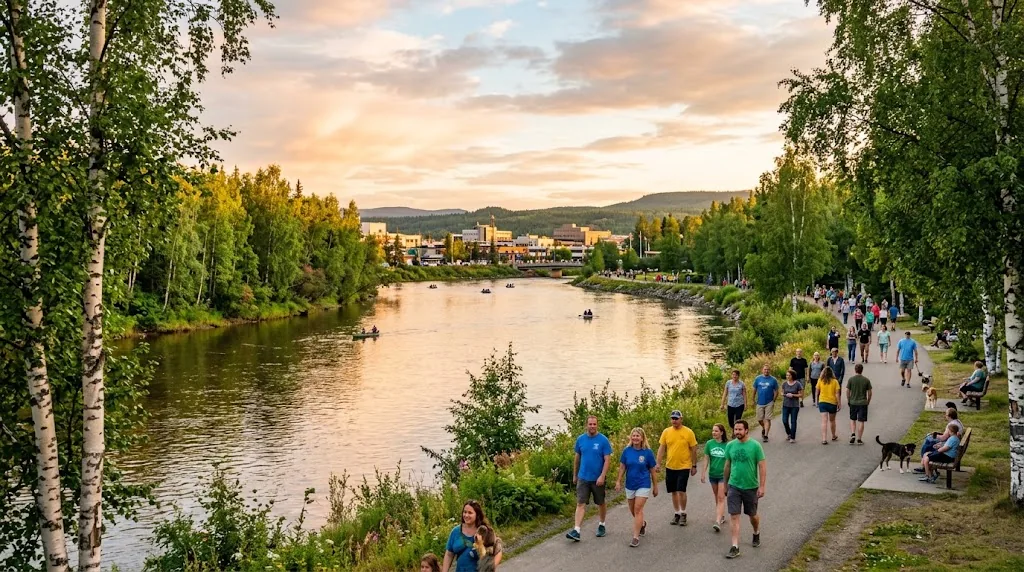
People often get confused because they think southern coastal towns must hold the heat all year. They do not. If you want blistering sunshine and genuinely hot summer days, interior Alaska takes the crown. Fairbanks routinely clocks the highest temperatures in the state during June and July, sometimes pushing way past what coastal cities experience because it is protected from chilly ocean winds by massive mountain ranges.
Coastal spots like Anchorage stay much more moderate. In July, Anchorage averages a high of 64.8°F, which feels crisp and refreshing when you are out hiking. Interior regions can swing much higher during peak afternoon hours, turning into a dry, surprising heat. Personally, I prefer the coastal breeze because walking around in high heat with mosquitoes the size of quarters is its own special kind of punishment.
Who should skip the interior? If you hate dry heat and massive daily temperature swings, stay near the coast. Cities like Anchorage keep things moderate, but you do trade away those super-hot afternoons. When you walk through downtown Anchorage in June, you feel a brisk marine air mixing with warm sunshine that makes you want to sit outside for hours. On the flip side, interior towns can feel like a dry oven in the middle of the afternoon before dropping into chilly evening temperatures that catch unprepared tourists completely off guard.
Packing for interior summer trips requires breathable layers that you can shed the second the sun ducks behind a cloud. Meanwhile, coastal trips demand windproof shells because the marine breezes do not care how sunny it looks on your weather app. Honestly, I always pack an extra fleece even in July because mountain weather turns on a dime.
Let us talk deeper about what summer feels like in these interior valleys. When you step off the plane in the interior during late June, the sheer intensity of the sun catches you off guard. Because the latitude sits so far north, the sun stays suspended in the sky for nearly twenty hours a day during peak weeks. This relentless solar input bakes the interior river basins, creating afternoon temperatures that frequently outpace southern coastal beaches. You will find locals wearing t-shirts and shorts, lounging by gravel pit lakes, and trying to soak up every single ray before the brief summer window slams shut.
What should you do in the interior when it gets warm? Renting a car to drive out toward Chena Hot Springs or hiking the local ridges gives you an incredible appreciation for the boreal forest. The trails are dry, the footing is solid, and the smell of pine mixed with warm earth reminds you of a classic mid-summer afternoon in the Pacific Northwest, just with a distinctly wilder edge. Where should you stay? Look for historic cabins or downtown motels in Fairbanks that offer air conditioning or heavy-duty window fans, because those mid-summer heatwaves can trap stale air inside poorly ventilated rooms overnight.
The honest downside to the interior warmth is the bug situation. Mosquitoes and black flies absolutely thrive in the warm, stagnant river valleys once the spring snowmelt turns to marshy puddles. If you forget strong bug spray with DEET or picaridin, your warm afternoon hike will turn into an absolute misery fest. Coastal breezes in Anchorage keep the bugs somewhat more manageable, but the interior heat summons them in thick, humming clouds.
What About Winter and the Mildest Temperatures?
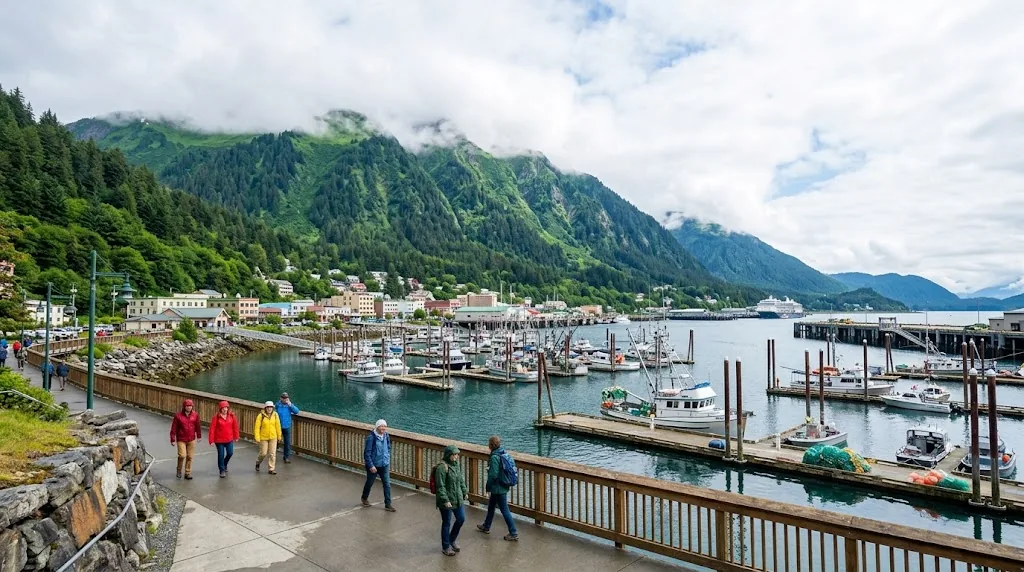
Winter is an entirely different beast. While the interior freezes solid with brutal sub-zero numbers that make your nose hairs stick together, Southeast Alaska tells a totally different story. Towns like Juneau and Ketchikan feature the mildest winters in the state. Maritime air keeps coastal Southeast much warmer than the frozen interior.
Anchorage sits right in the middle. In January, the average high hits 20.5°F with lows dropping to 12.2°F, while December brings an average high of 22.5°F and a low of 14°F. It is cold, sure, but entirely manageable if you own a real parka and proper boots.
Don't make the mistake of packing light cotton hoodies for a winter trip. Layers save lives up here. Check our trip-planner to get your gear checklist sorted out early.
Winter travel in Anchorage brings short days and crisp air. With December giving you only 1.7 hours of sunshine a day, you learn to appreciate streetlights and glowing shop windows. January offers only 2.9 hours of daylight, making daytime outdoor activities a short window affair. If you visit during these deep winter months, your itinerary needs to focus on cozy indoor spots, northern lights viewing tours away from city glow, and heavy winter gear that blocks the wind.
The downside to coastal winter warmth is moisture. Southeast Alaska and coastal zones deal with wet snow and freezing rain rather than light, powdery fluff. Anchorage balances this by staying cold enough to keep snow manageable, though January and February still see plenty of slick sidewalks. You need microspikes for your boots unless you enjoy sliding down downtown hills.
Examining the winter experience in Southeast towns like Juneau reveals an ocean climate that rarely plunges into the terrifying deep freezes found near Fairbanks. While interior residents plug in their car engine blocks overnight so the oil does not turn to tar, coastal residents deal with damp, heavy air, rain showers mixed with slush, and persistent gray skies. It is technically milder on a thermometer, but the damp cold cuts right through cheap wool if you are not wearing a proper windproof and waterproof outer layer.
What should you do during a mild coastal winter? Focus on indoor cultural experiences, local seafood restaurants, and low-elevation rainforest walks where the towering spruce trees shelter you from passing drizzles. Where should you stay? Book a cozy bed and breakfast in downtown Juneau within walking distance of local coffee shops so you do not have to dig a rental car out of wet snow banks every morning.
How Should You Plan Your Trip Around These Weather Patterns?
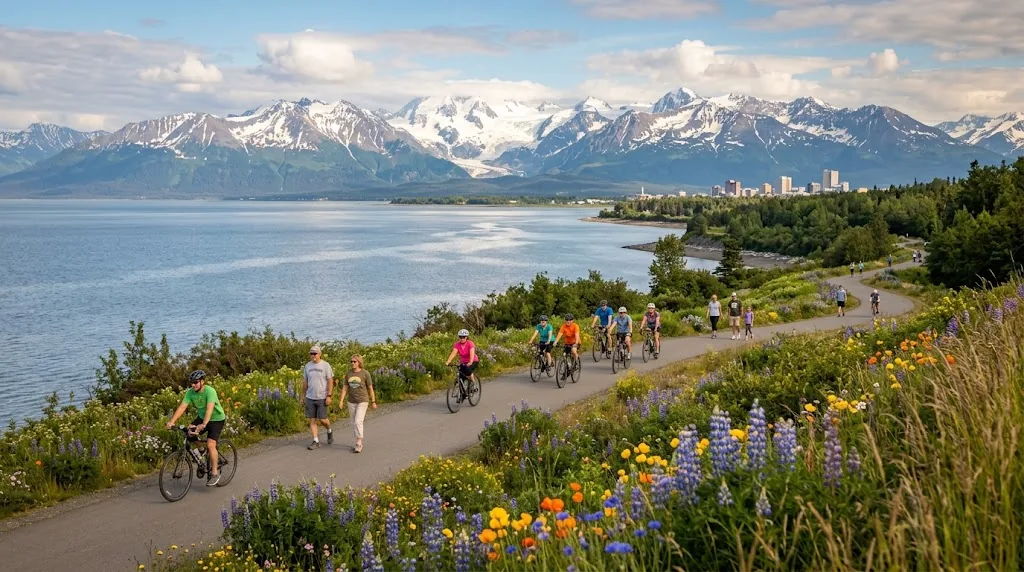
Timing your vacation depends entirely on what you want to do. If you want long daylight hours and comfortable walking weather, June and July are unbeatable. Anchorage gets 12.5 hours of sunshine a day in June and 11 hours in July, giving you plenty of time to explore trails without rushing.
Rain is another factor you have to respect. August brings 17 rainy days on average, and September climbs to 18 rainy days. Bring a solid rain jacket or you will regret it within twenty minutes of stepping outside.
For official state tourism resources and emergency updates, you can always check Travel Alaska or look at climate tracking data provided by the National Weather Service.
Planning your daily schedule during peak summer months means adjusting your internal clock. Because June and July give you endless daylight, you can hike trails at nine o'clock at night without needing a headlamp. Crowds thin out significantly during evening hours, letting you enjoy popular spots in total peace. Honestly, midnight sun hikes are the single best perk of visiting during June.
If you aim for the shoulder seasons like May or September, you encounter different challenges. May is surprisingly dry with only 10 rainy days and an average high of 53.6°F, making it a favorite for smart travelers who want to beat the summer rush. September brings gorgeous fall foliage, but the 18 rainy days mean your hiking boots will take a serious beating. Pick your poison based on your tolerance for precipitation.
Let us break down a practical packing strategy for your Alaskan adventure. You need a modular clothing system built around three distinct layers. Start with a synthetic moisture-wicking base layer that pulls sweat away from your skin during strenuous hikes up Flattop Mountain. Add a mid-layer fleece or wool sweater to trap body heat when the mountain winds pick up. Finish with a high-grade waterproof jacket that can withstand a steady downpour without soaking through to your undershirt.
Footwear makes or breaks your entire trip. Ditch the fashion sneakers and bring sturdy, waterproof hiking boots that have already been broken in around your neighborhood before you leave home. Blistered feet will ruin a vacation faster than a sudden rain shower. Pack thick merino wool socks that keep your toes warm even if morning dew or trail puddles manage to seep past your laces.
Avoid common tourist mistakes like assuming summer means beach weather. Even when Anchorage hits 64.8°F in July, glacial runoff streams remain dangerously cold, and mountain shadows drop ambient temperatures instantly. Do not book outdoor excursions without checking local trail reports, and always give wildlife plenty of personal space. Respect the environment, pack out your trash, and pay attention to shifting weather alerts so you can enjoy the wildest landscape in America safely.
Frequently asked questions
What is the warmest month of the year in Anchorage?
July is the warmest month in Anchorage, featuring a 20-year average high of 64.8°F and an average low of 53.2°F, along with about 11 hours of daily sunshine and 13 rainy days over the course of the month.
Does Anchorage get very cold in the winter months?
Winters are quite cold, with January recording an average high of 20.5°F and an average low of 12.2°F, accompanied by 12 rainy or snowy days and just 2.9 hours of daily sunshine on average.
Which region of Alaska has the hottest summer days?
Interior Alaska, particularly around Fairbanks, experiences the hottest summer daytime temperatures in the state due to being sheltered from cool coastal winds by major mountain ranges.
How much rain should travelers expect during late summer?
Late summer gets quite wet in Anchorage, with August averaging 17 rainy days and September averaging 18 rainy days, so visitors should always pack reliable waterproof gear.