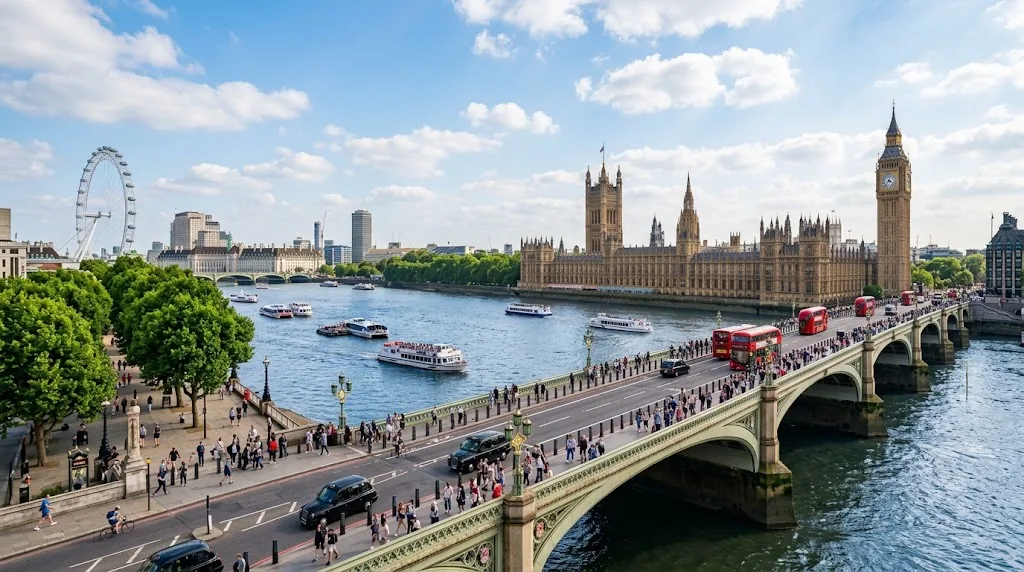
Best Time to Visit England: Weather in London, Manchester and Birmingham
Late May to mid June is the best time to visit England, with London at 68.5°F (20.3°C), 10 rainy days and 11.3 hours of sun in June. Manchester has 18 rainy days in July against London's 11, so the region you pick matters.
The best time to visit England is late May to mid June, with September a close second. In London, June averages a high of 68.5°F (20.3°C), 10 rainy days and 11.3 hours of sun a day, while September trades a little sun (8.3 hours) for the fewest rainy days of the year (9). The numbers below cover three cities, London, Manchester and Birmingham, so they describe the English cities and the south and the Midlands better than the Lake District, Cornwall or the Yorkshire coast.
England does not have a dramatic climate. It has a changeable one. Even in the warmest month, July, the London high is 72.1°F (22.3°C), and the difference between a pleasant week and a wet one is mostly luck. What the 20 years of data do show is that region matters more than most visitors expect: Manchester has 18 rainy days in July, London has 11.
Best time to visit England: the key months compared
Averages for 2006 to 2025, covering three cities. Rainy days are days with measurable rain, and sun is hours per day. The four months here are the ones we would actually consider.
| City and month | Avg high °F (°C) | Avg low °F (°C) | Rainy days | Sun hours per day |
|---|---|---|---|---|
| London, May | 62.8 (17.1) | 47.5 (8.6) | 11 | 10.3 |
| London, June | 68.5 (20.3) | 53.1 (11.7) | 10 | 11.3 |
| London, July | 72.1 (22.3) | 57.0 (13.9) | 11 | 11.4 |
| London, September | 66.6 (19.2) | 52.7 (11.5) | 9 | 8.3 |
| Manchester, May | 60.1 (15.6) | 45.9 (7.7) | 14 | 10.1 |
| Manchester, June | 64.9 (18.3) | 51.1 (10.6) | 15 | 10.5 |
| Manchester, July | 67.5 (19.7) | 54.5 (12.5) | 18 | 10.2 |
| Manchester, September | 62.6 (17.0) | 50.7 (10.4) | 14 | 7.5 |
| Birmingham, May | 60.3 (15.7) | 45.7 (7.6) | 12 | 10.1 |
| Birmingham, June | 65.8 (18.8) | 51.1 (10.6) | 12 | 10.8 |
| Birmingham, July | 69.1 (20.6) | 54.7 (12.6) | 14 | 10.8 |
| Birmingham, September | 63.7 (17.6) | 50.7 (10.4) | 11 | 7.7 |
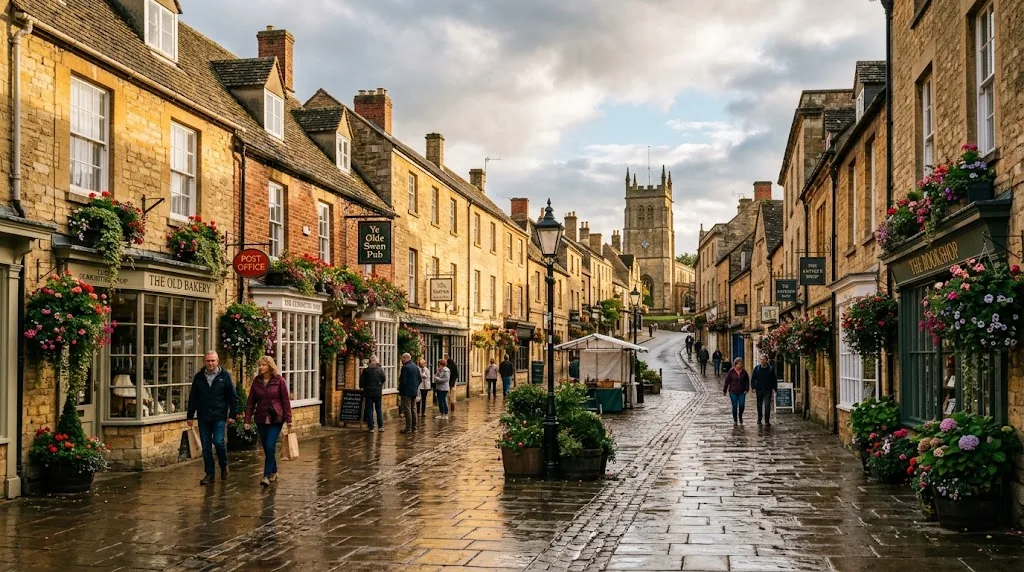
London, Manchester and Birmingham are not the same trip
Travellers often treat England as one weather zone. The data says otherwise. In London in July you can expect 11 rainy days and 2.5 in (64 mm) of rain. In Manchester in July it is 18 rainy days and 4.1 in (104 mm), with a cooler high of 67.5°F (19.7°C). Birmingham sits between the two, with 14 rainy days and 3.0 in (76 mm) and a high of 69.1°F (20.6°C).
The same pattern holds in winter. December has 11 rainy days in London, 13 in Birmingham and 17 in Manchester, and Manchester gets just 3.0 hours of sun a day against London's 3.6. If your route runs from the south to the north, the further north and west you go, the more you should plan for rain. We would also expect hill country and the west coast to be wetter than the cities, though our file does not include those places, so we will not put numbers on it.
Here is the whole year side by side, in rainy days per month.
| Month (Rainy days) | London | Manchester | Birmingham |
|---|---|---|---|
| January | 12 | 16 | 13 |
| February | 11 | 14 | 11 |
| March | 11 | 13 | 12 |
| April | 10 | 12 | 11 |
| May | 11 | 14 | 12 |
| June | 10 | 15 | 12 |
| July | 11 | 18 | 14 |
| August | 10 | 17 | 11 |
| September | 9 | 14 | 11 |
| October | 12 | 16 | 12 |
| November | 12 | 16 | 13 |
| December | 11 | 17 | 13 |
The practical lesson is to build flexibility into northern days. Put museums, markets and pubs on the same list as the walk or the football match, and keep one dry day free to move things around.
Spring: March to May
March is cold and unsettled. London averages 51.3°F (10.7°C) for the high and 37.9°F (3.3°C) for the low, with 11 rainy days and 7.1 hours of sun. In Manchester the high is 49.3°F (9.6°C) and rain falls on 13 days. It is a fine month for indoor-heavy city breaks, not for the countryside.
April surprises people. London has 10 rainy days and the lowest rainfall of the year at 1.6 in (41 mm), with 9.8 hours of sun. Manchester also has its driest month then, 2.2 in (56 mm) and 12 rainy days, and Birmingham has 1.8 in (46 mm) and 11 days. The catch is the cold: the London low is 41.4°F (5.2°C) and Manchester is 39.9°F (4.4°C), so mornings in parks and gardens need a real coat. Easter, which falls in March or April, is a school holiday period and a bank holiday weekend, so prices rise even though the weather is mixed.
May is where it starts to feel like a holiday. London reaches 62.8°F (17.1°C) with 10.3 hours of sun, though 11 rainy days remain. Manchester is cooler at 60.1°F (15.6°C) and wetter, with 14 rainy days. Blossom is mostly over by May, but gardens and parks are in good shape, and the long evenings are already noticeable.
Summer: June to August
June is our pick for most itineraries. London gets 68.5°F (20.3°C) and 11.3 hours of sun, Birmingham gets 65.8°F (18.8°C) with 12 rainy days and 10.8 hours of sun, and even Manchester manages 64.9°F (18.3°C) and 10.5 hours of sun, albeit with 15 rainy days. Daylight lasts very late in northern Europe in June, which makes sightseeing days feel long. See Birmingham in June for one example of how a mid-sized city fares.
July is the warmest month everywhere, but in Manchester it also has the most rainy days of the year (18), and in London it is only a few degrees warmer than June. August is similar: London 70.7°F (21.5°C) and 10 rainy days, Manchester 66.2°F (19.0°C) and 17 days. The weather is not the problem in these months. Crowds and cost are. School holidays usually run from late July into early September, and the August bank holiday weekend at the end of the month is busy. Wimbledon usually falls in late June and early July, which pushes London hotel demand up for those dates.
Heat is rarely an issue by global standards, but London can feel muggy in a warm spell, and many buildings and Underground lines have little cooling. Bring light clothes plus one waterproof layer.
Autumn: September to November
September may be the most underrated month. London has 9 rainy days and a high of 66.6°F (19.2°C), Birmingham has 11 days and 63.7°F (17.6°C), and Manchester has 14 days and 62.6°F (17.0°C). Schools are back, so the family crowds ease, and the evenings are mild enough for the pub garden. It is a good month for the Cotswolds-type village walk or a day trip, as long as you check the forecast the evening before.
October flips the script: London 12 rainy days and 5.9 hours of sun, Manchester 16 days and 5.3 hours. November is worse at 4.4 hours of sun in London and 4.1 in Manchester, with 12 and 16 rainy days. We would not choose November for a first visit. The clocks go back at the end of October, and the dark early evenings cut your sightseeing time.
Winter: December to February
England is a low-snow country in its big cities, but it is also grey. London averages 46.9°F (8.3°C) and 3.6 hours of sun in December, while Manchester is 45.3°F (7.4°C), 3.0 hours of sun and 89% humidity. Even so, December has a draw: Christmas markets, lights and theatre. If that is what you want, go in the first three weeks of December, before the holiday closures, and accept the weather.
January is the cheapest and gloomiest month. London has a high of 45.3°F (7.4°C) and 12 rainy days, Manchester has 16, and Birmingham 13. February brightens slightly, with 5.0 hours of sun in London and 4.9 in Manchester. Museum visits and indoor sport suit the season well, and prices tend to be lower, although we do not have figures for that.
Months we would skip, and for whom
- Manchester and the north-west in December and January: 17 and 16 rainy days, 3.0 and 3.4 hours of sun. Fine for a football weekend, poor for walking.
- Any city in November: short days, a London high of 51.4°F (10.8°C) and 12 rainy days, and no festive lighting yet to make up for it.
- Peak August for budget travellers: the weather is good, but the cost and queues are not.
- Early March for countryside plans: mud, wind and a 37.9°F (3.3°C) low in London.
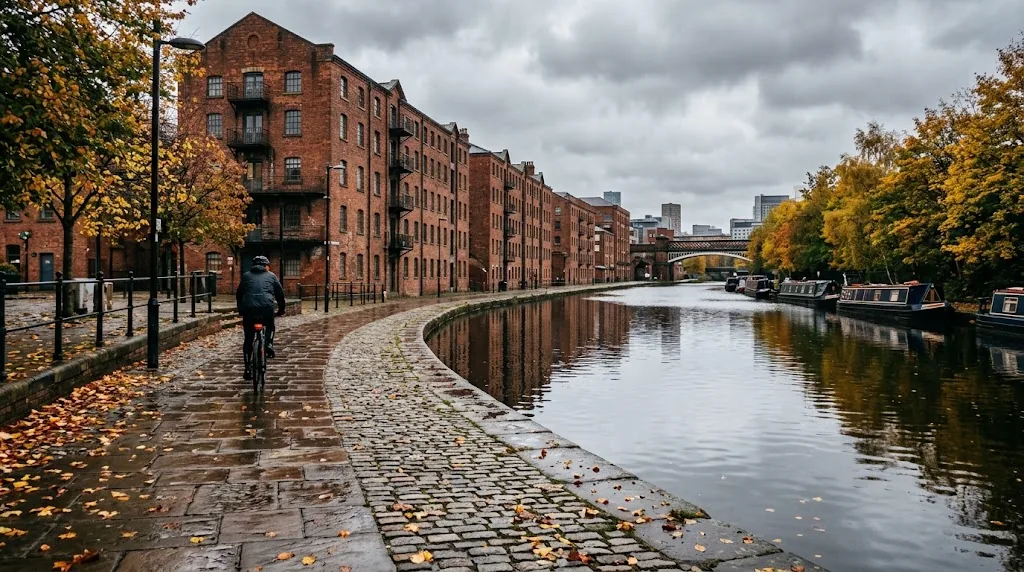
How we would time a week in England
If your plan is a week that mixes London with a northern or Midlands city, the best time to visit England for the weather alone is the second half of May through June. Put the outdoor days first, in London, where the odds are best, and keep Manchester or Birmingham for the second half of the week, when you can pivot to museums, covered markets or an indoor match.
In September, reverse that: go north first while the days are still long, then finish in London when the light is shorter but the rain odds are lowest. In winter, stay in one place if you can. The extra train day costs you a sliver of daylight, and in December that sliver is only 3.0 to 3.6 hours of real sun anyway.
A word on timing within the month. The weather data cannot tell you which week, but the calendar can. Half term weeks in late May and late October fill hotels, and Easter and the August bank holiday weekend do the same. Booking a mid week stay avoids a lot of price pressure.
How to choose by goal
- First time in London, and the best time to visit England for a classic trip: June, or September for fewer crowds.
- Walking and countryside: late May, June or September. Pick days, not weeks, and keep rain gear in your bag.
- Cheapest time: January and February, in the quiet periods away from school breaks, but with 11 to 12 rainy days in London.
- Families: late May half term or early September, to avoid peak summer cost.
- Christmas markets: the first half of December.
- Combining with the rest of the UK: see our notes on Ireland and Scotland and on Scotland by month, as both are cooler and wetter than southern England.
What to pack
England's one fixed rule is layers. In summer, carry a light waterproof jacket and a thin sweater, since evenings fall to about 53.1°F (11.7°C) in London in June. In spring and autumn, a mid-weight coat, an umbrella and shoes that can handle wet grass. In winter, a warm coat and a hat. For temperatures in the low 50s, see what to wear in 50 degree weather, and for 60s this 60 degree guide.
Data note: how we picked the best time to visit England
All figures are 20 year averages (2006 to 2025) from Open-Meteo historical data, calculated by WeatherApex for London, Manchester and Birmingham. They show what is typical, not what will happen on your dates. A single June can be much wetter or warmer than average, so look at the forecast closer to the trip. When you are choosing between cities, our trip planner can help, and if you are pairing England with France, our guide to the best month to visit Paris uses the same method. Official climate records are available from the Met Office.
Frequently asked questions
What is the rainiest month in England?
It depends on the city. Manchester has the most rainy days in July (18) and the most rain in December (4.4 in or 112 mm), while London peaks at 12 rainy days in January, October and November. London is drier than Manchester in every month of the year.
Is September a good month to visit England?
Yes. London has only 9 rainy days in September, the fewest of any month, with a high of 66.6°F (19.2°C) and 8.3 hours of sun a day. Birmingham has 11 rainy days and Manchester 14, so the further north you go, the more you should plan for showers.
When is the cheapest time to visit England?
Prices are usually lowest in January and February, away from school holidays, but we do not track prices. The weather cost is real, with 12 rainy days in London in January and 16 in Manchester.
How warm does England get in summer?
July is the warmest month, with average highs of 72.1°F (22.3°C) in London, 69.1°F (20.6°C) in Birmingham and 67.5°F (19.7°C) in Manchester. Short hot spells can go well above those averages, but typical summer days are mild rather than hot.