What to Wear by Temperature: A Simple °F and °C Clothing Guide
What to wear by temperature, from short sleeves at 77°F (25°C) and up to a padded coat below 45°F (7°C), with real averages such as Tokyo in April at 64°F by day and 48.2°F at night.
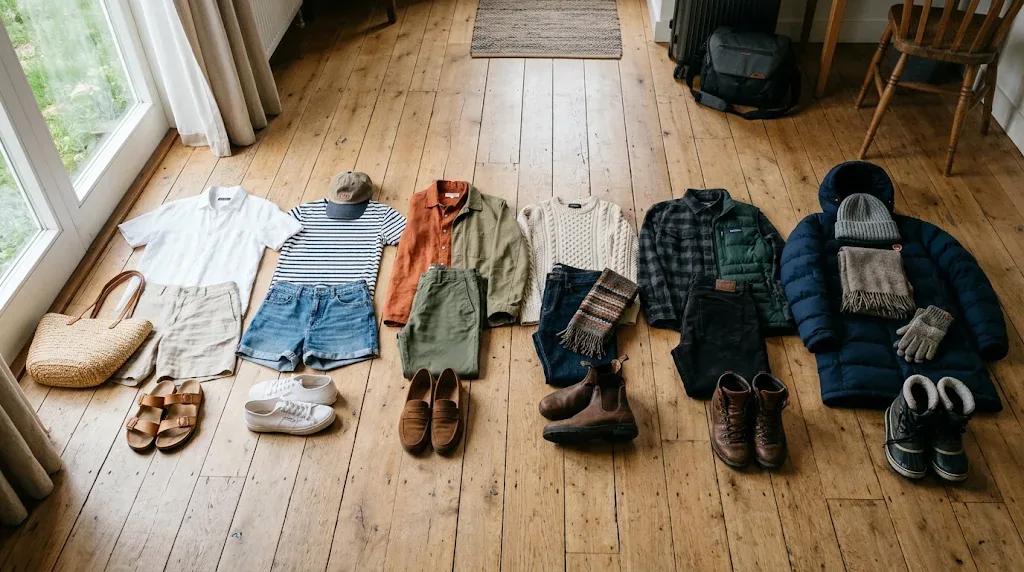
Here is what to wear by temperature in one line per band: from 77°F (25°C) up, short sleeves and breathable fabrics; 68 to 76°F (20 to 24°C), a light long sleeve top; 61 to 67°F (16 to 19°C), add a cardigan or light jacket; 54 to 60°F (12 to 15°C), a real jacket or trench; 45 to 53°F (7 to 11°C), a warm coat; below 45°F (7°C), a padded coat, hat and gloves. Use the daytime high to choose the base outfit and the overnight low to choose the outer layer.
That is the short version. The longer version matters because a number on a forecast is not the same as how the day feels. Tokyo in April averages a high of 64°F (17.8°C) but a low of 48.2°F (9°C), so the same day can call for two different outfits. Below, each band comes with real WeatherApex averages for a city and month where that temperature is normal, so you can see what it looks like in practice.
What to wear by temperature: the quick chart
| Daytime high | What to wear | Typical example (avg high / low) |
|---|---|---|
| 77°F and up (25°C+) | Short sleeves, linen or cotton, sun hat | Tokyo in August: 87.4°F (30.8°C) / 75.4°F (24.1°C) |
| 68 to 76°F (20 to 24°C) | Light long sleeve top, thin layer for evening | Tokyo in May: 72.3°F (22.4°C) / 57.7°F (14.3°C) |
| 61 to 67°F (16 to 19°C) | Long sleeves plus cardigan or light jacket | Tokyo in April: 64°F (17.8°C) / 48.2°F (9°C) |
| 54 to 60°F (12 to 15°C) | Sweater plus trench coat or proper jacket | Tokyo in March: 56.3°F (13.5°C) / 39.6°F (4.2°C) |
| 45 to 53°F (7 to 11°C) | Warm coat, sweater, scarf | Tokyo in January: 47.5°F (8.6°C) / 31.5°F (−0.3°C) |
| Below 45°F (under 7°C) | Padded or down coat, hat, gloves, warm shoes | Seoul in January: 35.2°F (1.8°C) / 19.2°F (−7.1°C) |
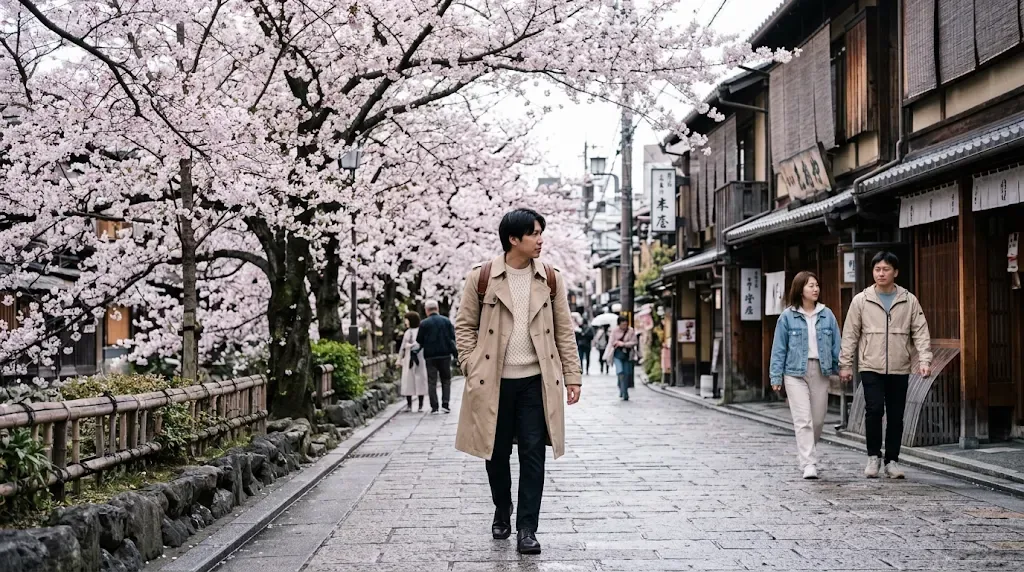
We used Tokyo for most rows on purpose. One city that moves through every band during the year shows how quickly the right outfit changes from one month to the next, and the same pattern holds in London, New York or Seoul.
Two numbers, not one: dress for the low, adjust for the high
The most common packing mistake is reading only the high. A forecast of 64°F sounds like a light jacket day, and at 2 pm it is. At 8 am, when the same city sits near 48°F, it is a sweater and jacket day. The gap between the high and the low is often 15 to 20 degrees Fahrenheit (8 to 11°C), and in dry, clear places it can be wider.
A simple rule works almost everywhere: pick the base layer for the high, then pick the outer layer for the low. Wear both when you leave in the morning, and take the outer layer off when the afternoon warms up. That is why a bag with room for one extra layer is so useful on city trips.
Three other things change how a temperature feels:
- Sun: direct sun can make a 60°F afternoon feel close to 70°F. Shade and cloud do the opposite.
- Wind: a steady breeze off a lake, river or sea can make the same reading feel 5 to 10 degrees colder. A thin windproof layer often helps more than a thicker sweater.
- Humidity and rain: damp air makes cool days feel colder and warm days feel stickier. Wet cotton loses most of its warmth.
77°F and up (25°C and above): short sleeves, and plan for the sun
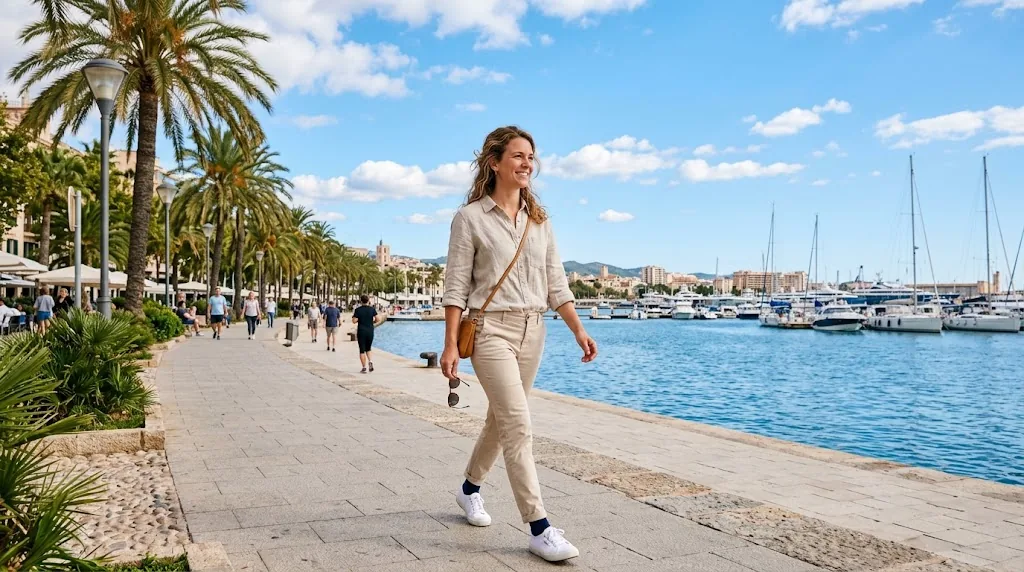
At this point you dress to stay cool, not warm. In Tokyo in August the average high is 87.4°F (30.8°C) and nights stay near 75.4°F (24.1°C), with 12 rainy days in the month. In Rome in July it is drier, with 5 rainy days, but hotter in the afternoon at 88.9°F (31.6°C) and still 68.7°F (20.4°C) at night.
- Short sleeve tops in linen, cotton or a light technical fabric.
- Shorts, light skirts or loose linen trousers.
- Breathable sandals or canvas sneakers you have already broken in.
- A hat and sunglasses. In humid places, a small towel is worth packing.
- One thin long sleeve layer for air conditioned trains, museums and restaurants.
Humidity decides how hard these days feel. Tokyo in August is far more tiring than the same number in a dry city, because sweat does not evaporate. For a deeper look at the warm end of this band, see our guide on what to wear in 80 degree weather.
68 to 76°F (20 to 24°C): light layers
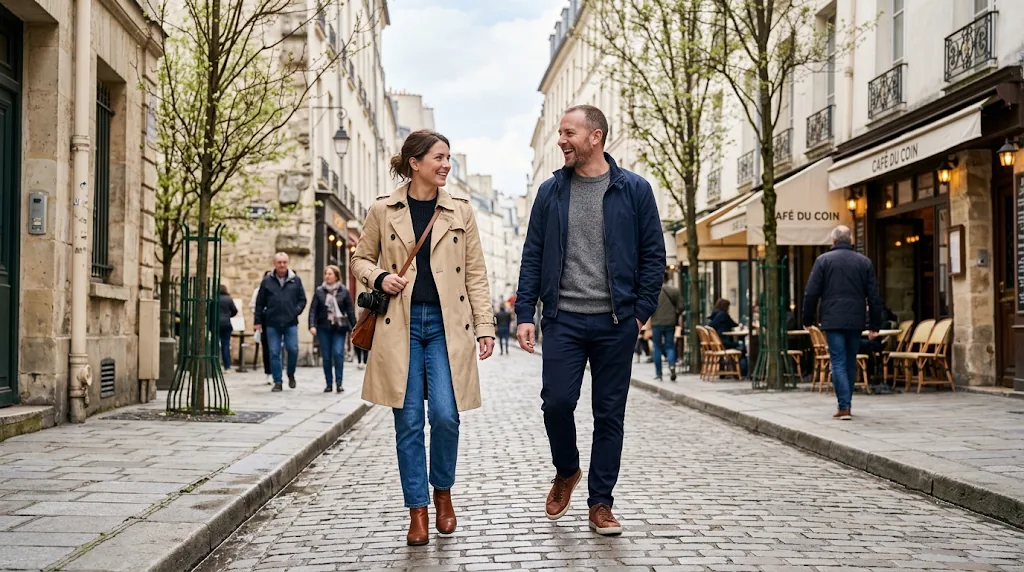
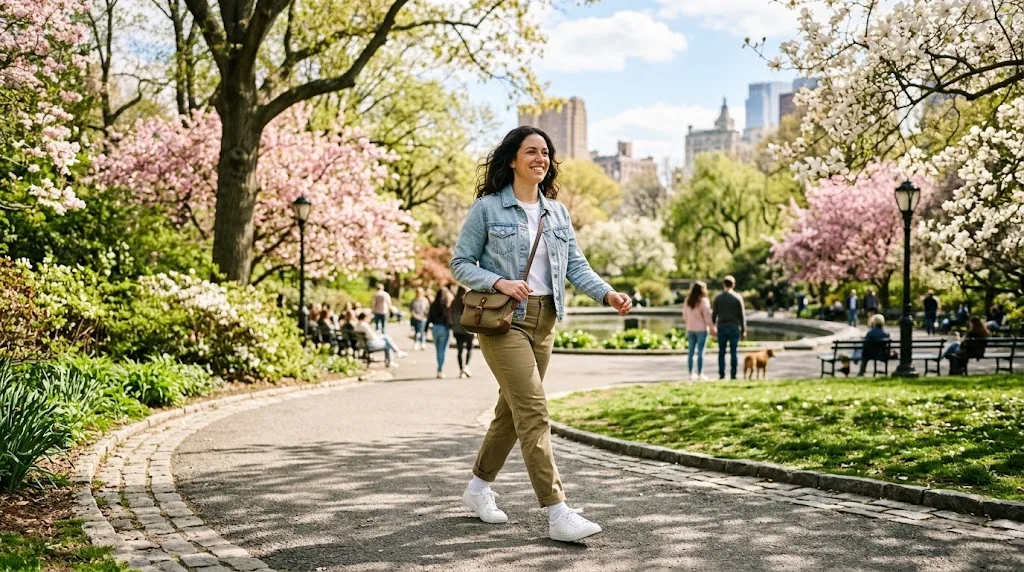
This is the most comfortable band for sightseeing, and also the one people underpack for in the evening. Tokyo in May averages 72.3°F (22.4°C) by day and 57.7°F (14.3°C) at night. Paris in June is similar at 72.9°F (22.7°C) and 56.1°F (13.4°C), with 11 rainy days.
- A light long sleeve shirt or a T shirt with a thin overshirt.
- Chinos, jeans or a midi skirt.
- A light cardigan, denim jacket or windbreaker in your bag for after dark.
- Comfortable walking shoes.
Short sleeves are fine at the top of this band in the afternoon sun. At the bottom of it, around 68°F, most people want long sleeves. Our what to wear in 70 degree weather guide has outfit ideas for day and evening.
61 to 67°F (16 to 19°C): add a cardigan or light jacket
Mornings start to feel cool here, even when afternoons are pleasant. Tokyo in April averages 64°F (17.8°C) with a low of 48.2°F (9°C), and London in May averages 62.8°F (17.1°C) with a low of 47.5°F (8.6°C) and 11 rainy days.
- Long sleeve tops, a light knit or cardigan.
- A light jacket: denim, a shirt jacket, a thin trench or a packable rain shell.
- Long trousers or jeans. Shorts only for the sunniest afternoons.
- Closed shoes.
Rain is the main thing to check in this band. A light jacket that also blocks drizzle saves you from carrying two layers. More ideas are in our guide on what to wear in 60 degree weather.
54 to 60°F (12 to 15°C): a real jacket
This is where a single sweater stops being enough for a full day outside. Tokyo in March averages 56.3°F (13.5°C) by day and 39.6°F (4.2°C) at night, with 12 rainy days. Rome in February is 55.8°F (13.2°C) with a low of 39.9°F (4.4°C).
- A sweater or fleece over a long sleeve base.
- A trench coat, wool blend jacket or lightly insulated jacket.
- Long trousers and closed shoes; ankle boots work well.
- A light scarf for mornings and evenings.
Notice how low the nights are in this band. A morning near 40°F (4°C) feels like winter, so dress for it and peel off by lunch.
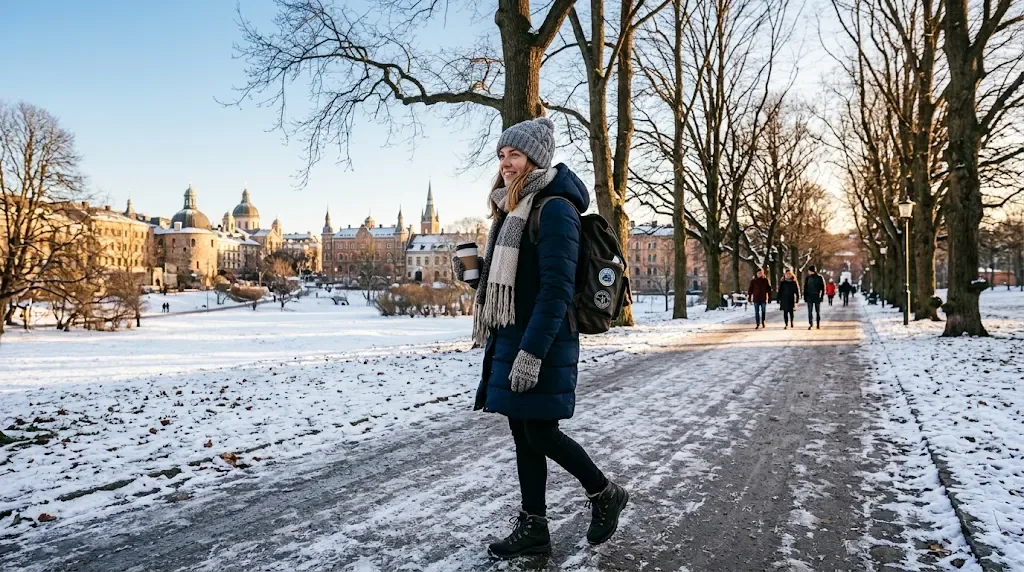
45 to 53°F (7 to 11°C): a warm coat
Now the outer layer does most of the work. Tokyo in January averages 47.5°F (8.6°C) by day, but the average low is 31.5°F (−0.3°C), just below freezing. London in January is milder at night at 35.6°F (2°C) but much wetter, with 12 rainy days.
- A warm wool coat or a mid weight padded jacket.
- A sweater over a long sleeve base layer.
- Scarf, and gloves for early mornings.
- Water resistant shoes or boots if rain is common.
Our what to wear in 50 degree weather guide covers this band city by city.
Below 45°F (under 7°C): dress for real cold
Below about 45°F, warmth matters more than style for most of the day. Seoul in January averages 35.2°F (1.8°C) by day and 19.2°F (−7.1°C) at night, with only 3 rainy days, so it is cold and dry. New York in January averages 39°F (3.9°C) and 25.2°F (−3.8°C).
- A down or well insulated coat that covers your hips.
- A warm base layer, such as merino or a thermal top, under a sweater.
- Hat, gloves and a scarf. These make a bigger difference than a thicker coat.
- Warm socks and boots with a good grip for icy sidewalks.
See our guide on what to wear in 40 degree weather for more on this band.
Common mistakes when deciding what to wear by temperature
Most of the problems we see with packing come from a few habits, not from bad forecasts.
- Trusting one number. A daily high of 56°F looks mild until you notice a low near 40°F. Always check both before you decide what to wear by temperature.
- Ignoring rain days. London in January has 12 rainy days on average. A warm coat that soaks through is worse than a lighter jacket that stays dry, so in wet months weatherproofing comes before thickness.
- Packing one heavy item instead of layers. A single thick coat is hard to carry once the afternoon warms up. Two thinner layers cover more situations and take the same space.
- Forgetting indoor temperatures. Trains, museums and shops are often heated in winter and cooled in summer. Layers you can open or remove make those changes easy.
- Using home habits abroad. If you live somewhere hot, 60°F will feel colder to you than to a local in London. Shift the bands a little in the direction your body prefers.
Thinking about what to wear by temperature this way, with the high, the low, rain and wind together, is more reliable than any single rule. It is also how we built the city and month pages on WeatherApex: each one shows the typical high and low side by side so you can pick the right band at a glance.
How to use this temperature guide when you pack
For a trip, look up the average high and low for each place and month, find the bands, and pack for both ends. A week in Tokyo in April, for example, spans two bands: 61 to 67°F in the afternoon and the 45 to 53°F range early in the morning. That means long sleeves, a knit and one light jacket, not a winter coat and not only T shirts.
A few habits help in every band:
- Choose layers that work on their own, so you can wear one, two or three of them.
- Pick one outer layer that blocks wind and light rain.
- Bring shoes you have already walked in for a full day.
- Check the forecast again two or three days before you leave and adjust.
If you are comparing several cities, the trip planner shows the typical highs, lows and rain for your dates side by side.
A note on the numbers
All averages in this guide come from WeatherApex climate data: daily weather from 2006 to 2025, averaged by month for each city. They describe typical conditions, not a forecast for your dates. The temperature bands are rounded for easy use; people who feel the cold easily may want to read each band as a few degrees cooler, and people who walk fast or run warm may want to read them as a few degrees warmer.
Frequently asked questions
What should I wear at 60 degrees Fahrenheit?
At about 60°F (15.6°C), wear long sleeves with a sweater and a light jacket or trench coat. Mornings are often much cooler: Tokyo in March averages 56.3°F (13.5°C) by day but 39.6°F (4.2°C) at night, so dress for the low and remove layers later.
Is 70 degrees warm enough for short sleeves?
In the afternoon sun, usually yes. Evenings are another matter: Paris in June averages 72.9°F (22.7°C) by day but 56.1°F (13.4°C) at night, so carry a light cardigan or jacket for after dark.
At what temperature do you need a winter coat?
Most people want a warm coat once the daytime high falls to about 53°F (11°C) or below, and a padded or down coat below 45°F (7°C). Seoul in January averages 35.2°F (1.8°C) by day and 19.2°F (−7.1°C) at night.
Should I dress for the high or the low temperature?
Both. Choose your base layer for the high and your outer layer for the low, wear both in the morning and take the outer layer off as it warms up. In Tokyo in April the gap is about 16°F (8.8°C).