Best Places to Visit in Iceland, Region by Region (and When)
The best places to visit in Iceland, from Reykjavik and the south coast to Akureyri and the Westfjords, mostly peak from June to August, when Reykjavik averages 57.4°F (14.1°C) in July and Akureyri 58.6°F (14.8°C).
The best places to visit in Iceland for a first trip are Reykjavik, the Golden Circle and the south coast, all within a day's drive of the capital, followed by the Snaefellsnes peninsula and the north around Akureyri and Lake Myvatn. June to August is the window for nearly all of them. Reykjavik in July averages a high of 57.4°F (14.1°C), and Akureyri in the north is slightly warmer at 58.6°F (14.8°C). Neither is dry, with 14 to 15 rainy days a month even in summer, but the roads are open and the days barely end.
Iceland rewards travellers who match the place to the season. The Westfjords and the highlands are really summer-only destinations, while Reykjavik, the Golden Circle and the south coast work in winter for northern lights trips. We have WeatherApex data for two places, Reykjavik and Akureyri, so every number below comes from one of them. For the rest of the island we describe the general pattern without figures. If you want the month question on its own, read our best time to visit Iceland guide first.
The best places to visit in Iceland, with their months
The last column names the data city each number comes from. Weather on the coast, in the mountains and on the glaciers can be very different from either town, so treat those as a guide to the season, not to the exact conditions.
| Place | Best for | Best months | Typical number (data city) |
|---|---|---|---|
| Reykjavik | Food, pools, museums, base for day trips | June to August; winter for short breaks | July high 57.4°F (14.1°C), 15 rainy days (Reykjavik) |
| Golden Circle | Geysers, Gullfoss, Thingvellir | All year; June to August easiest | Nearest is Reykjavik: December high 34.7°F (1.5°C) |
| South coast | Waterfalls, black sand, glacier lagoon | May to September; winter with care | Nearest is Reykjavik; often windier on the coast |
| Snaefellsnes peninsula | Volcano, sea cliffs, small harbours | June to September | Nearest is Reykjavik: June high 54.0°F (12.2°C) |
| Akureyri and Lake Myvatn | Town life, lava fields, whale watching | June to August; February and March for snow | July high 58.6°F (14.8°C), 14 rainy days (Akureyri) |
| Westfjords | Remote fjords, bird cliffs, empty roads | June to August | No data; long gravel stretches and few services |
| East fjords | Fishing villages, quiet drives | June to August | No data; Akureyri is the nearest data town |
| Highlands | Landmannalaugar, multi-day hikes | Usually July to early September only | No data; mountain roads open only in summer |
Reykjavik and the Golden Circle
Reykjavik
Most trips start in Reykjavik, and it is worth two days of its own: the harbour, the big church on the hill, the geothermal pools that locals use as social clubs, and a food scene well above what you would expect for a city this size. In summer it averages 54.0°F (12.2°C) in June and 57.4°F (14.1°C) in July, with lows around 44.6°F to 48.0°F (7.0°C to 8.9°C). It rains often but rarely hard, and June and July each average 10.8 hours of sun.
The trade-off comes in autumn. September is the wettest month at 6.0 inches (152 mm) over 19 days, and Reykjavik gets about 56.9 inches (1,445 mm) a year. Winter is milder than most people expect, with December at 34.7°F (1.5°C) by day and 26.6°F (-3.0°C) at night, but the sun shows for only 0.8 hours a day on average in December. Look at Reykjavik in December if you are planning a winter break.
The Golden Circle
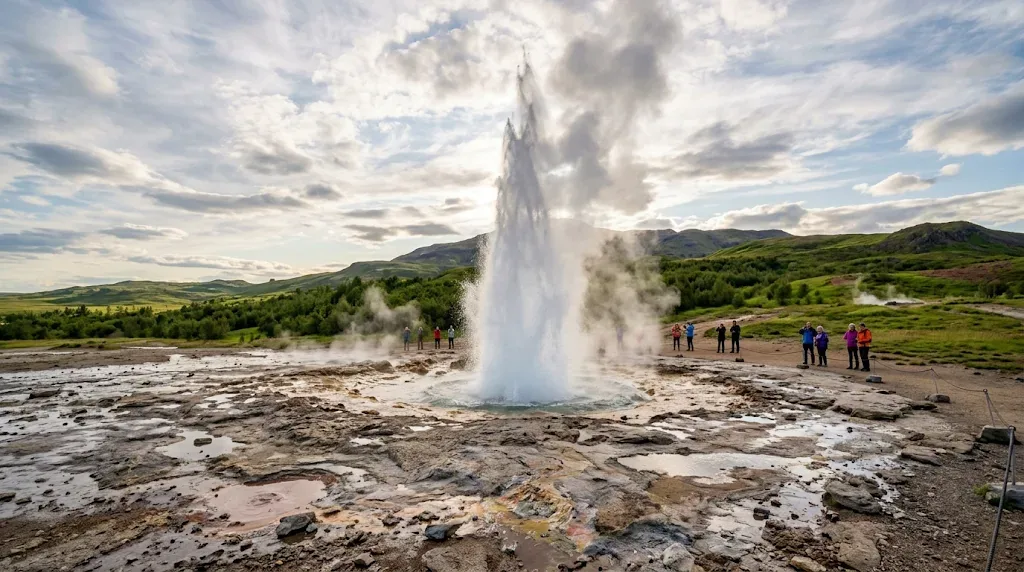
The Golden Circle loop, about a day's drive from Reykjavik, links Thingvellir National Park, where you can see the rift between two tectonic plates, the Geysir hot spring area and the Gullfoss waterfall. We have no data out there, so Reykjavik is our guide, but inland it is often a little colder in winter than the city. This is the most accessible of all the best places to visit in Iceland in winter, because the roads are main routes and are cleared quickly. In summer, go early in the morning or late in the evening to beat the tour buses. The long June light makes a 9 pm visit to Gullfoss perfectly reasonable.
The south coast
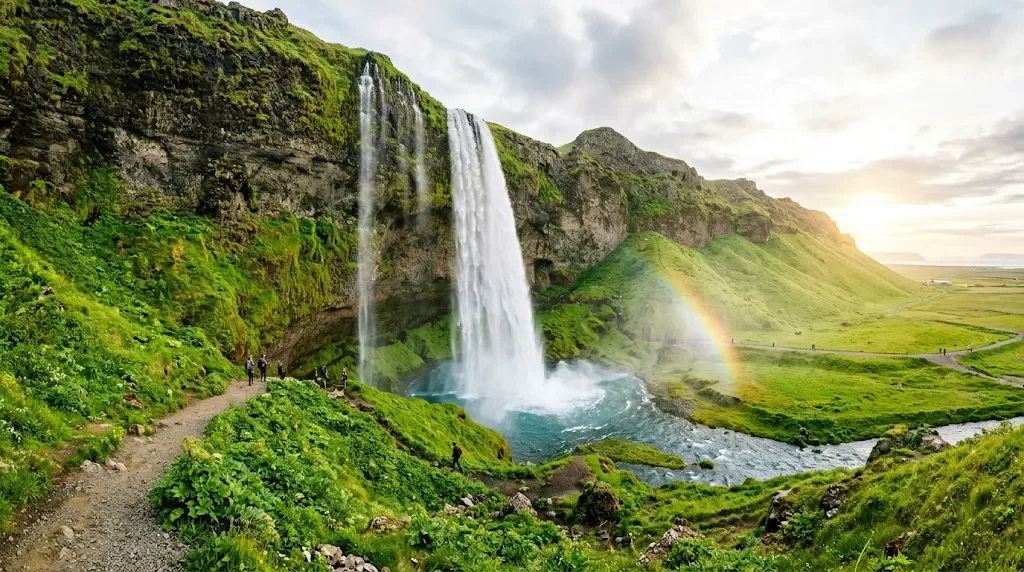
The road east from Reykjavik passes Seljalandsfoss, the waterfall you can walk behind, then Skogafoss, the black sand beach near Vik, and eventually the Jokulsarlon glacier lagoon, where icebergs drift out to sea. It is the most popular drive in the country for good reason. We have no data for the south coast. Reykjavik is the nearest data point, but the coast is exposed and wind is the main hazard here in every season, more than temperature.
May to September is the comfortable window, with June and July the easiest for long driving days. In winter the drive is still possible, and the glacier lagoon and ice caves are a big draw, but daylight is short and storms can close the road. Many people base themselves near Vik or Hofn rather than driving back and forth to Reykjavik. Do not walk close to the waves on the black sand beaches in any season, as dangerous surges are common.
Snaefellsnes peninsula
Two to three hours north of Reykjavik, Snaefellsnes packs a lot into a small area: a glacier-capped volcano, sea stacks, lava fields, a black church and a handful of fishing harbours. It is often described as Iceland in miniature. There is no data city on the peninsula, and Reykjavik is the closest, so expect similar summer temperatures around 54.0°F (12.2°C) in June. We would go between June and September. It works as a long day trip, but one night there lets you see the coast in evening light without rushing.
The north: Akureyri, Myvatn and Husavik
The north is where our data gets interesting. Akureyri in July averages 58.6°F (14.8°C), a little warmer than Reykjavik, with 14 rainy days and 3.2 inches (80 mm) of rain, less than the capital's 3.4 inches (86 mm). June is the sunniest month in Akureyri at 11.3 hours a day. Overall, Akureyri gets about 47.1 inches (1,197 mm) of rain a year, noticeably less than Reykjavik.
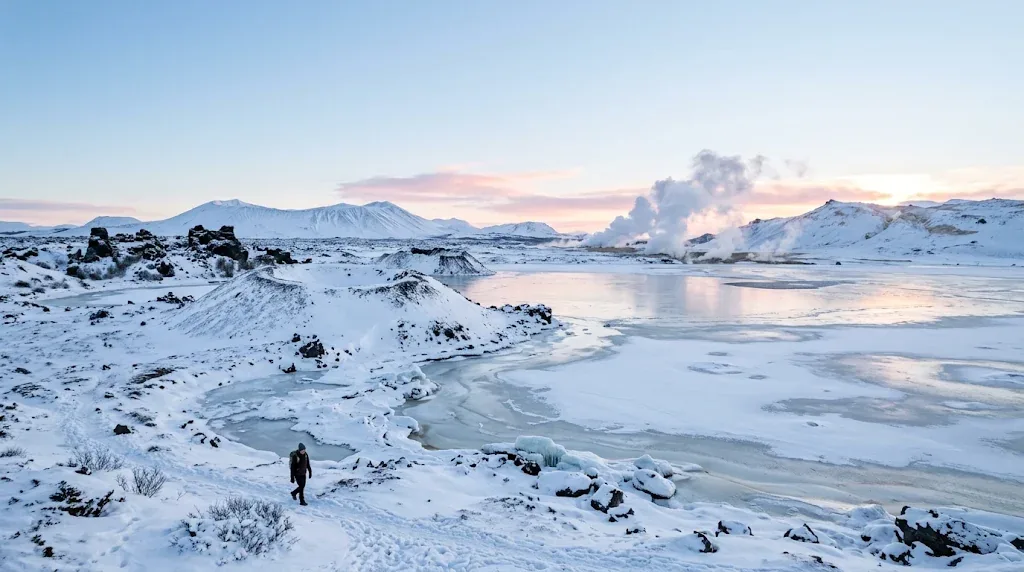
From Akureyri, Lake Myvatn is about an hour east, with its lava formations, pseudo-craters, geothermal areas and a nature bath that is a calmer alternative to the busier lagoons near Reykjavik. Husavik, to the north, is one of the best known spots for whale watching, and summer is the usual season. The Godafoss waterfall sits right on the road between them. June to August is the time for all of this.
Winter in the north is colder and darker than in the south. December averages 31.8°F (-0.1°C) by day and 21.7°F (-5.7°C) at night, with 0.2 hours of sun. Yet late winter can be lovely: by March the sun is back to 5.4 hours a day, there is usually snow on the ground, and the clear, cold nights are good for the northern lights. See Akureyri in March for the detail, and the Akureyri weather page for the full year.
The Westfjords
The Westfjords are the most remote part of Iceland that most visitors can reach: huge flat-topped mountains dropping into long fjords, the Dynjandi waterfall, and the Latrabjarg bird cliffs, which are known for puffins in summer. We have no data here. What matters more than the weather is the road. Many routes are long, winding and partly gravel, and some passes are difficult or closed outside summer. We would only go between June and August, and we would give it at least three or four days. It is not a place to squeeze into a week-long trip.
The east fjords
The east is the quietest stretch of the Ring Road, a series of small fishing villages such as Seydisfjordur tucked into steep fjords. There are no data cities on the east coast, and Akureyri is the nearest one we have. It suits travellers doing the full loop, who usually spend a night or two here between the north and the south coast. June to August is best. In winter the mountain passes between the fjords can be snowy, and weather can hold you up for a day.
The highlands
The interior highlands are where Iceland looks most like another planet: rhyolite mountains in red and yellow around Landmannalaugar, black deserts, glacial rivers and the long hiking trails between them. Access is the whole story. The mountain roads, known as F-roads, usually open only from late June or July to early September, need a four-wheel drive vehicle, and often involve river crossings. Rental companies restrict which cars can use them. We have no data for the interior, which is far colder and more exposed than either Reykjavik or Akureyri. Outside that summer window, the highlands are for organised tours only.
Which places work in winter
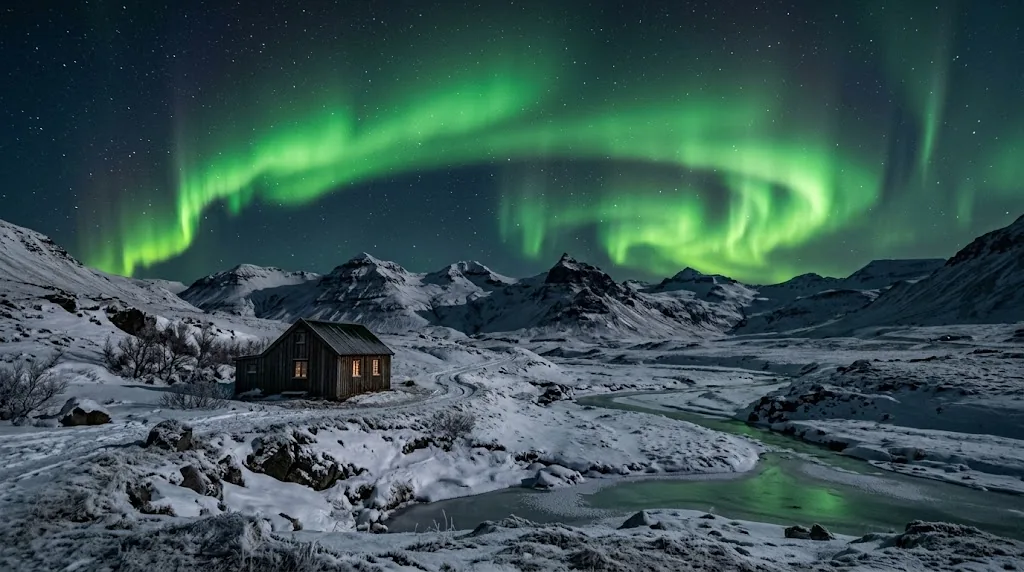
Not all of the best places to visit in Iceland suit a winter trip, and it is worth being honest about the short list. Reykjavik, the Golden Circle, the near part of the south coast to Vik, and Akureyri with Myvatn all work from November to March, with care. The Westfjords, the east fjords, Snaefellsnes on stormy days and the highlands are much harder or closed. The northern lights season generally runs from September to April, since you need dark skies, and clear nights matter far more than cold ones. Rental car insurance, winter tyres and a habit of checking road and weather warnings every morning are essential.
Choosing by what you want
The right mix of the best places to visit in Iceland depends on how long you have and what you came to see.
- Short first trip (4 to 5 days): Reykjavik, the Golden Circle and the south coast to Vik, from June to August.
- Northern lights: Reykjavik or Akureyri, from late September to March. Akureyri gets less precipitation in most winter months, with 4.2 inches (106 mm) in January against 5.8 inches (147 mm) in Reykjavik.
- Whales and puffins: Husavik and the Westfjords in June and July.
- Hiking: the highlands in July and August, ideally with a guide for the first time.
- Avoiding crowds: the north and east in June, or the shoulder months of May and September, when Reykjavik averages 48.7°F (9.3°C) and 50.7°F (10.4°C).
- Families: the south coast and Golden Circle in summer, with short drives and many stops.
Iceland is expensive at any time of year, but May and September are usually cheaper than July and August, and a full Ring Road loop needs at least a week, better ten days. Our trip planner helps line up stops with the weather for your dates. If you are also weighing up the Norwegian fjords, see our best time to visit Norway guide.
What to pack
Layers, not a giant coat. Summer days in the 50s Fahrenheit feel colder in wind and rain, so pack a waterproof and windproof shell, a warm fleece or light down jacket, thermal base layers, a hat and gloves, plus waterproof hiking boots. A swimsuit is essential, because the pools and hot springs are a big part of daily life. Bring an eye mask in summer, when it barely gets dark. For winter, add microspikes for icy paths and a much warmer jacket. Our guides to what to wear in 50 degree weather and what to wear in 40 degree weather cover summer and the shoulder months.
How we built this list
The best places to visit in Iceland in this guide are the regions that make up most itineraries, plus the remote areas that need their own planning. Every figure is a WeatherApex 20-year average for Reykjavik or Akureyri, covering 2006 to 2025, and it describes a typical month, not a forecast. We have not invented numbers for the south coast, the Golden Circle, the Westfjords, the east or the highlands. Iceland's weather changes fast and wind can matter more than any average, so check the national weather and road services each day you drive, and keep a spare day in your plan for a closed pass or a stormy coast.
Frequently asked questions
What is the most beautiful part of Iceland to visit?
For most first-time visitors it is the south coast, with its waterfalls, black sand beaches and the glacier lagoon. It is at its easiest from May to September; for comparison, Reykjavik averages 54.0°F to 57.4°F (12.2°C to 14.1°C) in June and July. The Westfjords and highlands are more dramatic but only practical in summer.
Is north Iceland warmer than Reykjavik in summer?
Slightly, in our data. Akureyri averages 58.6°F (14.8°C) in July against 57.4°F (14.1°C) in Reykjavik, with 14 rainy days instead of 15. In winter the north is colder, with December lows of 21.7°F (-5.7°C) in Akureyri and 26.6°F (-3.0°C) in Reykjavik.
Which parts of Iceland can you visit in winter?
Reykjavik, the Golden Circle, the south coast to Vik, and Akureyri with Lake Myvatn all work in winter with care. Reykjavik averages 34.7°F (1.5°C) in December with only 0.8 hours of sun a day. The Westfjords and the highlands are much harder or closed to normal cars.
When can you visit the Icelandic highlands?
Usually from late June or July to early September, when the mountain F-roads open to four-wheel drive vehicles. We have no data for the interior, which is colder than Reykjavik, where July averages 57.4°F (14.1°C). Outside summer, the highlands are for guided tours only.