Best Time to Visit India: Weather by City, Monsoon and Heat
The best time to visit India is November to February, when Delhi averages 71.2F (21.8C) in December with 1 rainy day. Avoid May in the north (Delhi 102.2F) and July in Mumbai (31 rainy days, 28.9 inches of rain).
The best time to visit India for most trips is November to February, when the plains are dry and comfortable and the heat of the year has not yet arrived. In December, Delhi averages 71.2F (21.8C) with 1 rainy day, Mumbai 87.3F (30.7C) with none, and Kolkata 78.4F (25.8C) with 1. The months to avoid for general sightseeing are April to June, when Delhi's average high hits 102.2F (39.0C) in May, and July to September, when Mumbai logs between 25 and 31 rainy days a month.
India covers too many climates for one table, so here is what our numbers include. We use five cities: Delhi, Mumbai, Bangalore, Chennai and Kolkata, with 20-year averages for 2006 to 2025. They represent the north plains, the west coast, the southern plateau, the southeast coast and the east. The Himalayas, Rajasthan's desert towns, Goa and Kerala get general comments only, with no figures.
Best Time to Visit India: Five Cities in Three Seasons
Instead of a long list, this table compares each city in December (the dry, cool season), May (the pre-monsoon peak) and July (the heart of the monsoon). Temperatures are in Fahrenheit with Celsius in brackets.
| City | Month | Avg high F (C) | Avg low F (C) | Rain (in / mm) | Rainy days | Sun hours per day | Humidity |
|---|---|---|---|---|---|---|---|
| Delhi | December | 71.2 (21.8) | 48.6 (9.2) | 0.3 / 8 | 1 | 9.4 | 68% |
| Delhi | May | 102.2 (39.0) | 77.4 (25.2) | 0.9 / 23 | 5 | 11.9 | 38% |
| Delhi | July | 92.8 (33.8) | 80.2 (26.8) | 7.5 / 190 | 20 | 9.3 | 75% |
| Mumbai | December | 87.3 (30.7) | 69.1 (20.6) | 0.3 / 8 | 0 | 10.0 | 63% |
| Mumbai | May | 90.9 (32.7) | 80.4 (26.9) | 1.3 / 33 | 4 | 11.6 | 74% |
| Mumbai | July | 82.0 (27.8) | 78.1 (25.6) | 28.9 / 734 | 31 | 5.5 | 89% |
| Bangalore | December | 78.8 (26.0) | 61.2 (16.2) | 1.0 / 25 | 4 | 9.5 | 72% |
| Bangalore | May | 88.5 (31.4) | 70.3 (21.3) | 4.9 / 124 | 16 | 10.6 | 69% |
| Bangalore | July | 79.9 (26.6) | 67.8 (19.9) | 6.1 / 155 | 23 | 7.4 | 81% |
| Chennai | December | 81.9 (27.7) | 72.9 (22.7) | 6.1 / 155 | 11 | 9.4 | 78% |
| Chennai | May | 96.8 (36.0) | 82.4 (28.0) | 2.3 / 58 | 5 | 11.1 | 69% |
| Chennai | July | 93.4 (34.1) | 80.4 (26.9) | 3.6 / 91 | 16 | 8.3 | 67% |
| Kolkata | December | 78.4 (25.8) | 59.2 (15.1) | 0.6 / 15 | 1 | 9.4 | 71% |
| Kolkata | May | 94.8 (34.9) | 80.2 (26.8) | 5.1 / 130 | 14 | 10.6 | 76% |
| Kolkata | July | 88.2 (31.2) | 79.3 (26.3) | 14.6 / 371 | 29 | 7.6 | 86% |
The table makes the pattern plain. December is the only one of the three months where every city stays below 90F (32C), and only Chennai gets more than 1 inch (25 mm) of rain. May is hot and fairly dry in the north and humid and sticky on the coasts. July is wet in four of the five, from 6.1 inches (155 mm) in Bangalore to 28.9 inches (734 mm) in Mumbai. Chennai is the exception at 3.6 inches (91 mm), though it is still 93.4F (34.1C).
Best Time to Visit India: The Quick Answer
This is the best time to visit India for most first-time visitors, and it is the right call for the classic north India circuit through Delhi, Rajasthan and Agra. Delhi in December has a high of 71.2F (21.8C) and a low of 48.6F (9.2C), with 9.4 hours of sun a day. January is cooler at 67.3F (19.6C), with a low of 45.9F (7.7C), and you will want a proper jacket for mornings and evenings. November is warmer at 80.8F (27.1C) and has just 1 rainy day.
Two honest warnings for the north. Air quality across the plains is usually at its worst in the cooler months, and fog can slow flights and trains in December and January. Neither ruins a trip, but build slack into your schedule and do not book a tight connection on the last evening.
The rest of the country is excellent in this window. Mumbai in January is 85.3F (29.6C) with a low of 66.2F (19.0C), no rain and 62% humidity. Kolkata in December is 78.4F (25.8C) and Bangalore, at 78.8F (26.0C) with a low of 61.2F (16.2C), is mild enough that you can walk all day. Chennai is the exception. It is still drying out from the northeast monsoon, with 6.1 inches (155 mm) and 11 rainy days in December, so the best months there come later, January to March.
Spring, March to June: the heat
The pre-monsoon months are the ones we would not choose for a first trip. Delhi climbs from 84.7F (29.3C) in March to 97.3F (36.3C) in April and 102.2F (39.0C) in May. Nights barely help: the May low is 77.4F (25.2C), and in June it is 82.0F (27.8C). The air is dry at first, with humidity around 35 to 38% in April and May, then rises to 51% in June and 75% by July.
The south and east are hot in a different way. Chennai reaches 96.8F (36.0C) in May with a low of 82.4F (28.0C). Kolkata peaks at 96.4F (35.8C) in April, with humidity rising to 76% by May and the first storms arriving with 14 rainy days. Delhi in May is the hardest case, and we suggest skipping Rajasthan's desert towns and the Delhi plains in these months unless you plan to be indoors by midday.
Bangalore is milder than the plains, helped by its elevation. April is its hottest month at 92.1F (33.4C) with a low of 70.0F (21.1C), and May drops to 88.5F (31.4C) as the pre-monsoon showers begin, with 16 rainy days. The Himalayan hill stations and high valleys, where the plains' heat is far less intense, are the usual escape from March to June, though we have no figures for them here.
| Month | Delhi | Mumbai | Bangalore | Chennai | Kolkata |
|---|---|---|---|---|---|
| January | 67.3 (19.6) | 85.3 (29.6) | 81.5 (27.5) | 82.4 (28.0) | 77.4 (25.2) |
| February | 74.5 (23.6) | 87.4 (30.8) | 85.6 (29.8) | 85.6 (29.8) | 84.0 (28.9) |
| March | 84.7 (29.3) | 90.5 (32.5) | 90.1 (32.3) | 89.8 (32.1) | 91.9 (33.3) |
| April | 97.3 (36.3) | 91.4 (33.0) | 92.1 (33.4) | 93.6 (34.2) | 96.4 (35.8) |
| May | 102.2 (39.0) | 90.9 (32.7) | 88.5 (31.4) | 96.8 (36.0) | 94.8 (34.9) |
| June | 101.1 (38.4) | 86.0 (30.0) | 82.2 (27.9) | 95.9 (35.5) | 91.8 (33.2) |
| July | 92.8 (33.8) | 82.0 (27.8) | 79.9 (26.6) | 93.4 (34.1) | 88.2 (31.2) |
| August | 90.7 (32.6) | 82.0 (27.8) | 79.9 (26.6) | 91.6 (33.1) | 88.0 (31.1) |
| September | 90.9 (32.7) | 83.3 (28.5) | 80.2 (26.8) | 90.5 (32.5) | 87.8 (31.0) |
| October | 89.6 (32.0) | 88.2 (31.2) | 80.4 (26.9) | 87.6 (30.9) | 87.1 (30.6) |
| November | 80.8 (27.1) | 89.6 (32.0) | 79.2 (26.2) | 83.5 (28.6) | 83.7 (28.7) |
| December | 71.2 (21.8) | 87.3 (30.7) | 78.8 (26.0) | 81.9 (27.7) | 78.4 (25.8) |
Read across the April and May rows and you can see why. All five cities pass 90F (32C) in April, and in May Delhi goes past 100F (38C).
The monsoon, June to September
The monsoon usually reaches the southwest coast around the start of June, Mumbai in the first half of the month, and Delhi around the end of June or early July. It retreats from the northwest in September and the south in October. Timing varies year to year, so treat dates as approximate.
Mumbai is the dramatic case. June brings 17.7 inches (450 mm) over 26 days, July 28.9 inches (734 mm) over 31 days, August 18.8 inches (478 mm) over 30 days and September 14.5 inches (368 mm) over 25 days. Sun falls to 5.5 hours a day in July and humidity reaches 89%. Kolkata is just as soaked, with 371 mm in July and 351 mm in August, 29 rainy days in each, and 86 to 87% humidity.
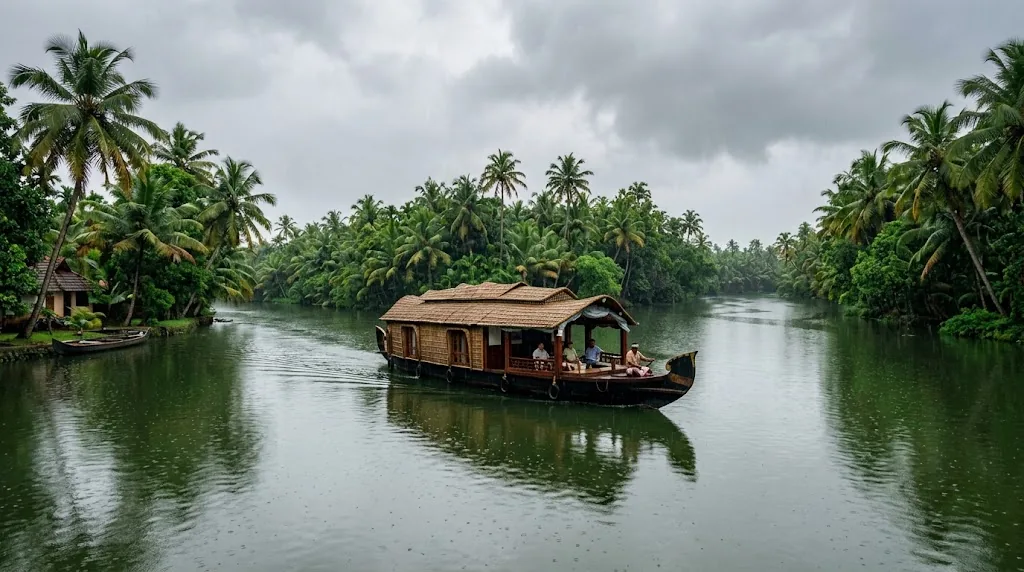
The monsoon is not all bad. Delhi's heat breaks to 92.8F (33.8C) in July with 190 mm of rain, landscapes turn green, and rates drop. Kerala and the Western Ghats draw visitors in these months, because the rain is part of the appeal there. Bangalore stays comfortable at 79.9F to 82.2F (26.6C to 27.9C) even with 20 to 23 rainy days between June and September. But flooding and slow transport are real in Mumbai and Kolkata, and we would not plan a sightseeing-heavy first visit in July or August.
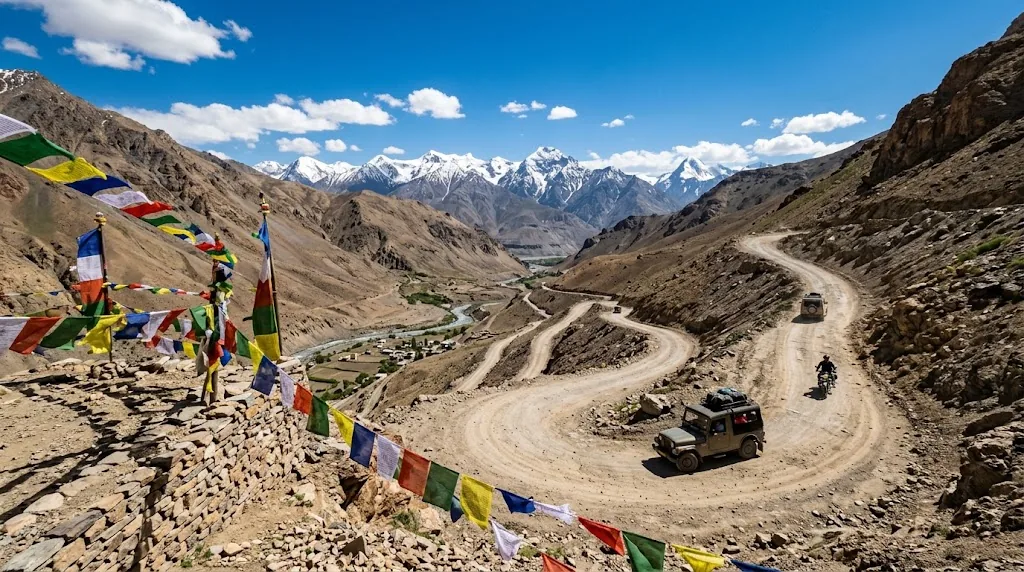
The high Himalaya moves in the opposite direction. Roads to places such as Ladakh usually open in early summer and are best from about June to September, when the plains are at their wettest or hottest. If your priority is mountains, your calendar flips.
October and the southeast coast
October is a transition month. Delhi is back to 89.6F (32.0C) with 0.5 inches (13 mm) and 2 rainy days, and its humidity falls to 60%. Mumbai is 88.2F (31.2C) with 10 rainy days and 3.4 inches (86 mm). Kolkata is wetter, with 13 rainy days and 6.1 inches (155 mm). Because the festival season, including Diwali, usually falls somewhere in October or November (the exact date shifts each year), prices and crowds rise in the north at the same time.
Chennai is a special case. The northeast monsoon gives it 8.4 inches (213 mm) in October and 11.3 inches (287 mm) over 18 rainy days in November, which makes Chennai in November the wettest month of its year, not the driest. Plan for January to March in Tamil Nadu and the southeast coast.
| Month | Delhi | Mumbai | Bangalore | Chennai | Kolkata |
|---|---|---|---|---|---|
| January | 3 | 0 | 1 | 4 | 2 |
| February | 4 | 0 | 1 | 2 | 3 |
| March | 3 | 0 | 3 | 2 | 4 |
| April | 3 | 0 | 6 | 3 | 9 |
| May | 5 | 4 | 16 | 5 | 14 |
| June | 8 | 26 | 20 | 12 | 21 |
| July | 20 | 31 | 23 | 16 | 29 |
| August | 19 | 30 | 21 | 18 | 29 |
| September | 11 | 25 | 20 | 19 | 26 |
| October | 2 | 10 | 16 | 19 | 13 |
| November | 1 | 2 | 11 | 18 | 2 |
| December | 1 | 0 | 4 | 11 | 1 |
When we would go, by region
The best time to visit India changes with the region you land in, so here is the short version for each.
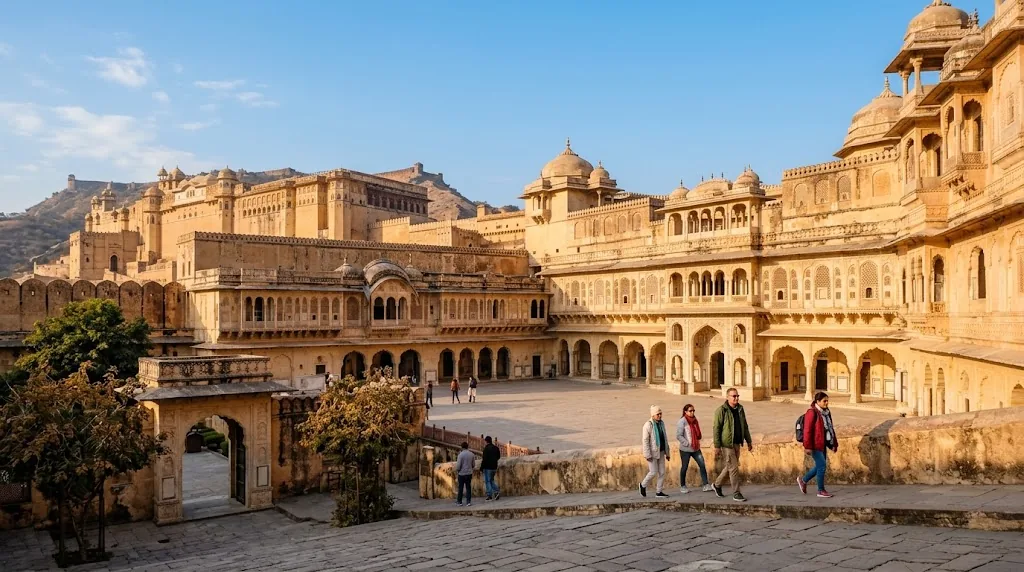
- Delhi, Agra and Rajasthan: late October to early March. December and January for comfort, February for warmer afternoons. Skip May and June.
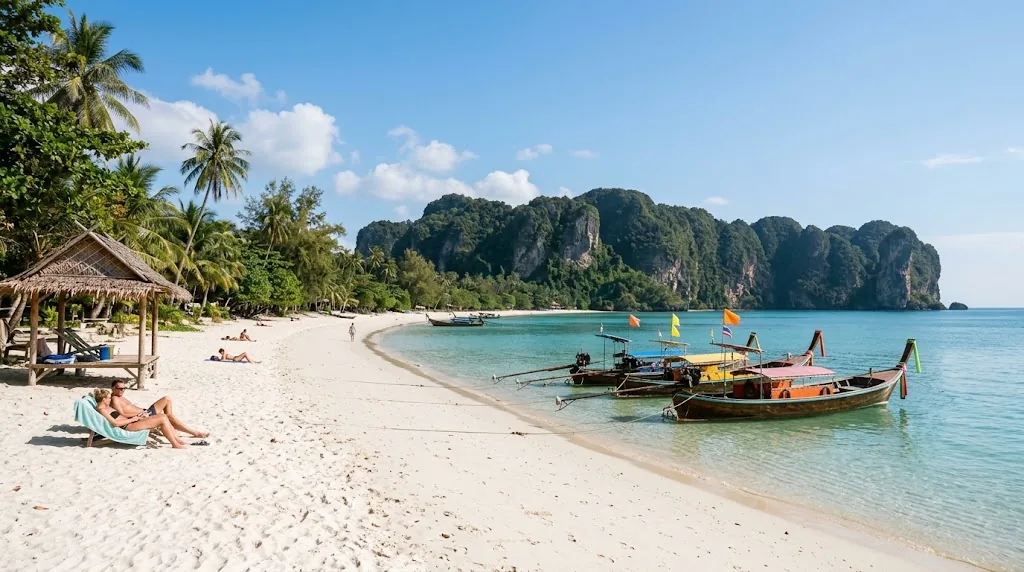
- Mumbai and the west coast, including Goa: November to February. Mumbai in January is dry and a very comfortable 85.3F. Goa follows a similar pattern in general terms, with beaches best in the dry months.
- Bangalore and the southern plateau: December to March are pleasant and dry. January and February have 1 rainy day each.
- Chennai and Tamil Nadu: January to March, before the heat peaks. Avoid November.
- Kolkata and the east: November to February, with December the best at 78.4F and 1 rainy day.
- Kerala: general guidance only. The dry season is usually the cooler months from about December to March, while the monsoon months attract travelers who want greenery and lower prices.
- Himalayan regions: April to October depending on altitude, with the high roads in summer. This is the one corner of the country where you travel against the plains' calendar.
How to choose by goal
For a first trip with a mix of cities and monuments, make it December or January. For the beach, go from November to February on the west coast, and avoid the monsoon months completely. For the lowest prices, the monsoon and the early-summer heat are cheaper in general, though you pay with comfort. For photographers who like atmosphere and fresh green, July to September in the south and west has its fans, as long as you allow for delays. To avoid crowds, shoulder weeks such as late February and March work, as the plains are warm but not extreme: Delhi in February is 74.5F (23.6C) with 9.8 sun hours and 4 rainy days.
If you are comparing India with other warm regions for the same dates, our guides to the best time to visit Thailand and the best time to visit Vietnam use the same data, and where is it warm in January puts Mumbai alongside other winter picks.
What to pack
In winter, pack light cotton layers for the day and a warm jacket or fleece for Delhi and the north, where January lows are near 46F (8C). For heat months, loose breathable clothing, a hat, sunscreen and a refillable bottle matter more than anything else. For the monsoon, a compact umbrella, quick-drying clothes and waterproof footwear that you can wear in standing water. Daytime highs in the 80s F are common across the south, so our guide to what to wear in 80 degree weather is useful for the coastal cities.
How we picked: a data note
The figures come from WeatherApex 20-year averages for 2006 to 2025, based on Open-Meteo historical data. They show typical conditions for five cities, which is enough to choose the best time to visit India but will not predict a particular week. Monsoon onset in particular can shift by a couple of weeks from one year to the next. If you are putting together a multi-stop trip, the trip planner lets you line up several cities against your dates. For heat comparisons on a global scale, see what is the warmest place in the world.
One practical closing tip: pick your dates by the region you care about most, then book internal flights and trains early for December and January, which are the busiest weeks of the dry season. For official climate data, see India Meteorological Department.
Frequently asked questions
What is the best month to visit India?
December is the safest single month for a multi-city trip. Delhi averages 71.2F (21.8C), Kolkata 78.4F (25.8C), Mumbai 87.3F (30.7C) and Bangalore 78.8F (26.0C), each with 0 to 4 rainy days. Chennai is still wet at 11 rainy days, so it fits January to March better.
When is the monsoon in India?
It usually reaches the southwest coast around the start of June, Mumbai in the first half of June and Delhi around late June or early July, then retreats from September. Mumbai gets 28.9 inches (734 mm) over 31 rainy days in July. Chennai is wettest later, with 11.3 inches (287 mm) in November from the northeast monsoon.
How hot does India get before the monsoon?
Very hot. Delhi averages 97.3F (36.3C) in April and 102.2F (39.0C) in May, with a May low of 77.4F (25.2C). Chennai reaches 96.8F (36.0C) in May and Kolkata 96.4F (35.8C) in April. Bangalore is milder, with a peak of 92.1F (33.4C) in April.
Is India worth visiting in the monsoon?
It can be, if you pick the right place and accept delays. Bangalore stays at 79.9F to 82.2F (26.6C to 27.9C) from June to September, and the landscapes turn green. We would avoid first-time sightseeing in Mumbai and Kolkata, which have 21 to 31 rainy days a month from June to September and up to 89% humidity.