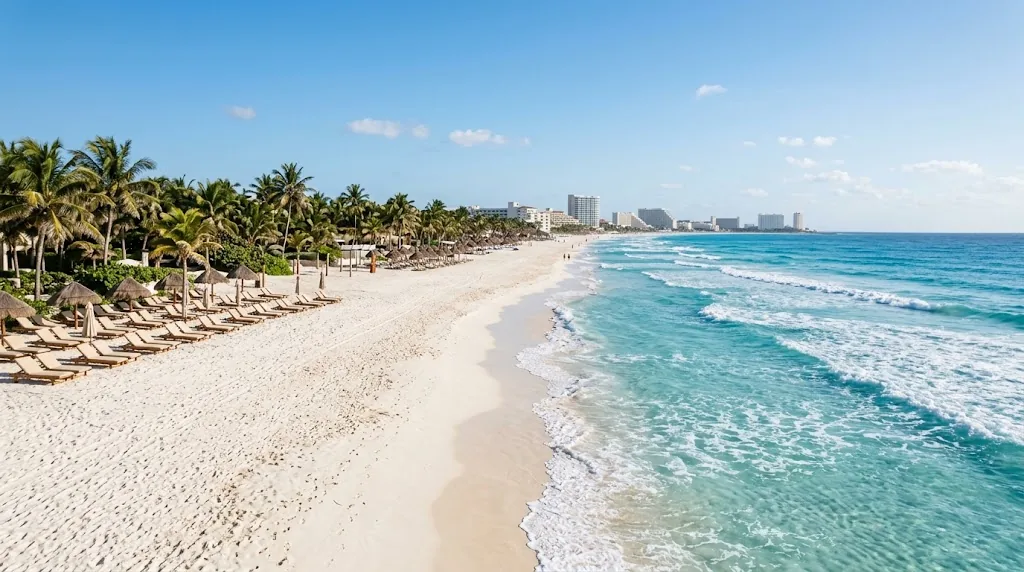
Best Time to Visit Mexico: Mexico City and Cancun by Month
The best time to visit Mexico for city and beach is mid December to April, and March in particular: Cancun averages 81.1F (27.3C) with 8 rainy days and Mexico City 77.4F (25.2C). September has 23 rainy days in Cancun, right in hurricane season.
The best time to visit Mexico for a classic mix of city and beach is mid December to April, and March in particular. In March, Cancun averages 81.1F (27.3C) with 8 rainy days and 11.3 hours of sun, while Mexico City is 77.4F (25.2C) with 6 rainy days. Hurricane season and the heavy rains run roughly June to November, and September and October are the months we would avoid for the coast.
A word on scope before the details. Mexico is nearly two million square kilometers, and no single set of numbers describes it. The figures here cover two cities only: Mexico City (the high central valley) and Cancun (the Caribbean coast), using 20-year averages from 2006 to 2025. For the Pacific coast, Baja, Oaxaca, Chiapas and the Yucatan interior we give only well-known general patterns and no numbers.
Best Time to Visit Mexico: Mexico City and Cancun Side by Side
The two cities have very different personalities. Mexico City is cool for its latitude because of its altitude, with rain concentrated in summer afternoons. Cancun is hot and humid all year, and its rain is spread across more of the year. Temperatures are in Fahrenheit with Celsius in brackets.
| Month | Mexico City high | Mexico City low | Mexico City rainy days | Mexico City sun hrs/day | Cancun high | Cancun low | Cancun rainy days | Cancun sun hrs/day |
|---|---|---|---|---|---|---|---|---|
| January | 70.0F (21.1C) | 45.0F (7.2C) | 4 | 10.1 | 78.3F (25.7C) | 71.6F (22.0C) | 12 | 9.1 |
| February | 73.9F (23.3C) | 46.8F (8.2C) | 3 | 10.7 | 79.5F (26.4C) | 72.5F (22.5C) | 9 | 10.3 |
| March | 77.4F (25.2C) | 49.6F (9.8C) | 6 | 11.2 | 81.1F (27.3C) | 73.8F (23.2C) | 8 | 11.3 |
| April | 79.5F (26.4C) | 52.7F (11.5C) | 8 | 11.8 | 83.7F (28.7C) | 75.7F (24.3C) | 6 | 11.8 |
| May | 79.0F (26.1C) | 54.9F (12.7C) | 13 | 11.8 | 85.1F (29.5C) | 77.4F (25.2C) | 13 | 11.9 |
| June | 74.8F (23.8C) | 55.6F (13.1C) | 19 | 10.6 | 85.3F (29.6C) | 78.3F (25.7C) | 19 | 10.9 |
| July | 71.2F (21.8C) | 54.3F (12.4C) | 25 | 10.2 | 86.5F (30.3C) | 79.2F (26.2C) | 17 | 11.8 |
| August | 71.6F (22.0C) | 54.7F (12.6C) | 25 | 10.2 | 86.9F (30.5C) | 79.2F (26.2C) | 21 | 11.4 |
| September | 70.3F (21.3C) | 54.3F (12.4C) | 22 | 9.4 | 85.8F (29.9C) | 78.3F (25.7C) | 23 | 10.5 |
| October | 70.5F (21.4C) | 51.4F (10.8C) | 13 | 9.8 | 83.7F (28.7C) | 76.6F (24.8C) | 20 | 9.9 |
| November | 70.5F (21.4C) | 48.0F (8.9C) | 6 | 10.1 | 81.0F (27.2C) | 74.1F (23.4C) | 13 | 10.1 |
| December | 70.2F (21.2C) | 46.0F (7.8C) | 3 | 10.4 | 79.7F (26.5C) | 73.0F (22.8C) | 13 | 9.7 |

Best Time to Visit Mexico: The Quick Answer
- Caribbean beaches (Cancun, Riviera Maya): February to April. Highs of 79.5F to 83.7F (26.4C to 28.7C), 6 to 9 rainy days, and 10.3 to 11.8 hours of sun a day.
- Mexico City and the central highlands: February to April, and November. The dry, sunny months, with highs of 73.9F to 79.5F (23.3C to 26.4C).
- Pacific resorts and Baja: no figures here, but generally the dry winter and spring are best, with a wet and humid summer and autumn on the southern Pacific coast.
- Cheaper but still decent: late April to May, or early November, accepting some rain and heat.
The overlap is neat. In Mexico City, rain is lowest from November to April; on the Caribbean coast, it eases from December to April. If you want a single window for a trip that covers both, that is it, and our single favorite is March.
Winter, December to February: dry and comfortable
December has a split personality. Mexico City is at 70.2F (21.2C) with just 3 rainy days and 0.5 inches (13 mm) of rain, the driest month there. Cancun is 79.7F (26.5C) with 13 rainy days and 2.7 inches (69 mm), so the coast is still showery at the start of winter, although the showers tend to be short. January keeps that going on the coast (12 rainy days, 2.8 inches or 71 mm) and has the lowest sun of the year at 9.1 hours.
By February the coast has dried out to 9 rainy days and 1.8 inches (46 mm). The air feels comfortable at 79.5F (26.4C) for the beach, although the water and the evening breeze can feel cool. Mexico City is at 73.9F (23.3C), with 10.7 sun hours and humidity of 51%. This is also the peak tourist season, especially around Christmas, New Year and the US spring break weeks in March, so book flights and hotels early and expect higher prices.
Spring, March to May: the beach sweet spot, then the heat
March and April are what most people picture. Cancun gets 81.1F (27.3C) and 83.7F (28.7C), humidity near 72% to 74%, and rain of only 1.3 and 1.5 inches (33 and 38 mm). April has the fewest rainy days of the year on the coast at 6. Mexico City peaks in April at 79.5F (26.4C) with 8 rainy days. Easter week (Semana Santa) is the busiest period for domestic travel, so prices are high and beaches are full. Choose the weeks either side of it.
One extra note for the Caribbean coast: seaweed (sargassum) can wash up on beaches in some seasons, and in recent years it has tended to be heaviest in spring and summer. It varies a lot from year to year and beach to beach, so check recent reports before you book a beach-only trip.
May is the turning point. Cancun reaches 85.1F (29.5C) with 13 rainy days and 3.3 inches (84 mm). Mexico City is still warm at 79.0F (26.1C) but rain increases to 13 rainy days and 2.9 inches (74 mm). It is the last decent month for a low price, and the heat on the coast is getting heavy.
Summer, June to August: hot, wet and cheaper
June is a big change. Cancun gets 7.2 inches (183 mm) over 19 rainy days, with an 85.3F (29.6C) high and 82% humidity. July is drier at 4.2 inches (107 mm) over 17 rainy days, and August has 5.4 inches (137 mm) over 21. The high in August reaches 86.9F (30.5C), the hottest of the year. With humidity at 80% and above, even a gentle walk can feel sticky. The sun does come out, at 11.4 to 11.8 hours in July and August, so the days are not grey. The rain arrives in bursts.
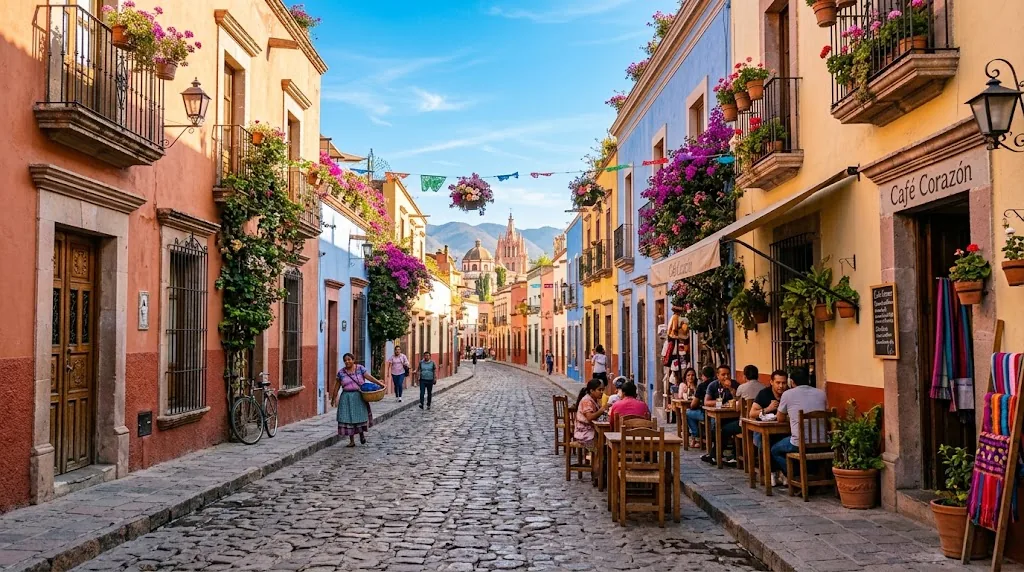
Mexico City is cooler and wetter in a different way. July and August bring 8.2 and 8.1 inches (208 and 206 mm) over 25 rainy days each, but with highs of only 71.2F and 71.6F (21.8C and 22.0C). The pattern is usually a bright morning and a heavy afternoon downpour. Summer is the budget season for both, and it can work well for the capital, as long as you plan outdoor sights before midday. Our Mexico City guide has more on how to do that.
Hurricane season, honestly
Any honest answer on the best time to visit Mexico has to deal with storms. The Atlantic hurricane season officially runs from June 1 to November 30, and activity usually peaks from August to October. The Pacific coast has its own season, usually from May or June to November. The risk of a direct hit on any given trip is low, but the risk of disruption (storm warnings, cancelled flights, closed beaches and several grey days) is real, especially in September and October.
The numbers for Cancun back this up. September has 7.3 inches (185 mm) over 23 rainy days, and October has 7.0 inches (178 mm) over 20, and both months have 80% to 83% humidity. If you travel to the coast between August and October, buy travel insurance with weather cover, keep your plans flexible and avoid tight connections. Mexico City is inland and high, and is not exposed to hurricanes in the same way.
Autumn, September to November: skip it for the coast, try it for the capital
September and October are our months to skip for beaches. Cancun is hot (85.8F or 29.9C in September, 83.7F or 28.7C in October), wet, and in the storm zone. November is where things recover: Cancun is down to 81.0F (27.2C) with 3.8 inches (97 mm) and 13 rainy days. Mexico City in November is dry with 6 rainy days, 1.1 inches (28 mm) and a 70.5F (21.4C) high, and Day of the Dead (November 1 and 2) draws visitors and crowds. October in the capital (13 rainy days, 3.3 inches or 84 mm) is a decent shoulder month if you accept some showers.
A two-stop plan: capital first, coast second
For a ten-day trip, we would spend the first four or five days in Mexico City and the rest on the coast. Mexico City is cooler and the altitude takes a day or two to adjust to, so it is easier to start there and finish with the heat and the beach. In practice the best time to visit Mexico for this routing is late February through April. You would see the capital at 73.9F to 79.5F (23.3C to 26.4C) with 3 to 8 rainy days, then fly to Cancun for 79.5F to 83.7F (26.4C to 28.7C) and 6 to 9 rainy days.
If your dates are only available in summer, flip the logic. Spend longer in the capital, where the average high stays around 71F (21.8C) and the afternoon rain is predictable, and keep the coast to a short stay, since the same weeks bring 17 to 23 rainy days a month there and the start of the stormier part of the year. December and early January also work, with the caveat that the coast still sees 12 to 13 rainy days.
What our numbers do not cover
Mexico has several other climates that we do not put numbers on. The Pacific resorts such as Puerto Vallarta and Acapulco follow a dry-winter, wet-summer pattern. Baja California is a desert peninsula with very hot summers and a milder winter. Oaxaca and the colonial highland towns usually behave like Mexico City, with a dry winter and a rainy summer. The Yucatan interior is hotter and more humid than the capital, and Chiapas has a long summer wet season. These are broad patterns only, so check a local source before committing to dates in a region we have not measured. The best time to visit Mexico really depends on which of these you choose.
How to choose by goal
- Beach holiday: late February to April. After that, humidity of 77% and above, plus more rain.
- City sightseeing: February, March or November in Mexico City, with 3 to 6 rainy days.
- Cheapest: June to early October, but you take on the rain and, on the coast, hurricane risk. Mexico City in summer is the safer bargain.
- Families: February to April for the beach, because storms are less likely and sun hours are 10.3 to 11.8 a day. Book well ahead for school holidays.
- Avoiding crowds: May and early November for a compromise, or late January outside holiday weeks.
What to pack
For the coast, bring light clothing, a high SPF, reef-safe sunscreen, a hat and a light rain shell for the wet months. For Mexico City, bring layers, because the 45F to 55F (7C to 13C) overnight lows come as a surprise to many who packed only for beach weather. Shoes for wet pavement help from June to September. For day outfits in the 70s F, see our 70 degree weather guide.
How we picked: a data note
All figures are 20-year averages (2006 to 2025) from the Open-Meteo Historical Weather API. They tell you what is typical, not what a given week will do, and a hurricane season can be quiet or active regardless of the average. The numbers cover Mexico City and Cancun only. You can compare them month by month on the Mexico City and Cancun weather pages, check dates in the trip planner, or read our Cancun-only guide for the coast in more depth. Our short version: aim for March, avoid September and October on the coast, and pack a jacket for the capital.
Frequently asked questions
What is the best month to visit Mexico?
March is our pick for combining the capital and the Caribbean coast. Cancun averages 81.1F (27.3C) with 8 rainy days and 11.3 hours of sun, and Mexico City is 77.4F (25.2C) with 6 rainy days. April is nearly as good, with only 6 rainy days in Cancun.
When is hurricane season in Mexico?
The Atlantic hurricane season officially runs from June 1 to November 30, with activity usually peaking from August to October. Cancun gets 7.3 inches (185 mm) over 23 rainy days in September and 7.0 inches (178 mm) over 20 days in October. Travel insurance with weather cover is wise for those months.
What is the cheapest time to go to Mexico?
Summer and early autumn are usually the cheapest, from June to October, but they are also the wettest. Cancun has 17 to 23 rainy days a month from July to September, so Mexico City is the safer low-season choice, with highs near 71F (21.8C) and a bright morning most days.
Is Mexico hot all year?
The coast is, but the capital is not. Cancun's average high runs from 78.3F (25.7C) in January to 86.9F (30.5C) in August. Mexico City stays between 70.0F (21.1C) and 79.5F (26.4C), with cool nights of 45.0F (7.2C) in January.